Begin with a small, inviting choice
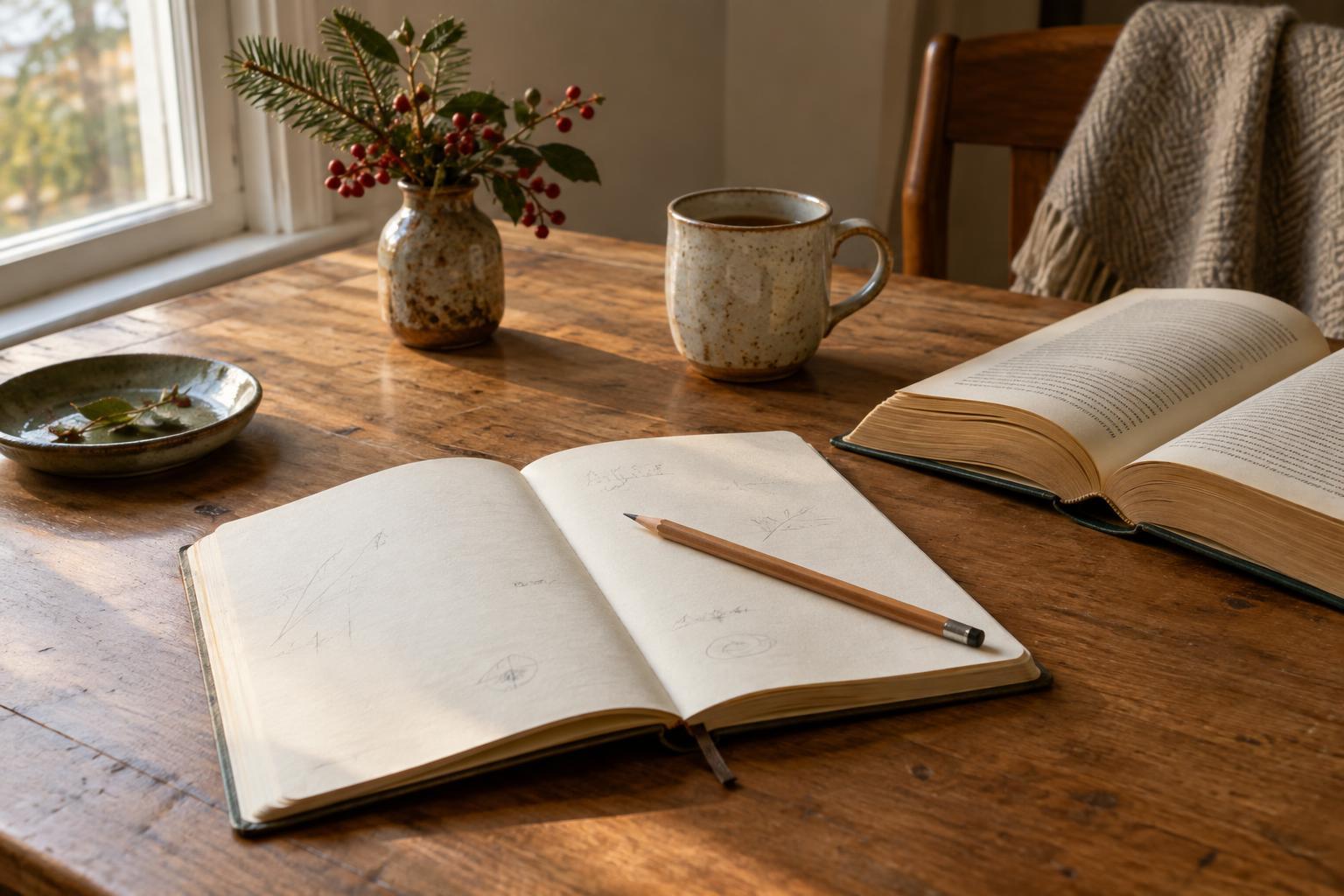
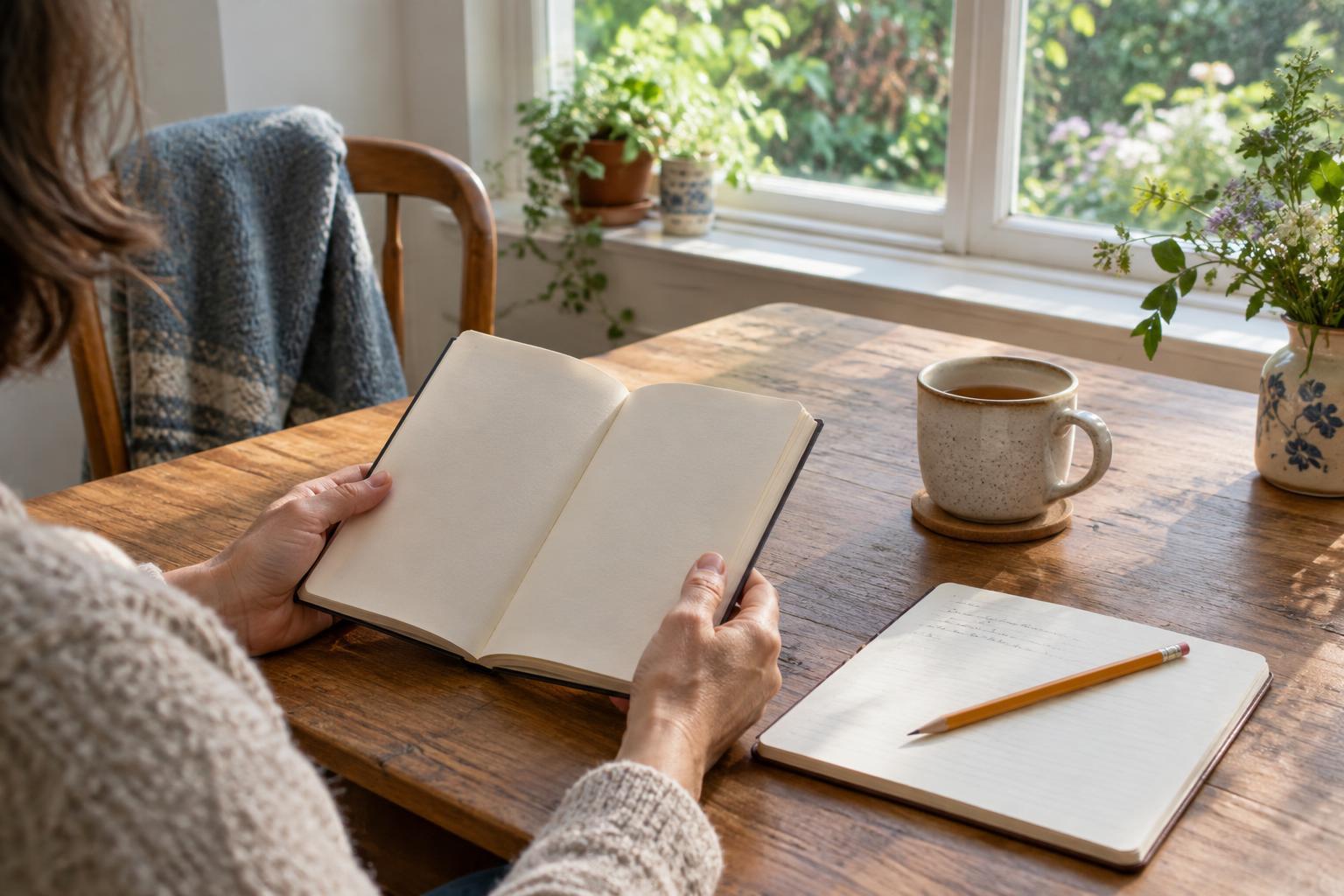
A ten-minute reading routine works best when you do not spend half of it deciding what to read. Keep a book, essay collection, or notebook of saved passages in a place you already visit: beside a favorite chair, near the breakfast table, or in a bag you carry. Choose writing that rewards a slow look. A page of a novel, a short poem, a personal essay, or a passage from a book you are already enjoying can all work.
Before you begin, decide how much you will read rather than how much you hope to accomplish. One page may be enough. A brief selection leaves time to notice what the words bring up, instead of turning the routine into a race to finish a chapter. If a passage feels dense, read less of it. Reflective reading is not a test of speed or comprehension; it is an opportunity to pay attention.
Give the ten minutes a loose shape
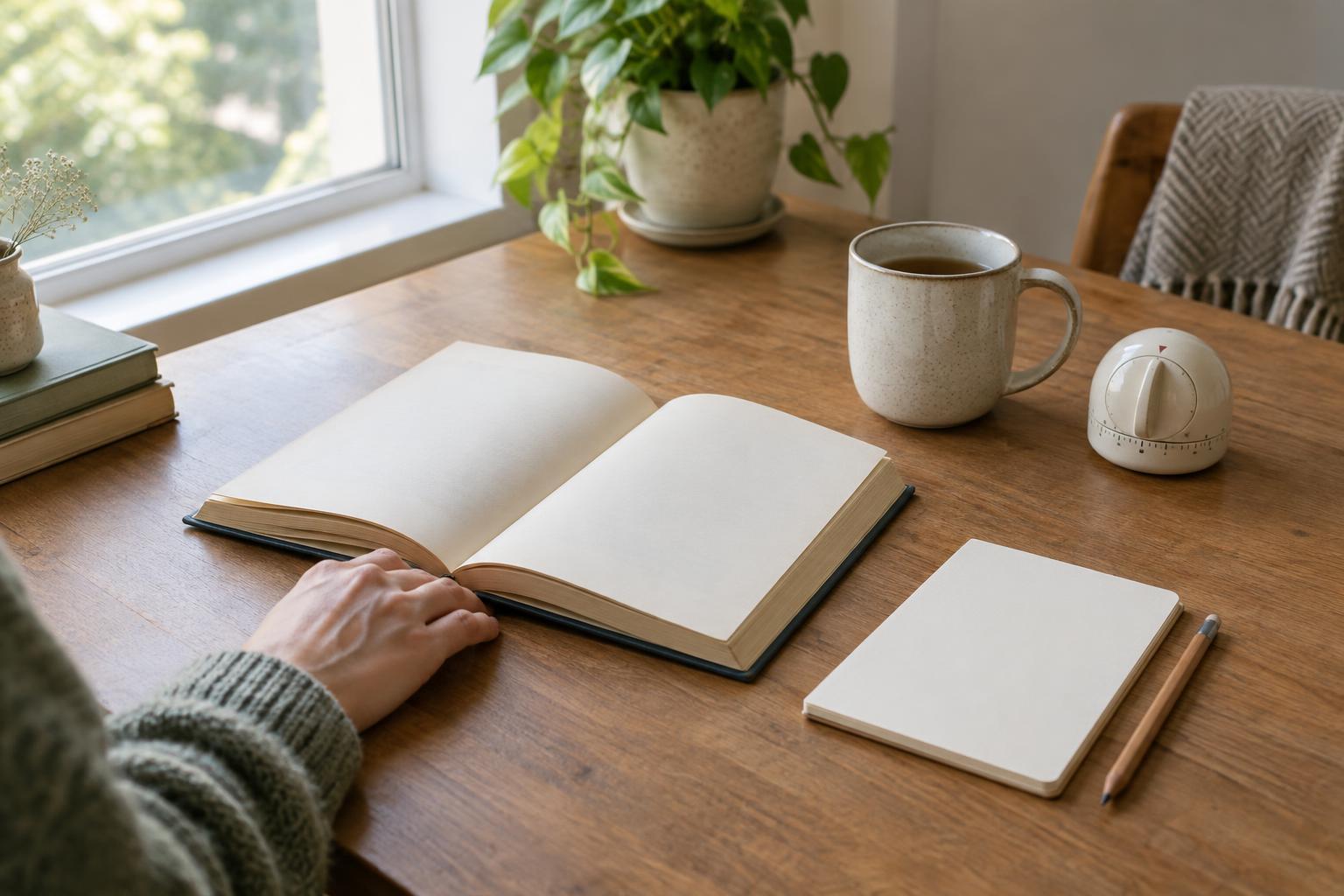
A simple structure can make the routine easier to repeat. Spend the first minute settling in and putting aside other tasks. Read for about four minutes, slowly enough to notice a sentence you might otherwise pass over. Use the next three minutes to sit with what you read, and the final two to record a thought or choose a small action. These times are guides, not rules. On a busy day, the pause may matter more than completing every step.
To help protect the time, set your phone out of reach or silence notifications if you can. You do not need a perfectly quiet room. If your household is active, try reading before others wake, during a lunch break, or after a regular evening task. Linking the practice to something you already do is often simpler than searching for an entirely new opening in the day.
Ask one question and stay with it
After reading, resist the urge to find the “right” interpretation. Instead, ask one open question: What stood out? Where did I feel curious or resistant? What does this passage remind me of? A question gives your attention somewhere to rest without requiring a polished answer. If the writing describes a person or place, you might wonder whose perspective is missing or what you would have noticed in the same scene.
You can also reread a single line. Sometimes a sentence catches your attention because it expresses something familiar; sometimes it challenges an assumption. Neither response needs to be resolved immediately. Let yourself name the response in ordinary words, such as “I found this comforting” or “I’m not sure I agree.” That is already reflection. Over time, this gentle curiosity can make reading feel more like a conversation than an assignment.
Leave a small trace
A note helps you carry the reading beyond the ten minutes, but it need not become a full journal entry. Write down one sentence from the passage, a question it raised, or a brief connection to your day. If you prefer not to write, say your thought quietly to yourself or mark the page to revisit later. The point is to give the moment a little room to linger.
Keep your notes easy to find, whether in a pocket notebook or a single note on your phone. Looking back after a few weeks may show which themes keep drawing your attention. You might discover that you return to stories about welcome, patience, change, or belonging. Those patterns do not demand a conclusion. They can simply help you choose what to read next or prompt a thoughtful conversation with a friend.
Make room for an imperfect routine
Some days, ten minutes will feel spacious. Other days, you will be distracted, interrupted, or unable to read at all. Missing a day does not erase the value of the days you showed up. When you return, start with the next page or reread the last one you remember. Avoid turning a missed session into another task to catch up on.
If the routine begins to feel stale, change one part of it. Read outdoors when the weather allows, try a different kind of writing, or share a short passage with someone and ask what they noticed. The aim is not to build an impressive record of books finished. It is to create a modest, repeatable space where words, questions, and daily life can meet. Ten minutes is enough to begin, and beginning again is always allowed.