Start with the gathering, not the menu
A neighborhood meal can take many forms: a table full of dishes to share, a picnic where everyone brings their own lunch, or something in between. The best choice is not necessarily the most elaborate one. It is the format that lets people arrive, eat and enjoy one another’s company without having to guess what is expected.
Before sending an invitation, consider where the gathering will happen and what people will be doing. A seated meal in a room with serving tables may suit a potluck. A short meetup at a park may work better when guests bring their own food. Think, too, about who is invited. Guests may have different schedules, budgets, cooking facilities and levels of comfort with preparing food for a group. A format that leaves room for those differences often feels more welcoming than one that assumes everyone can contribute in the same way.
When a potluck makes sense
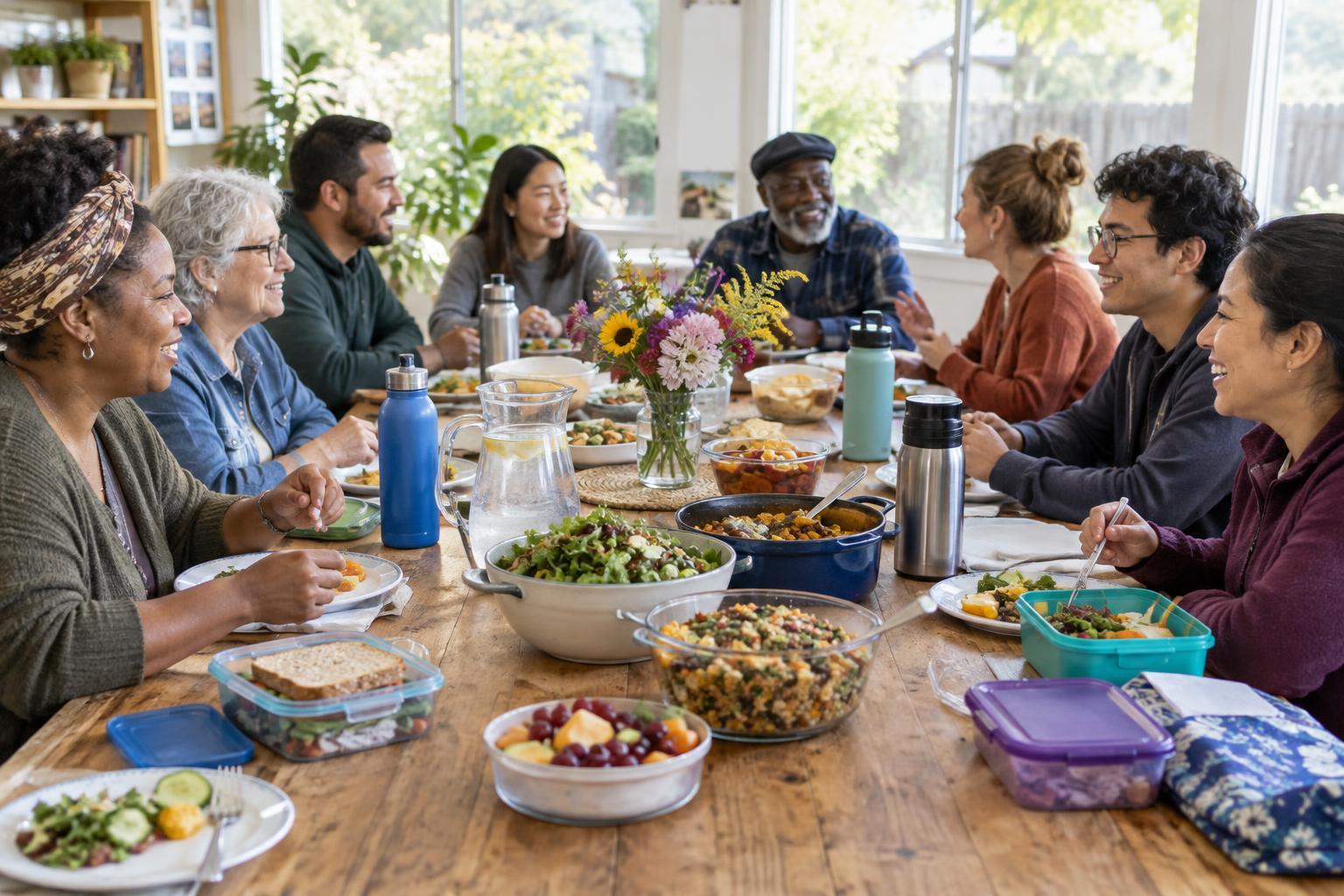
A potluck gives guests a shared table to build together. It can be especially enjoyable when the meal itself is a focus of the gathering and there is enough time and space to set out food. People may discover a new favorite dish, and someone who comes without food can still be included. But a potluck also asks for coordination: serving utensils, plates, labels, space for dishes and a plan for leftovers.
Keep the invitation simple and specific. Tell guests whether bringing a dish is optional, how many people might attend and what basics the host will provide. A loose sign-up by dish type can help avoid a table of only desserts without turning the meal into an assignment. If a guest would rather contribute napkins, help set up or simply attend, make that a genuine option. Hospitality works better when participation is not measured by the size of someone’s casserole.
For dishes that need to stay hot or cold, ask contributors to plan how they will transport and serve them. Provide a place for guests to note ingredients if they wish, but do not promise that a shared table will meet every dietary need. Clear expectations let guests make their own choices.
When bring-your-own works better
A bring-your-own meal gives each person or household control over what and how much to eat. It can reduce coordination for a casual outdoor gathering, a meeting between other activities or a meal with limited kitchen access. It may also make attendance easier for someone with particular food preferences or a tight schedule: they can pack something familiar rather than prepare a dish for a crowd.
The possible downside is that the meal can feel less communal if guests are left wondering whether they are supposed to share. Say plainly that everyone should bring food for themselves and that sharing is welcome only if people choose to offer it. If the host can provide water, cups or a few extra shelf-stable snacks, mention that separately; guests should not have to rely on unannounced extras. Encourage people to bring only what they need, especially when seating, storage or cleanup space is limited.
Make either format easy to understand
An invitation should answer the practical questions a guest might hesitate to ask. State the meal format near the top, along with the time, place, seating situation and whether guests need their own plates or utensils. If there is a cost, describe it before people commit. If children or newcomers are welcome, say so. A short note such as “No need to bring food to be included” can make a potluck less intimidating; for a bring-your-own picnic, “Please pack a meal for yourself” removes the opposite confusion.
Give guests a way to ask about access needs without having to explain them to the whole group. Consider whether the space has a place to sit, a restroom nearby and a route that works for the people you expect. A covered table or an indoor backup can help if the weather changes, but it is fine to choose a simpler plan and communicate it clearly.
Leave room for the meal to be imperfect
Even a well-planned gathering may have too much bread, too few chairs or someone arriving later than expected. A host does not need to solve every surprise. A few flexible choices help: keep the schedule relaxed, make space at the table as people arrive and have a clear place for cleanup. If there is not enough food to share at a potluck, avoid putting pressure on a guest who brought little or nothing. Adjust what you can and treat everyone with the same ease.
The point of either format is time together. Choose a potluck when sharing food will add to that experience and the group can manage the setup. Choose bring-your-own when flexibility and individual choice matter more. Either can feel generous when the invitation is honest, the expectations are light and people are welcomed as guests rather than contributions.