Begin with the kind of welcome you can offer
It is easy to imagine that hosting begins with a shopping list. In practice, it begins with an invitation. A short message that says when to come, what to expect, and whether to bring anything can do more for a guest’s comfort than a carefully arranged table. If the gathering is casual, say so. If you have only an hour to spare, an invitation for tea or a walk is still a genuine invitation.
Choose a plan that fits your time, energy, and space. A few neighbors on the porch may be easier to enjoy than a full dinner indoors. An afternoon visit might call for water and a simple snack, not a meal. Being clear about the plan lets people arrive without wondering whether they should have eaten first or dressed for a special occasion. It also gives you permission to be present rather than spending the visit trying to meet an expectation you never intended to set.
Make the space easy to use
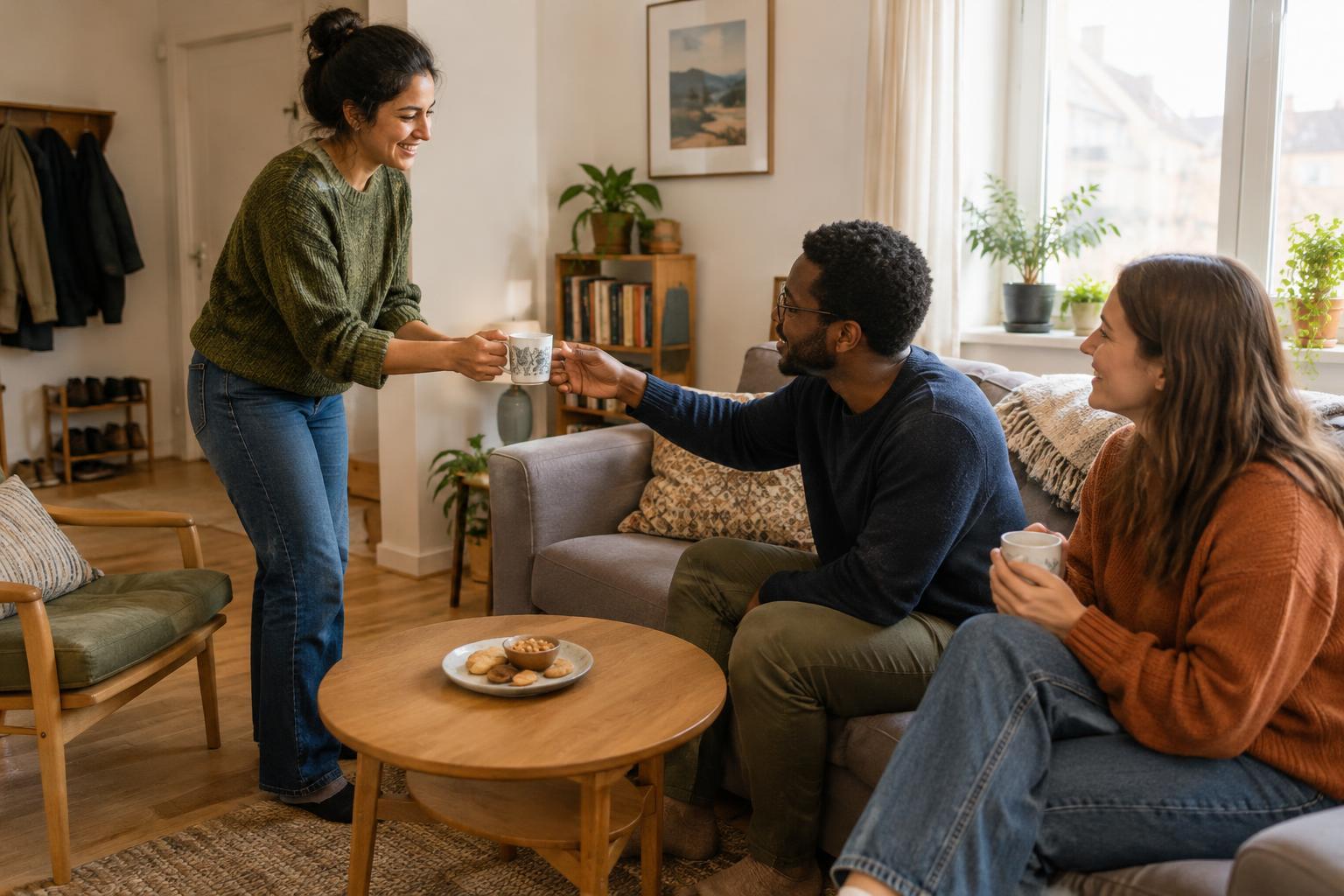
A welcoming room does not have to be spotless or newly decorated. Start with the places guests will actually use: a clear path to the door, somewhere to put a coat, a place to sit, and an easy-to-find bathroom. Move a chair so people can hear one another. Set out a pitcher or jug of water and let guests know where to find cups. These practical details quietly tell people that you thought about their arrival.
Use what you already have for atmosphere. Daylight, a tidy corner, or a few branches in a jar can make a space feel cared for. If seating is limited, let guests know beforehand and consider a gathering where people can come and go. Pay attention to comfort without making a spectacle of it: offer a chair with a back, leave room to move around, and ask before turning up music. Noticing what helps people settle in matters more than matching dishes or decorations.
Keep food simple and expectations clear
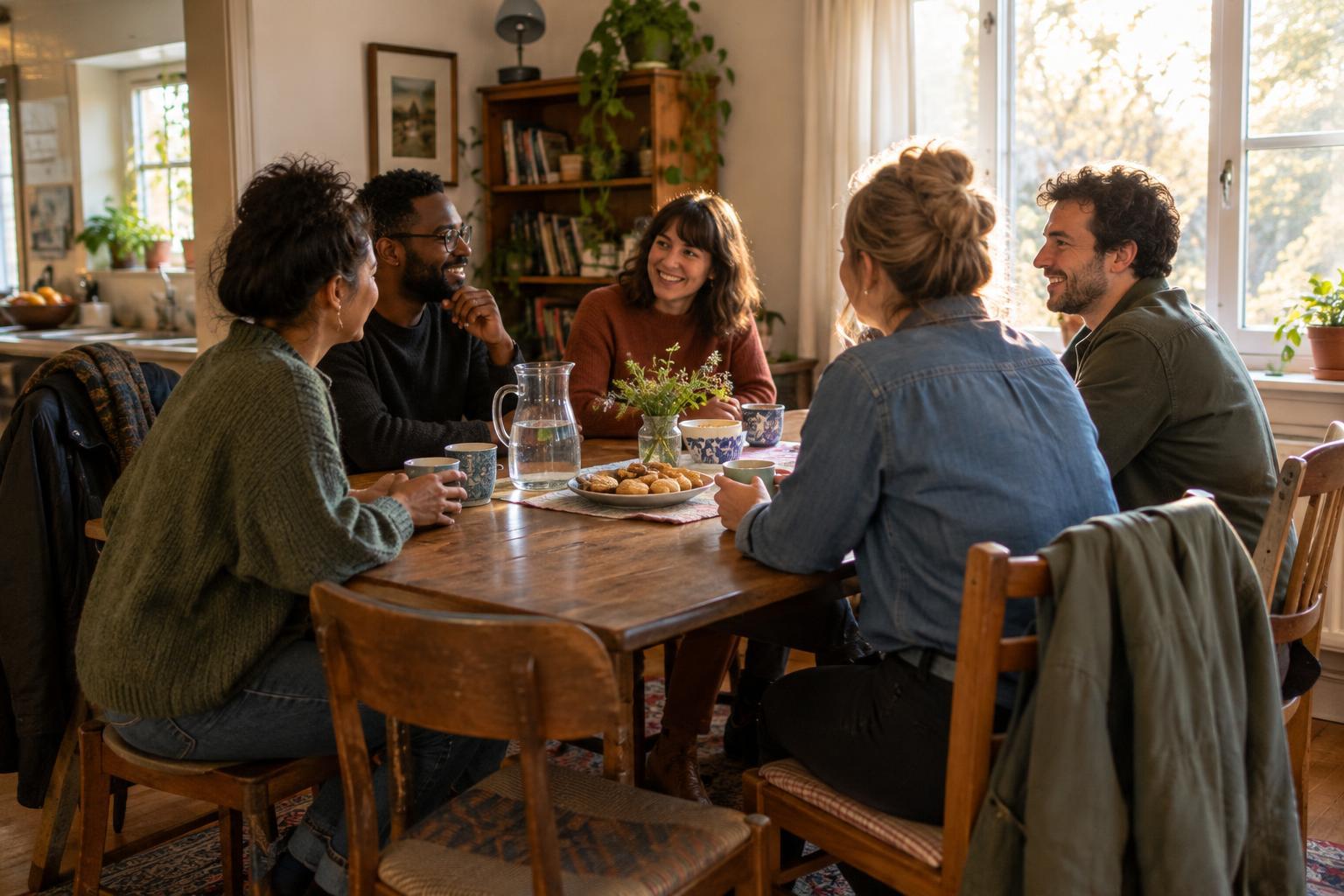
Food can be a pleasure, but it does not need to be the measure of a gathering. Toast and fruit, a pot of soup, or whatever you can prepare without rushing may be enough for the occasion. Serving one familiar thing well is often less stressful than trying to offer many choices. If you are not serving food, say so in the invitation; guests can plan accordingly.
A shared meal can also be simple, provided participation is genuinely optional. You might say, “I’ll make the main dish; bring something to share if you’d like.” That leaves room for someone who has little time, limited resources, or no chance to stop at a store. Ask about food needs when relevant, and do not make a guest explain them in front of everyone. If you cannot accommodate a need, be straightforward so the person can make a comfortable choice. Thoughtfulness is not the same as promising more than you can provide.
Give people ways into the conversation
One of the least expensive forms of hospitality is helping people feel included. Introduce guests with a little context they are happy to share, rather than listing what they do for work or putting them on the spot. A gentle question such as “How do you two know the neighborhood?” can open a conversation. It helps to have a low-pressure activity available, too: looking through a borrowed book of local photographs, working on a puzzle, or taking a short walk gives people something to do together besides making continuous small talk.
Watch for the person at the edge of the group, but resist treating quietness as a problem to fix. An offer to join a conversation is kinder than a public call for someone to speak. Likewise, allow guests to leave without a long goodbye or an apology. When the invitation has a clear end time, everyone can relax a little more, including the host.
Let the gathering be enough
A modest gathering may include mismatched cups, an interrupted story, or a snack that runs out. None of these moments cancels the welcome. People often feel most at ease when they can help in ordinary ways, whether that means carrying a glass to the sink or pulling up another chair. Accepting a small offer of help can make the gathering feel shared rather than staged.
After guests leave, notice what worked for you as well as what they seemed to enjoy. Perhaps a short visit suited your schedule, or setting out drinks before anyone arrived gave you more time to talk. Keep those lessons for next time. Budget-friendly hosting is not a test of how little you can spend; it is a way to put attention where it counts—on a clear invitation, a comfortable welcome, and time together.