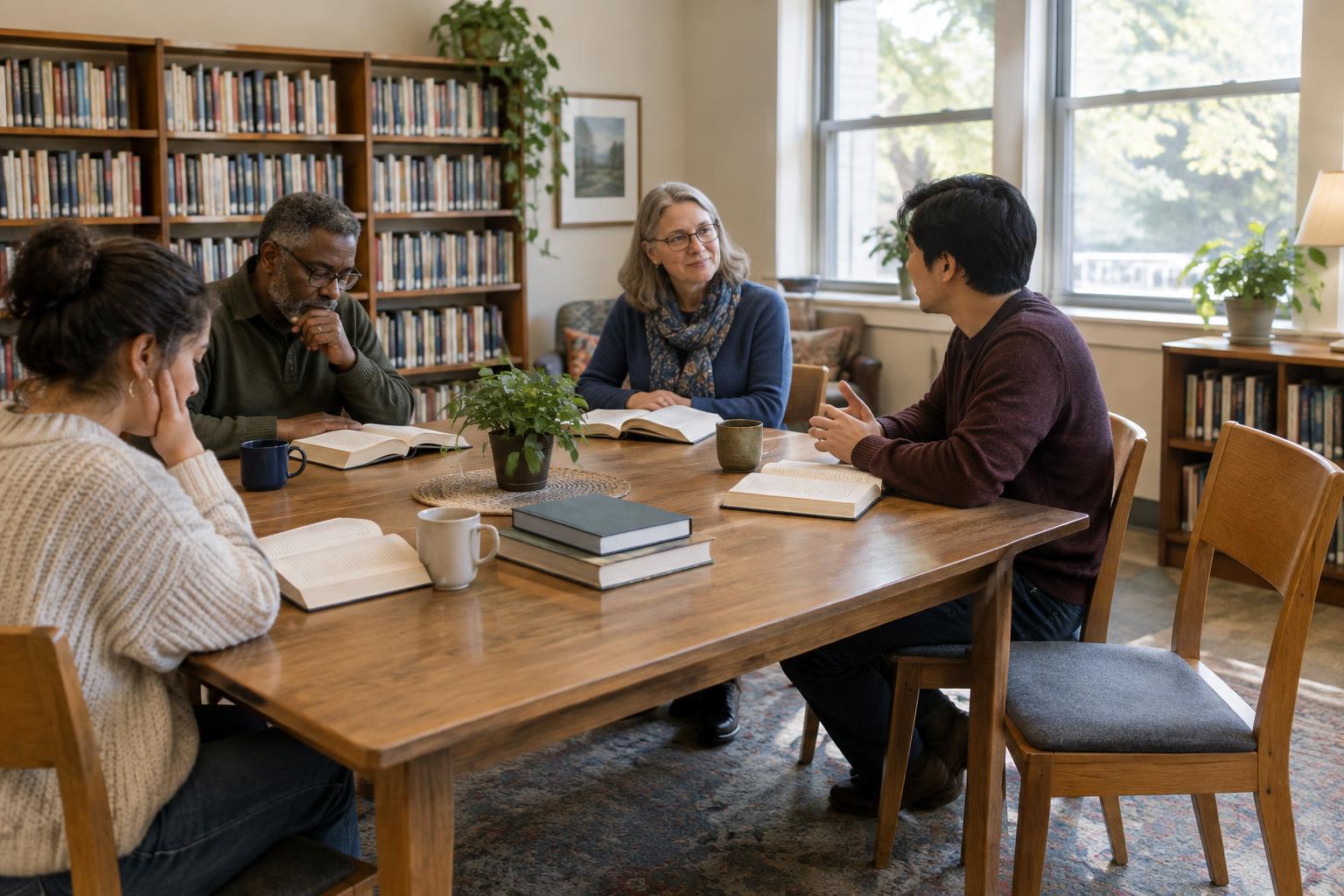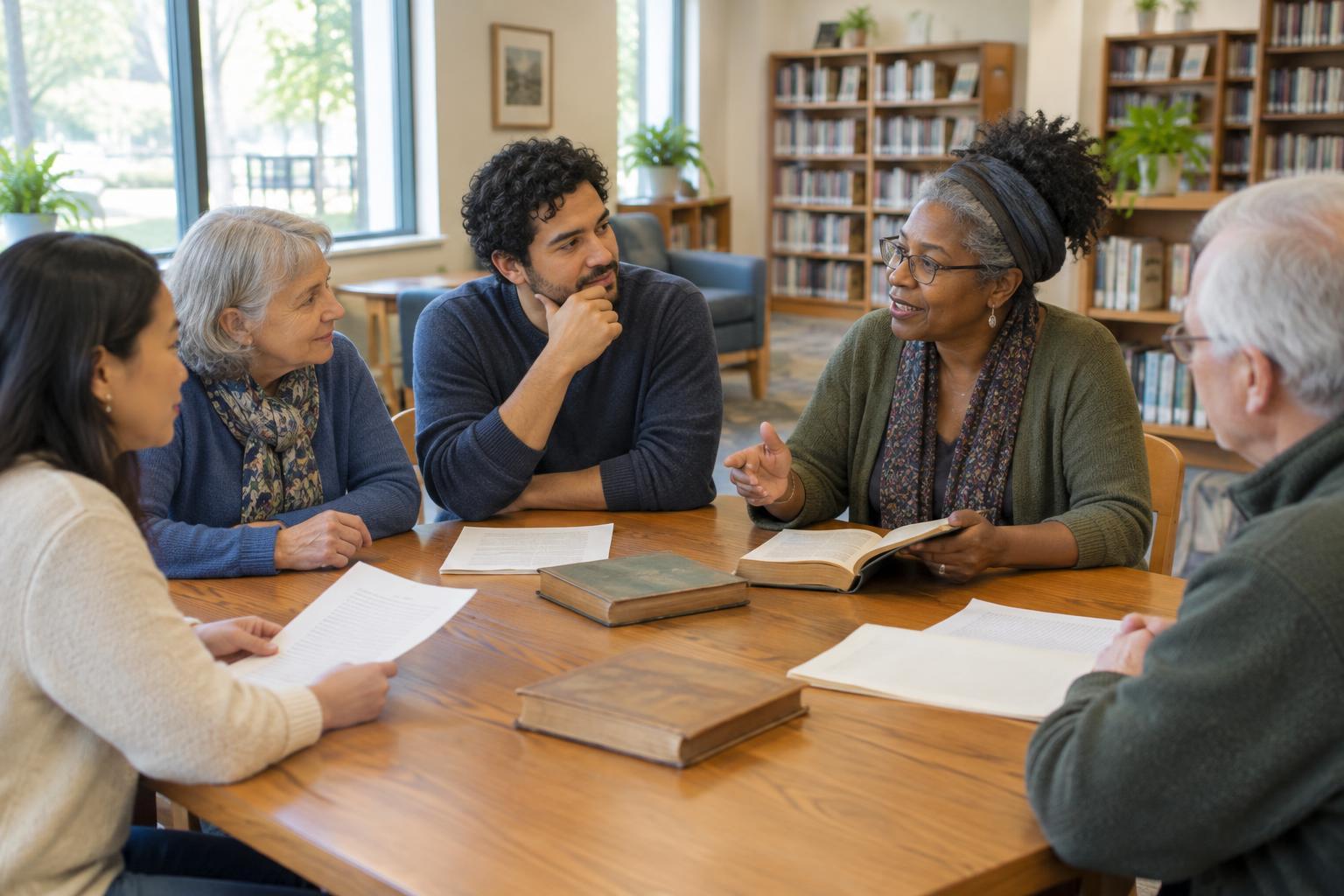
Start with the gathering, not the catalog
A community reading gathering does not need a syllabus or a room full of confident readers. A short text and a little time to talk can be enough. Before searching, decide what kind of evening you want: a quiet reading with pauses for reflection, a lively conversation, or a gathering where people take turns reading aloud. The answer will help you choose a text that fits the group rather than asking the group to fit the text.
For a first gathering, consider a poem, essay, folk tale or short story that can be read in one sitting. Look for clear language, an inviting subject and enough room for different interpretations. If participants will read the text beforehand, keep in mind that some people may prefer to listen on the day instead. A welcoming plan leaves space for both.
Understand what public domain means
A public-domain work is one that is not protected by copyright in the place where you intend to use it. That can make it easier to share copies or read from it at a free gathering. But “free to read online” is not the same as “public domain.” A website may let visitors read a copyrighted work without giving them permission to print copies or distribute it.
Copyright rules vary by country, and the status of a work can depend on details such as when and where it was published. Also check the particular version you have found. An older story may be in the public domain while a recent translation, introduction, illustration or edited edition has its own copyright protection. If you are unsure, choose a text whose rights information is clear, or ask a librarian to help you identify a suitable edition.
Search in places that show their work
A public library is a useful starting point, especially if you would like help finding shorter works or editions with readable type. Library catalogs can lead you to collections of poems, essays and stories, while a librarian may be able to suggest a text that suits your group’s interests. You can also explore digital collections that provide publication details and explain the rights status of their texts, such as Project Gutenberg or a library’s digitized collection. Availability and rights notes differ, so check the record for the item you choose.
When you find a promising piece, note its author, title, original publication information if provided, and the source of the version you plan to share. Look for a specific rights statement rather than relying on a search-result snippet or a label copied onto another site. If a collection contains several works, check the one you actually want: the collection’s formatting or added material may have different terms from the original text.
Check the copy your group will use
Read the full text before inviting others to it. A familiar title can contain dated language, unsettling scenes or references that deserve a little context. You need not avoid every challenging work, but it helps to tell participants what to expect and to choose with care, particularly when the gathering is open to all ages. Reading ahead also lets you spot scanning errors in digitized books and decide where a natural stopping point falls.
If you plan to hand out copies, use the version whose status you checked rather than pasting together text from multiple websites. Include the author, title and the source of your copy so participants can find it again. For accessibility, consider a large-print handout or a digital copy that people can enlarge. Recording the gathering or posting a reading online raises questions beyond sharing a handout in a room; check the relevant permissions before making those plans.
Make room for conversation
Send the title and a brief invitation in advance, along with a note that reading aloud is optional. At the gathering, one person can introduce the text in a sentence or two and explain how the conversation will work. You might begin with a simple question: What line stayed with you? People can respond from their own experience without needing to know anything about literary history.
If discussion slows, ask what surprised participants or whether a passage felt different when heard aloud. Let people disagree without pressing anyone to defend a personal reaction. End by inviting suggestions for the next reading, including works in genres or traditions the group has not yet explored. A thoughtful text matters, but the lasting pleasure of a community reading gathering often comes from making time to listen to one another.