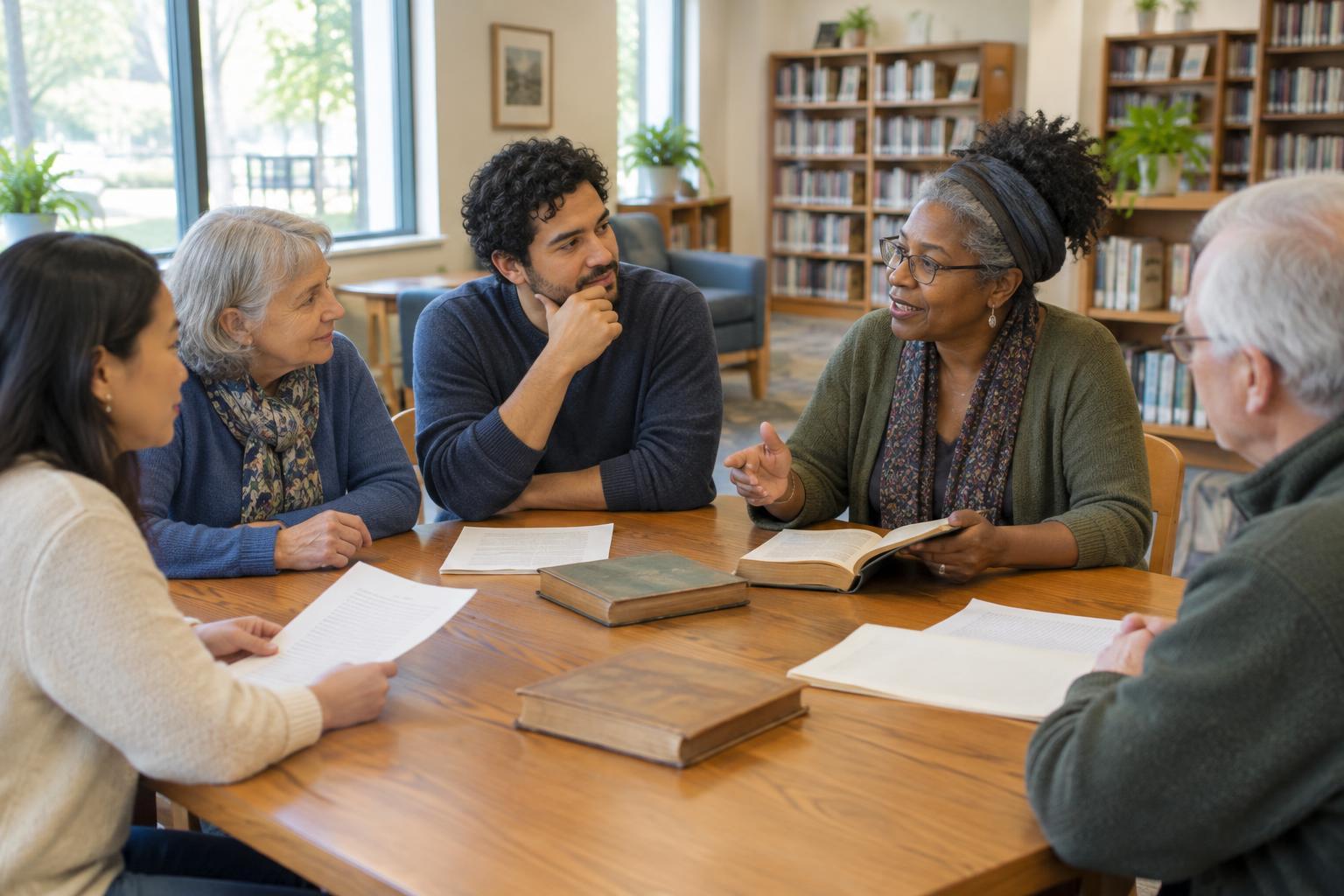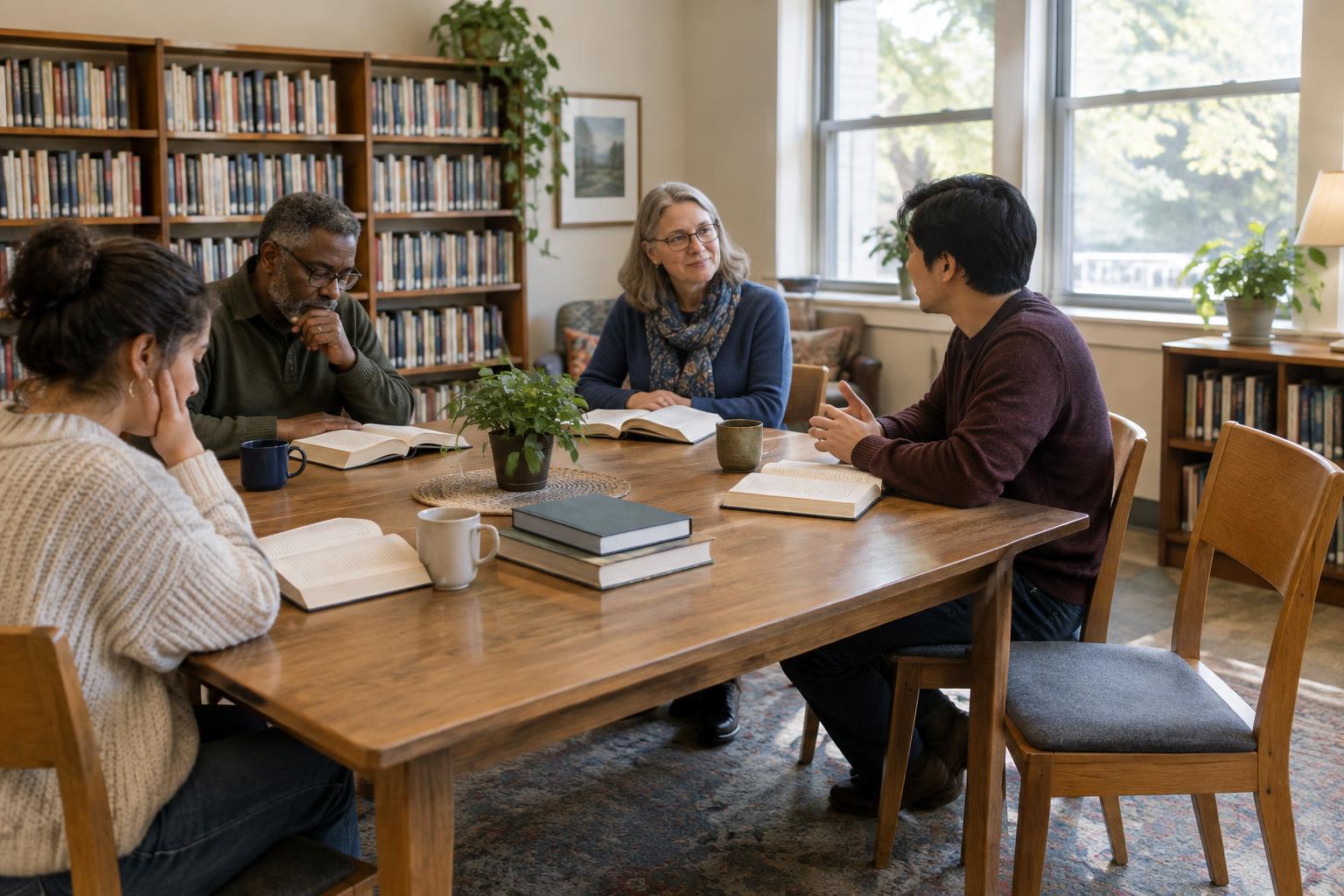
Why both kinds of reading matter
Reading alone gives us time to notice what a text brings up before anyone else offers an interpretation. We can pause over a sentence, return to a confusing passage, or admit that we do not yet know what we think. Group conversation offers something different: other readers may notice a detail we missed or understand a familiar line in an unexpected way. Neither experience needs to replace the other.
A welcoming reading group can make room for both. The aim is not to arrive with a polished opinion and defend it. It is to bring a little of our own attention to the conversation, then remain curious about what others bring. That balance can make discussion richer without turning every reading into a debate or every personal response into a public disclosure.
Begin with a small pocket of quiet
Before a gathering, consider giving readers one simple question to carry into the text: What stayed with you? Which passage would you like to hear again? What are you unsure about? A question like this offers direction without suggesting that there is a correct response. People who have limited time can still arrive with a marked sentence or a single thought.
At the gathering itself, a few quiet minutes can help everyone settle in. Participants might reread a short passage, jot down a word, or simply think. This pause is useful even when everyone has read in advance. It lets the conversation begin with the text rather than with the quickest voice in the room. Anyone who prefers not to write can reflect silently; the quiet is an invitation, not an assignment.
Use questions that open rather than test
Questions work best when they help people describe what they noticed. “What changed for you between the beginning and the end?” and “Where did you feel uncertain?” leave room for different answers. If a group is discussing a poem or an especially brief piece, reading it aloud twice may reveal shifts in tone or emphasis. For a longer work, choosing one manageable passage can keep the conversation grounded.
It helps to distinguish an observation about the text from a personal association. Someone might say, “The character avoids answering the question,” and then add, “That reminded me of a conversation I once had.” Both contributions can matter, but no one should feel required to share the second kind. A facilitator can gently return to a line on the page when discussion becomes too broad, while still thanking the speaker for the connection.
Make participation possible without pressure
Not everyone thinks best while speaking. Some people need time before responding; others prefer to listen for most of the gathering. A group can welcome these styles by allowing pauses and by making it ordinary to pass when invited to speak. A brief opening round, such as sharing one word or one passage, can help distribute the first turn, but it should never become a demand for a personal story.
When a few voices dominate, a facilitator might say, “Let’s hear from anyone who hasn’t had space yet,” then leave a real pause. When interpretations differ, asking each person which words led them there can keep disagreement attentive rather than competitive. The goal is not equal speaking time measured by the minute. It is a setting where people can contribute, listen, change their minds, or remain unsure without embarrassment.
Carry the conversation back into private reflection
A discussion need not end with a single agreed meaning. Before closing, invite people to name a question they want to keep or a passage they might revisit. They may share aloud, write privately, or simply remember it. This gives the gathering a gentle ending while recognizing that a text can continue to work on us after we leave the room.
Later, a reader might return to a note they made before the conversation and add what someone else helped them see. They may also find that their first impression still matters. Balancing private reflection with group conversation is less about dividing time evenly than about protecting a rhythm: notice for yourself, listen to others, and make space to think again. That rhythm can serve a neighborhood reading circle just as well as two friends sharing a book over a kitchen table.