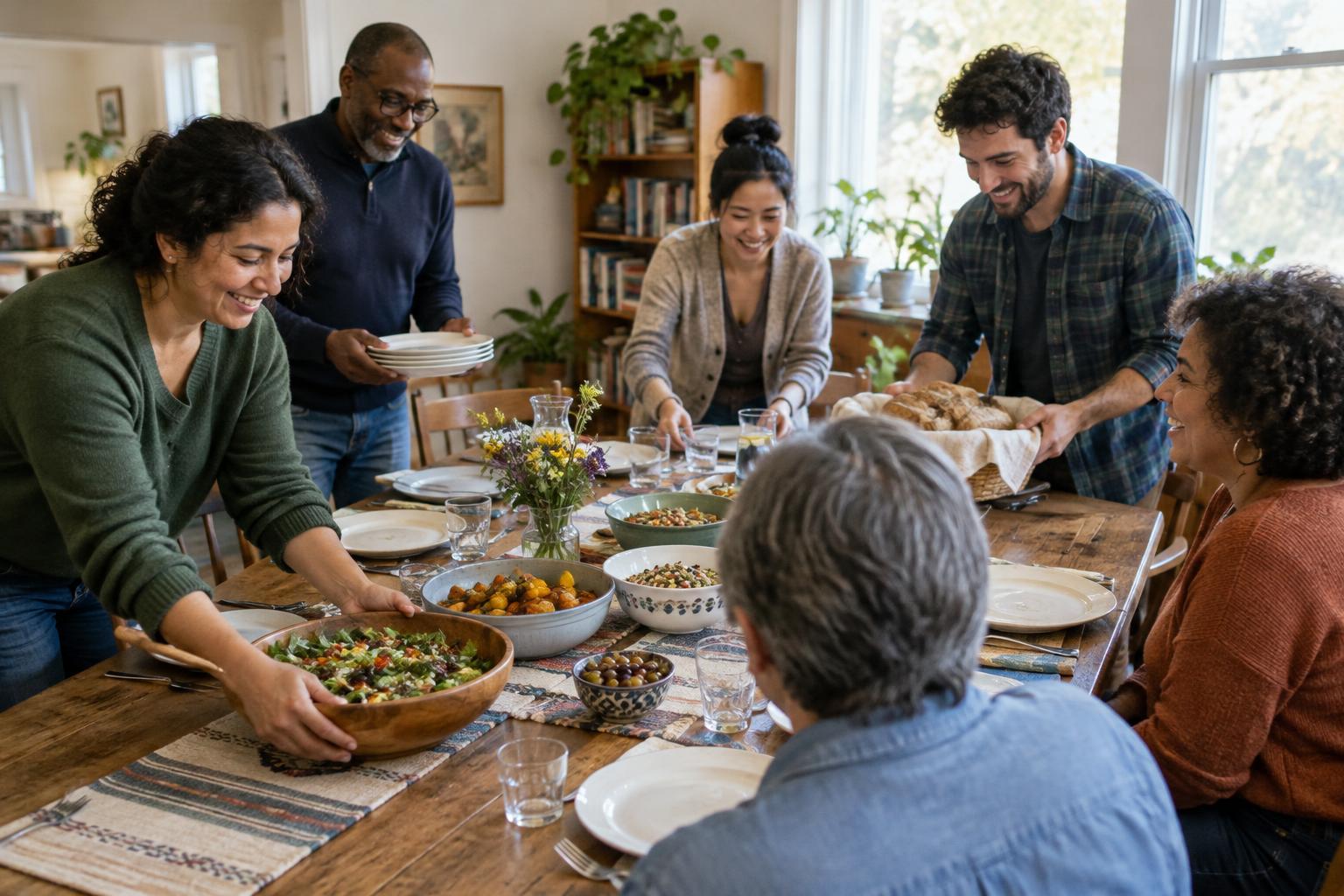
Choose a meal that welcomes help
Hosting does not have to mean producing a complete dinner. A shared meal works best when the host provides a place, a simple plan and a starting point, while guests bring what they comfortably can. Think of yourself as the person making room at the table rather than the person responsible for every dish.
Pick a format that is easy to understand. A soup supper might need one pot of soup, bread, fruit and something to drink. A baked-potato meal gives guests the option to bring toppings or a side. A sandwich lunch can be built from a few fillings and vegetables. Familiar foods make it easier for people to decide what to contribute, and a short menu keeps the table from becoming a complicated project.
Before inviting anyone, decide what you are willing to provide. That might be the main dish, plates and water, or simply the space and a warm drink. A clear limit helps you make an invitation you can enjoy fulfilling.
Invite contributions without making them a requirement
An invitation can be both specific and relaxed: “I’m making soup on Saturday evening. If you’d like to bring bread, fruit or a snack to share, that would be lovely, but please come either way.” This tells guests what is useful while making it clear that their company matters more than a dish.
Some people may have little time, limited kitchen space or no comfortable way to transport food. Offer other ways to take part, such as bringing napkins, filling water pitchers, setting out chairs or helping with cleanup. If someone asks what is needed, give them one manageable choice rather than a long list.
For a larger group, a simple sign-up list or a few direct messages can prevent everyone from bringing dessert. You do not need to coordinate every detail. Aim for enough variety to make a meal, then let duplicates be welcome.
Make the practical details easy to find
A helpful invitation includes the time, place, general meal plan and anything guests should know about the space. If seating is limited, say so and arrange to borrow chairs if possible. Let people know whether they need to bring a serving utensil with their dish. These small details spare everyone last-minute guesswork.
Ask guests to tell you about dietary needs if they are comfortable doing so, and avoid promising that every dish will suit everyone. Labels with ingredients, especially for shared dishes, can help people choose for themselves. Keep serving simple: make room for food to be set down, put plates and utensils where people can see them, and have a plan for foods that need to stay hot or cold.
You can also prepare for the ordinary gaps in a potluck menu. Keep an easy backup, such as extra bread, cut vegetables or a pantry snack, without turning it into a second meal you must cook. The goal is for people to feel fed and at ease, not to display a perfect spread.
Let guests share the work of gathering
When people arrive, point them toward a place for coats and dishes, then invite them into the room. A guest who wants to help might put out cups, slice bread or introduce two neighbors who have not met. You can accept that help without assigning everyone a job. Some guests will contribute most by sitting down and joining the conversation.
If the group does not know one another well, a gentle opening can help. You might ask how someone knows the neighborhood, which local place they enjoy visiting or what they have been reading lately. Keep the conversation open enough for people to answer briefly or simply listen. A shared meal should leave room for quiet guests as well as lively ones.
Try to sit and eat, too. If the host spends the whole meal refilling dishes and watching the kitchen, guests may feel they should be working instead of relaxing. Put water and extra utensils within reach, and trust people to help themselves.
End simply, and make the next time easier
As the meal winds down, let guests know where to put used dishes and what they should take home. Accept offers to clear the table if they are helpful, but do not make cleanup the price of attending. Leftovers can be offered to their makers first, then packed away according to what people want to keep.
Afterward, notice what made the gathering feel easy. Perhaps a familiar main dish gave everyone a starting point, or perhaps having guests bring their own serving spoons saved a scramble. Keep those useful details for another time. A shared meal does not need to become a regular event to be worthwhile; one unhurried evening around a table is enough.
The simplest hospitality often comes from leaving space for others to contribute. When the host does less alone, everyone has a better chance to take part in the meal itself.