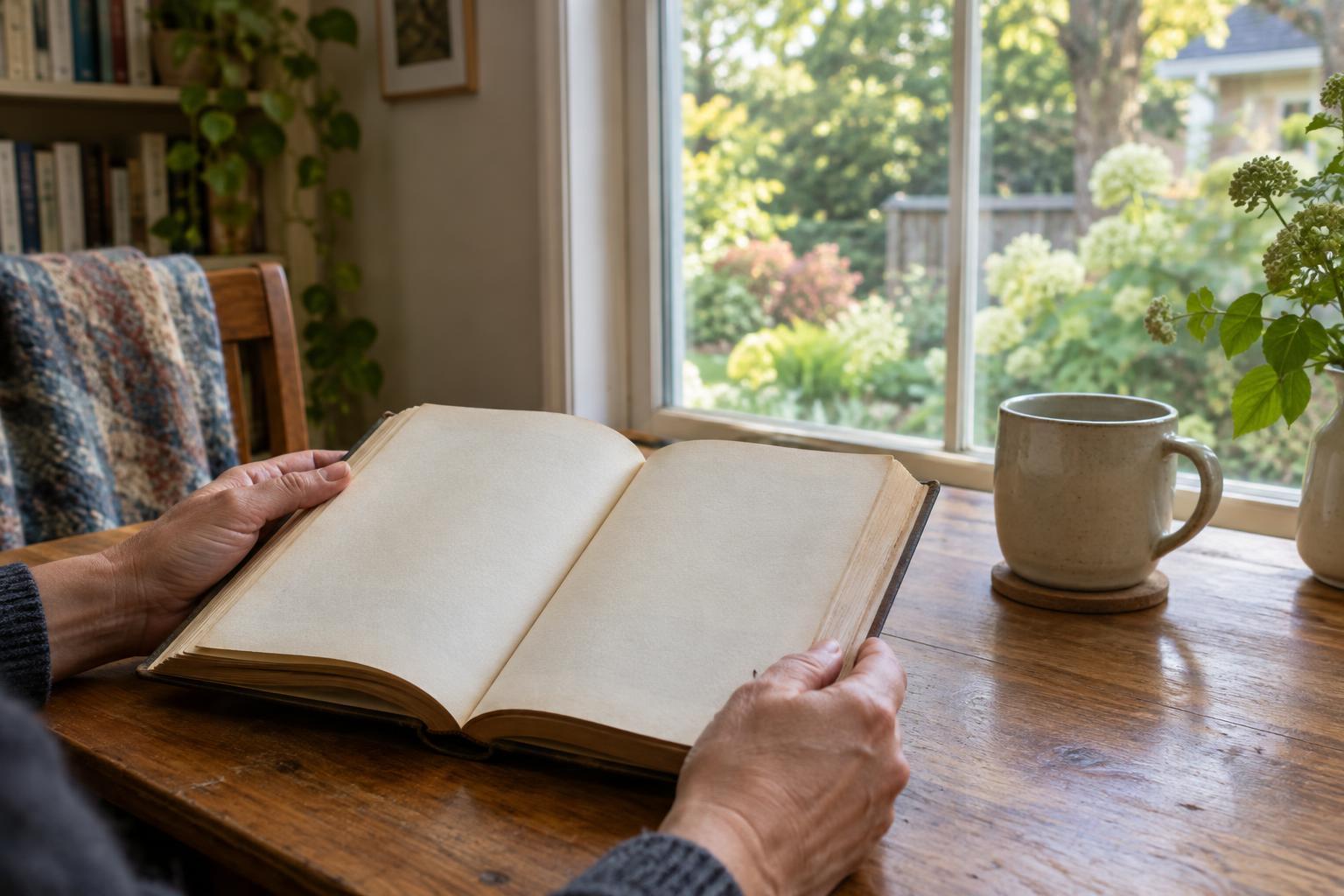
Begin with the passage you already know
A favorite poem, a paragraph from a novel, a family story or a passage from a sacred text may feel so familiar that you can almost finish its sentences. That familiarity is useful: you do not have to spend all your attention figuring out what happens next. You can slow down and listen for details that were easy to miss the first time.
Choose something short enough to read more than once in a sitting. Before you begin, make a small note about why you picked it. Perhaps it once comforted you, challenged you or reminded you of someone. You are not trying to recover exactly what you felt years ago. You are making a starting point so you can tell the difference between what you remember and what you notice now.
If the passage carries difficult memories, choose another. Rereading works best when curiosity is possible, even if the words are serious. There is no prize for staying with a text that feels overwhelming.
Read once without looking for a lesson
On the first reading, let the passage be itself. Notice its setting, speakers, images and movement. Who is present? What changes from the opening line to the last? Which words are repeated? These questions keep your attention close to the page before you decide what it means for your life.
Then read it again, perhaps aloud. Hearing the rhythm can reveal a pause or emphasis you had skimmed past. Mark one sentence that draws you in and one that resists easy understanding. You need not explain either choice yet. If writing in a book is not comfortable, jot the phrases in a notebook or simply keep them in mind.
Try not to rush toward a single takeaway. A familiar passage may hold humor alongside grief, or tenderness alongside disagreement. Giving those qualities room is part of reading it carefully.
Ask what the text says and what you bring to it
After reading, separate two kinds of observation. First, ask, “What is on the page?” Look for words, actions or images you can point to. Then ask, “What am I bringing to the page today?” Your answer might involve a recent conversation, a responsibility you did not have before or a concern that has become more important to you. Neither question cancels the other. Together, they help you see why the same lines might land differently.
A simple two-column note can help. Under “In the passage,” write a few concrete details. Under “In my life,” write the associations or questions those details raise. For example, a scene of welcome might prompt you to notice exactly who opens the door in the story. It might also lead you to think about how welcome feels when you are the newcomer rather than the host.
Be gentle with earlier versions of yourself. You may find that you once overlooked a character or read a difficult line with more certainty than you would now. That does not make your earlier reading worthless. It gives you a chance to ask what experience has taught you, and what you still want to consider.
Let the new reading stay open
Before you put the passage away, write one sentence beginning, “This time, I noticed…” Follow it with a question rather than a conclusion if that feels more honest. You might wonder why a particular voice has become more noticeable or why a once-comforting line now feels complicated. A question can be a meaningful result of careful reading.
If you share the passage with a friend or reading group, invite observations before interpretations. Ask which detail each person noticed and whether it has changed for them over time. People can encounter the same words from different places in life. Listening to those differences can deepen a conversation without requiring everyone to agree.
Keep your note with the passage if you can. When you return in another season, it may show you not only how your understanding of the words has shifted, but also which concerns have remained steady. The aim is not to find a brand-new meaning every time. Sometimes the most valuable discovery is that a line still matters, though you now understand a little more about why.