Make the first few minutes easy
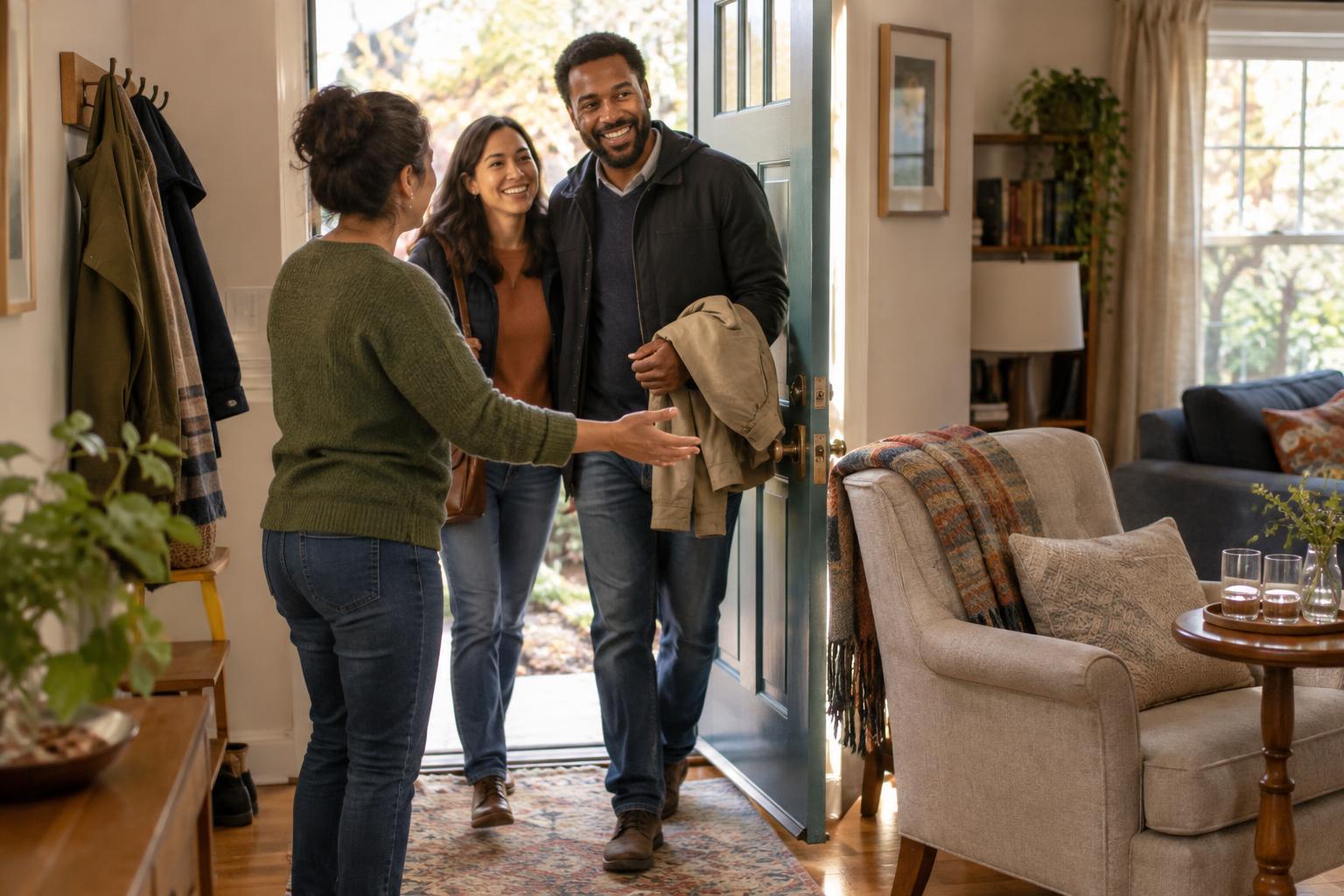
The moment a guest arrives can feel surprisingly busy. Someone is finding the doorbell, carrying a bag or wondering where to stand. You do not need a perfect entrance to make that moment welcoming. Open the door, greet your guest by name if you know it, and give them a moment to come inside before launching into a conversation or a tour.
A simple invitation helps: let them know where they can put a coat or bag and where everyone is gathering. If shoes are usually left by the door, say so kindly and have a convenient place for them. If guests may keep their shoes on, make that clear too. Small directions spare people from having to guess at your household routines.
Offer a place to settle
Before attending to food or last-minute tasks, show guests where they can sit. Clear enough space that they do not have to move a stack of papers or wonder whether a chair is in use. In a group, introduce people with a little context when it feels natural: “This is Maya, who also enjoys gardening” gives two people an easy opening without putting either on the spot.
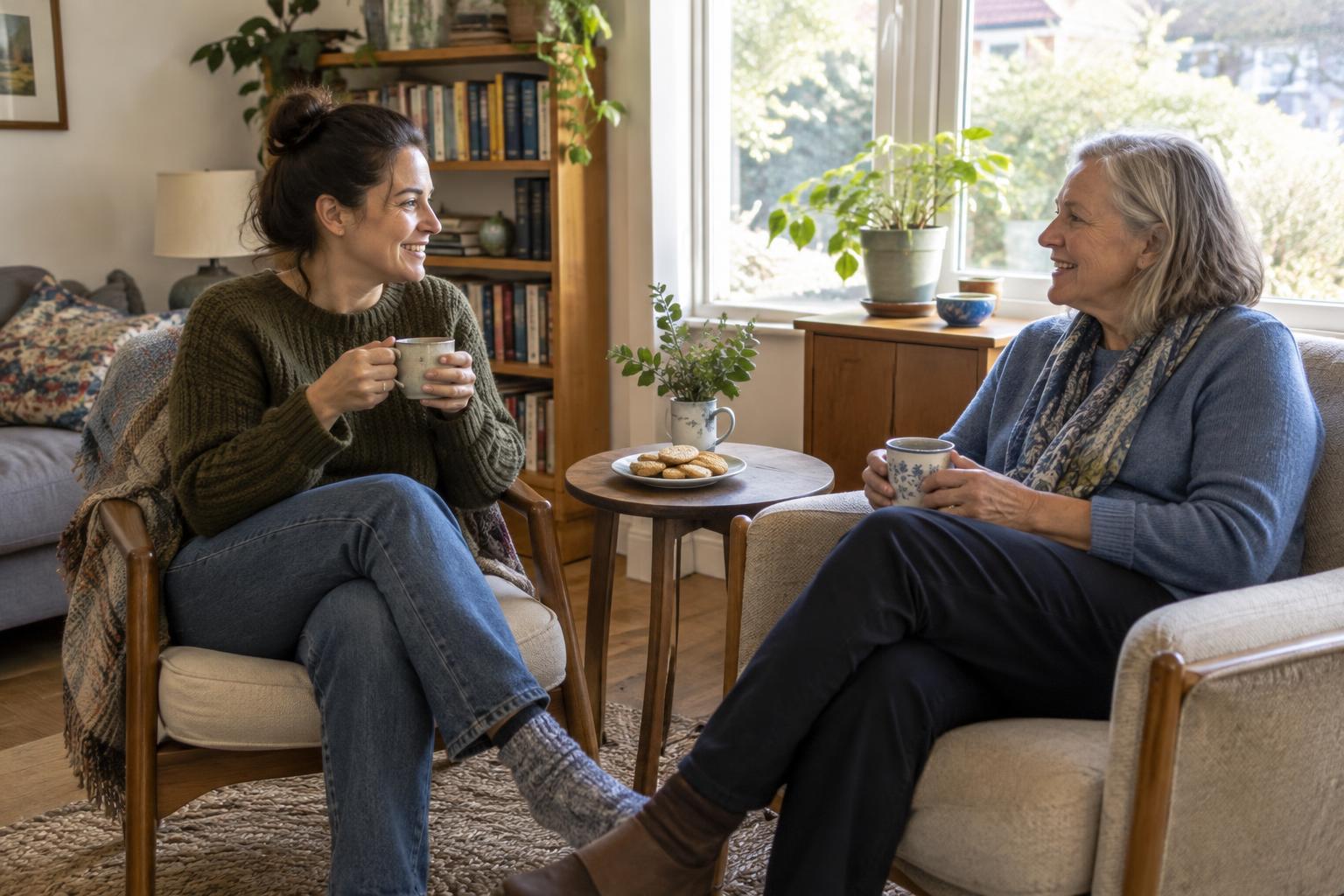
Think about comfort as a choice rather than a single arrangement. A guest may prefer a chair with a back, a quieter spot or a place away from a draft. You can ask, “Is this seat comfortable, or would you rather sit over here?” Then accept the answer. If someone needs a different arrangement, adjusting without making a fuss is often the most helpful response.
Share the useful details
Guests often feel more at home when they know the basics. Point out the bathroom, where to find drinking water and whether they should help themselves to anything. If a pet is likely to greet them, mention it before the animal approaches. You can also say when you expect to eat or what the loose plan is for the visit, especially if people have traveled or have another commitment later.
Offer a drink without making the choice complicated. “Would you like water, tea or something else?” is enough. If you are serving food, asking ahead about dietary needs is considerate; if that did not happen, describe what is available and let guests choose. There is no need to draw attention to what someone eats or declines. Hospitality works best when an offer feels like an offer, not an obligation.
Leave room for different social rhythms
Not everyone arrives ready to talk at the same pace. Some guests enjoy lively conversation at the door; others appreciate a few quiet minutes to take off a coat, wash their hands or get oriented. Notice their cues and allow the visit to warm up naturally. An easy question about their journey or a shared interest can start a conversation without demanding a detailed answer.
You also do not have to entertain every minute. If you need to finish something in the kitchen, tell guests what you are doing and when you will rejoin them. Offer a comfortable place to wait or invite them to come along, without expecting them to help. Clear, relaxed communication is kinder than repeatedly apologizing for an ordinary home in the middle of an ordinary day.
Keep the welcome generous and manageable
A comfortable arrival begins before the door opens, but preparation can stay modest. Check that the path into your home is clear, the bathroom has what guests need and there is somewhere to set a drink. If parking or finding the entrance might be confusing, a brief note beforehand can prevent an awkward start. These practical touches usually matter more than decorations or a complicated menu.
Your own ease is part of the atmosphere. Choose preparations you can manage, and be honest about anything guests should know, such as a noisy pet or a room that is unavailable. People do not need you to perform a flawless version of hosting. They need a welcome that makes it clear where they can go, what they can do and that they are free to be themselves.