Start with a place and a purpose
A harvest display can welcome people to a neighborhood gathering, brighten a shared porch or mark the season in a community room. Before collecting anything, decide what the display is for and how long it will stay up. A one-day event calls for a different plan than a display that will sit outdoors for several weeks. Ask whoever manages the space for permission, and check where people need room to walk, sit, open doors or use ramps.
Choose a spot that people can enjoy without having to step into the arrangement. A table against a wall, a wide porch corner or a designated patch of ground may work better than the middle of a busy path. Note whether the spot gets rain, wind or strong sun. This helps you decide what belongs there and how often someone will need to check it.
Invite contributions without making shopping the goal
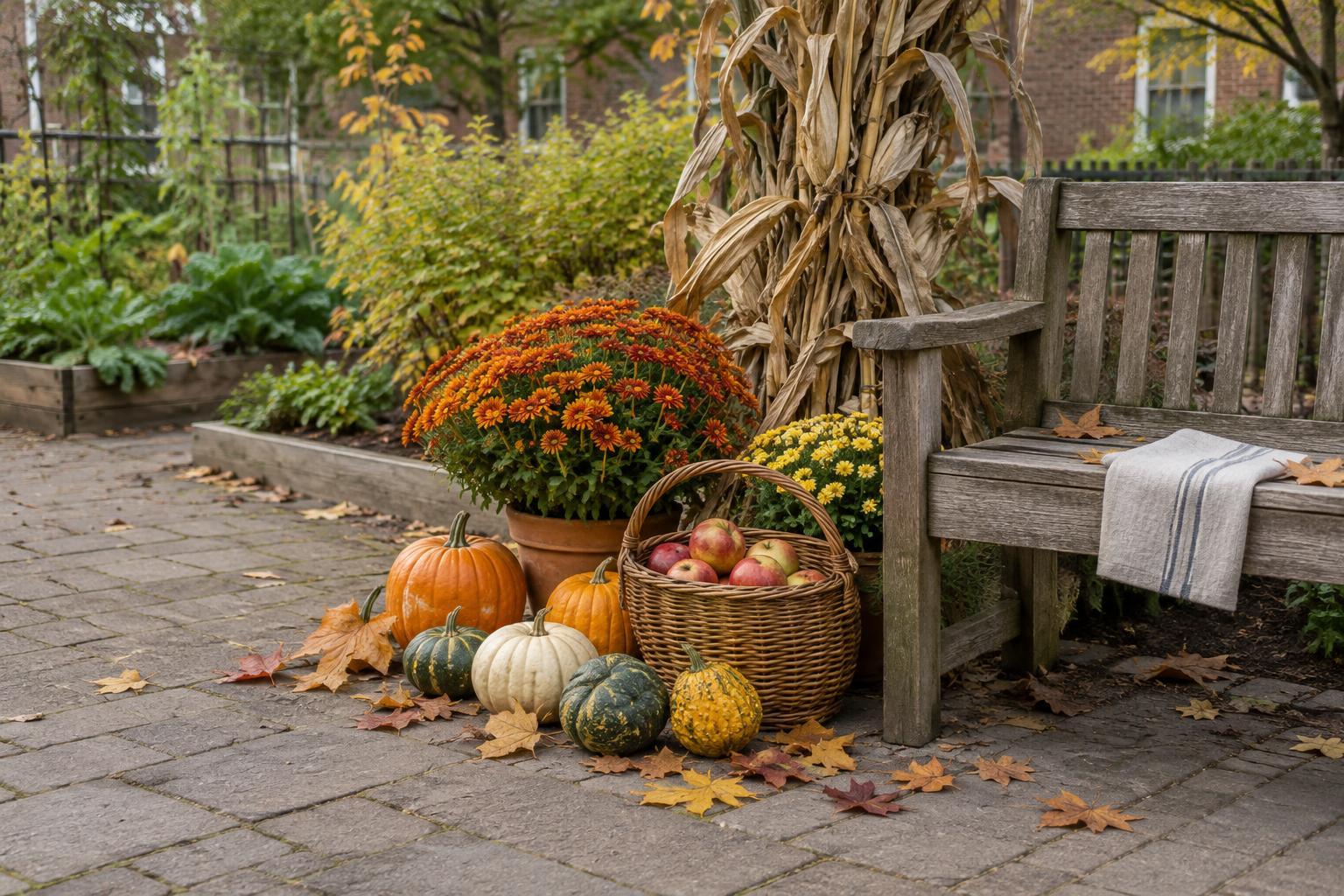
Ask neighbors what they already have or grow: pumpkins, gourds, late-season flowers, dried seed heads, baskets, crates or a sturdy cloth. Make it clear that small contributions are welcome and that nobody needs to buy something. A few carefully chosen pieces can say more than a crowded collection. If you hope to use produce from a garden, ask the grower directly rather than assuming that anything left outside is available.
Keep a simple list of offers and mark which objects are loans. For borrowed items, record the owner’s name, a way to reach them and any handling requests. Agree on a return date before the display begins. If several people offer similar pieces, thank them and choose only what fits the space; it is easier to care for a modest display than to find room for everything.
Build a display that is easy to see and navigate
Start with a stable base, such as a sturdy table or low crates that cannot tip. Arrange larger pumpkins or baskets first, then add smaller gourds, branches or flowers for contrast. Varying heights can make the display interesting, but keep heavy items low and avoid stacking anything that could roll or fall. Secure lightweight cloth and decorations if the display is outdoors, and skip loose straw where it may scatter or become slippery.
Leave walking routes clear and make sure the arrangement does not hide signs or block seating. A display need not be touchable to be welcoming, but it should be visible from more than one height when possible. A short, plain-language sign can explain that the items were grown or lent by neighbors. Ask contributors how they would like to be acknowledged; some may prefer a general thank-you rather than having their names displayed.
Plan for care, weather and food
Assign one or two people to check the display while it is up. They can straighten borrowed pieces, remove damaged produce and bring vulnerable items inside before rough weather. If the display is outdoors, avoid anything that may spoil quickly or attract unwanted attention from animals. Keep electrical lights out of the plan unless the site has an approved, safe setup; daylight and natural color can do the work on their own.
Decide in advance whether any produce is meant to be eaten. Decorative items should not be presented as food for visitors, particularly after days outdoors or repeated handling. If contributors want edible items to reach people, arrange that separately before the display is built, so usable produce can stay clean and be handled appropriately. Clear expectations help prevent waste and awkward last-minute decisions.
Take it down with the same care
Choose a takedown date and tell volunteers when help will be useful. Sort borrowed pieces first, using the list made at the start to check that each one goes back to its owner. Shake out cloths, wipe baskets if needed and pack fragile items with care. Ask owners before cleaning anything that might be damaged by water or a cleaning product.
Then decide what to do with the remaining natural materials. Depending on their condition and local arrangements, they may be suitable for a compost collection, a home garden or another approved use. Leave the space as you found it, and send contributors a brief thank-you. The display may last only a short while, but the habit behind it—sharing what is on hand and looking after it together—can carry into the next season.