Start with a small, clear plan
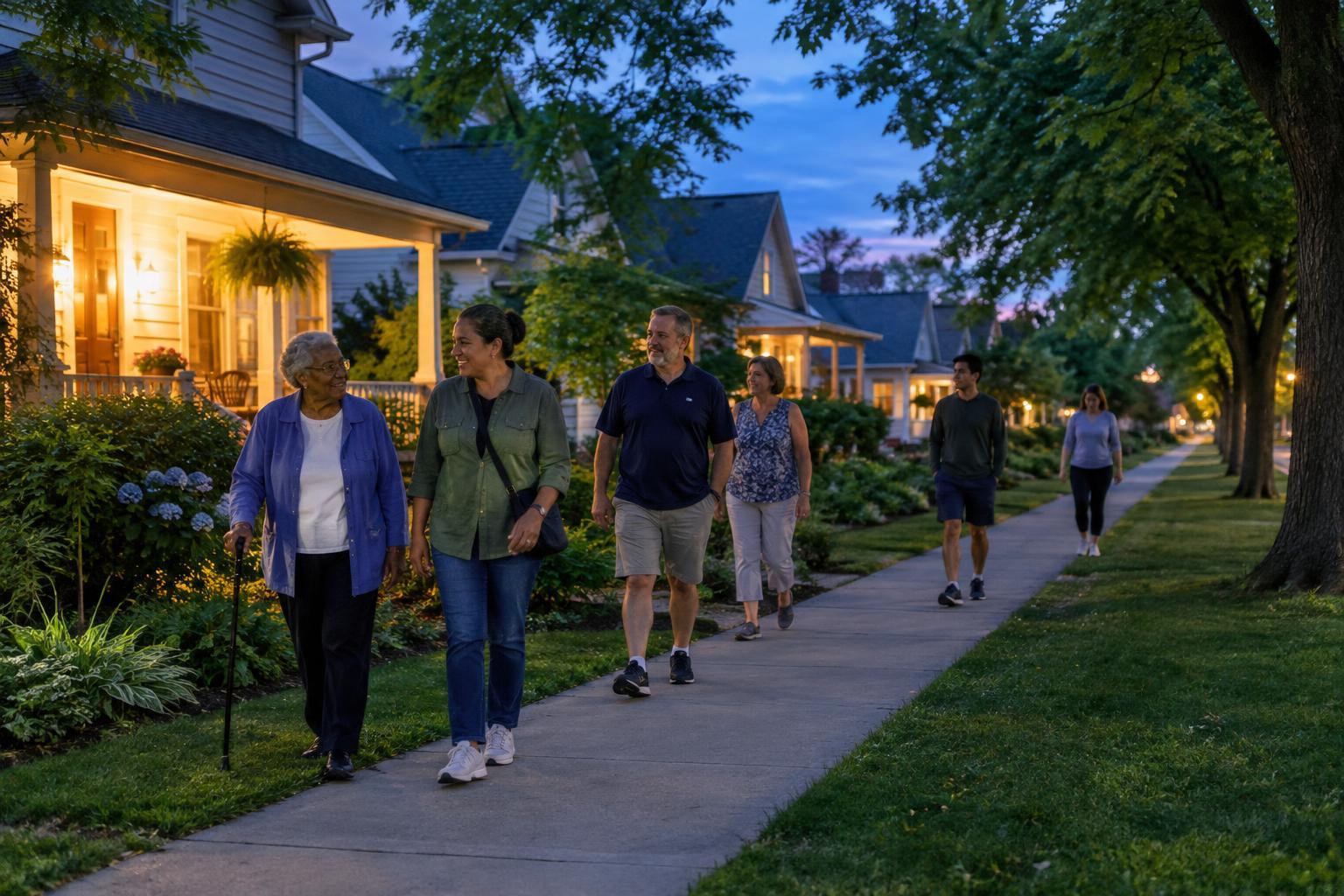
A porch-light stroll is a neighborhood walk with a little extra intention. Households along the route may choose to turn on a porch light, sit outside to say hello, or simply enjoy seeing neighbors pass. Nobody needs to decorate, host, or even be home. The point is to share a pleasant evening, not to put anyone’s porch on display.
Choose a short route that you can walk ahead of time. Look for continuous sidewalks or other suitable walking paths, straightforward crossings, and a place where people can gather without blocking an entrance. A loop is convenient, but an out-and-back route works if there is an obvious turning point. Pick a start time when the day is cooling down, and estimate how long the walk will take at an unhurried pace. A clear beginning and end make it easier for people to decide whether to join.
Invite neighbors without creating obligations
Keep the invitation simple: share the meeting place, start time, approximate route, expected duration, and what to do if the weather changes. Explain that participating households can switch on a light if they wish, but the walk is open to everyone whether or not their home is on the route. People might join for one block, greet walkers from a chair, or skip the event altogether.
If you hope to pause outside particular homes, ask those residents first. Do not assume that a lit porch is an invitation to enter a yard, take photos, or ring the bell. You can also ask whether anyone would like to help welcome walkers at the start or bring up the rear. A few clear roles are more useful than a complicated sign-up sheet, and they leave room for a neighbor who decides at the last minute to come along.
Make the route comfortable for more people
An evening walk should be easy to understand and easy to leave. Let people know about steps, steep stretches, uneven pavement, or long gaps without a place to rest. If a fully accessible route is not available, say so plainly rather than promising that everyone can use it. Consider a shorter option or a stationary gathering point where neighbors can still take part in the conversation.
Porch lights add warmth, but they do not replace attention to the path. Encourage walkers to bring a small light for dim spots and to wear something visible. Stay together at crossings, use designated crossings where available, and keep driveways and walkways open. Children should stay with their caregivers, and dogs should be leashed if they come along. It is fine to turn back early; a welcoming stroll should not depend on everyone completing the same distance.
Leave space for conversation and quiet
You do not need a program for every minute. At the gathering point, briefly explain the route, identify any planned stops, and remind people to respect homes and gardens. Then let the walking do its work. A gentle opening prompt can help, such as asking what people enjoy about summer evenings in the neighborhood. Anyone who would rather listen can simply walk.
Keep stops brief so the group does not crowd a porch or sidewalk. If a resident has offered to share a story about a garden, an old neighborhood custom, or a favorite summer memory, let that be a gift rather than a required performance. Avoid amplifying music or calling out to households that have not opted in. The best pace gives neighbors time to notice one another while allowing nearby homes their usual evening peace.
End simply, and make the next stroll easier
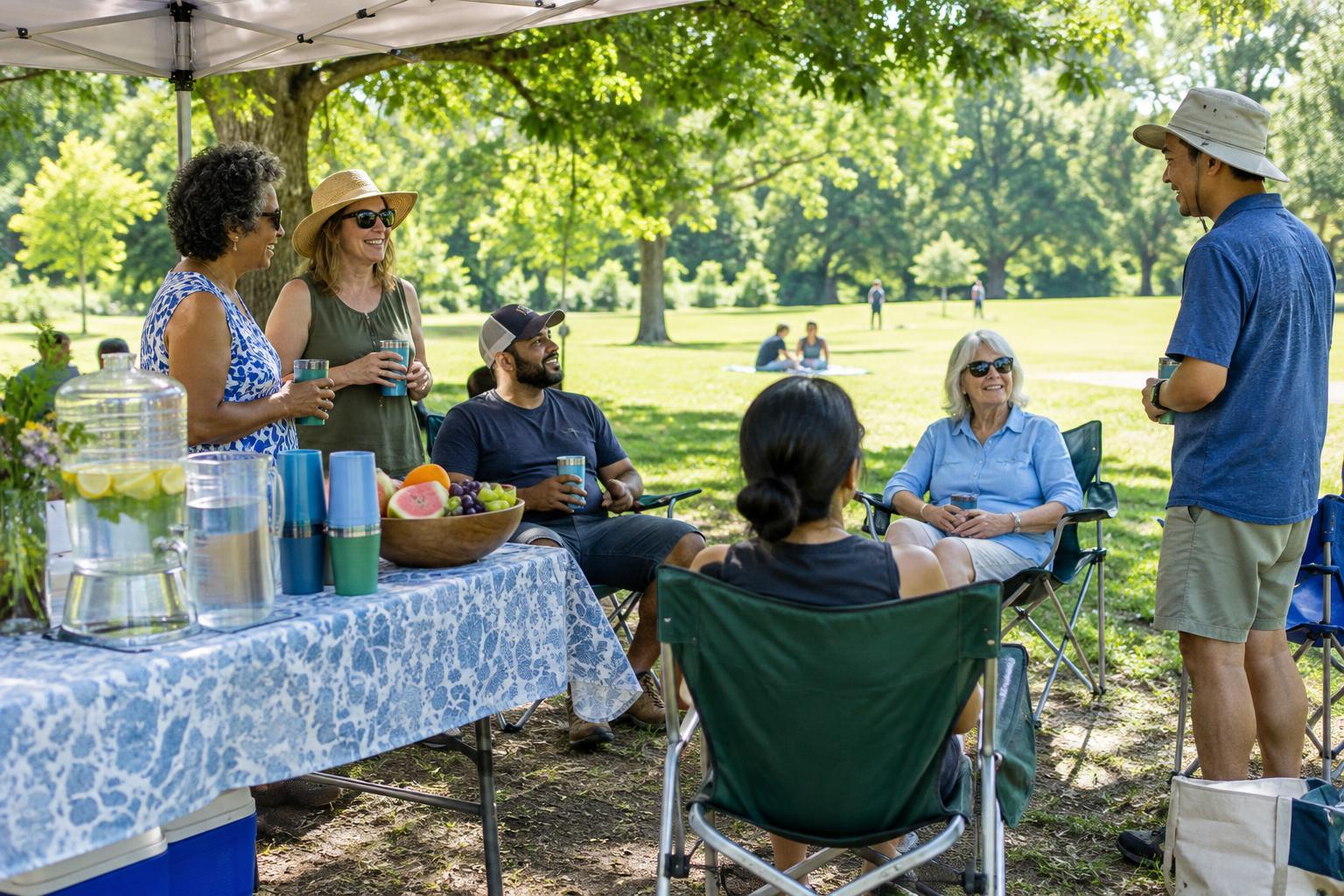
Finish where people can say goodbye without lingering in the street. Water is a thoughtful extra, but refreshments are not necessary. If you do offer anything to eat, keep it optional and make ingredients easy to identify. Carry away any cups or other supplies, and leave the gathering place as you found it. A rain or storm plan can be as simple as postponing and sharing the change through the same channels you used for the invitation.
Afterward, thank anyone who helped, including neighbors who welcomed the group from home. Ask for practical feedback: Was the route easy to follow? Was the timing comfortable? Were there places where the group crowded the path? A porch-light stroll can remain a one-time pleasure or become a modest seasonal tradition. Either way, its success lies in making it easier for neighbors to share an ordinary summer evening on their own terms.