Plan for comfort before choosing the decorations
A summer celebration might center on a picnic, a neighborhood craft table, or an afternoon of shared food. Whatever the occasion, treat comfort as part of the invitation. Walk through the space at the time the gathering will take place. Notice where shade falls, whether people can sit in it, and how far guests must go to reach water or a cooler place to rest. A spot that feels pleasant in the morning may offer little relief later in the day.
Make a simple plan for changing conditions. If the gathering can move indoors, identify that space in advance and let helpers know when to use it. If moving is not possible, consider a shorter event or a cooler time of day. Give guests an easy way to hear about a change of plans. Flexibility is kinder than expecting everyone to stay outdoors simply because the tables are already set.
Put shade where people will actually spend time
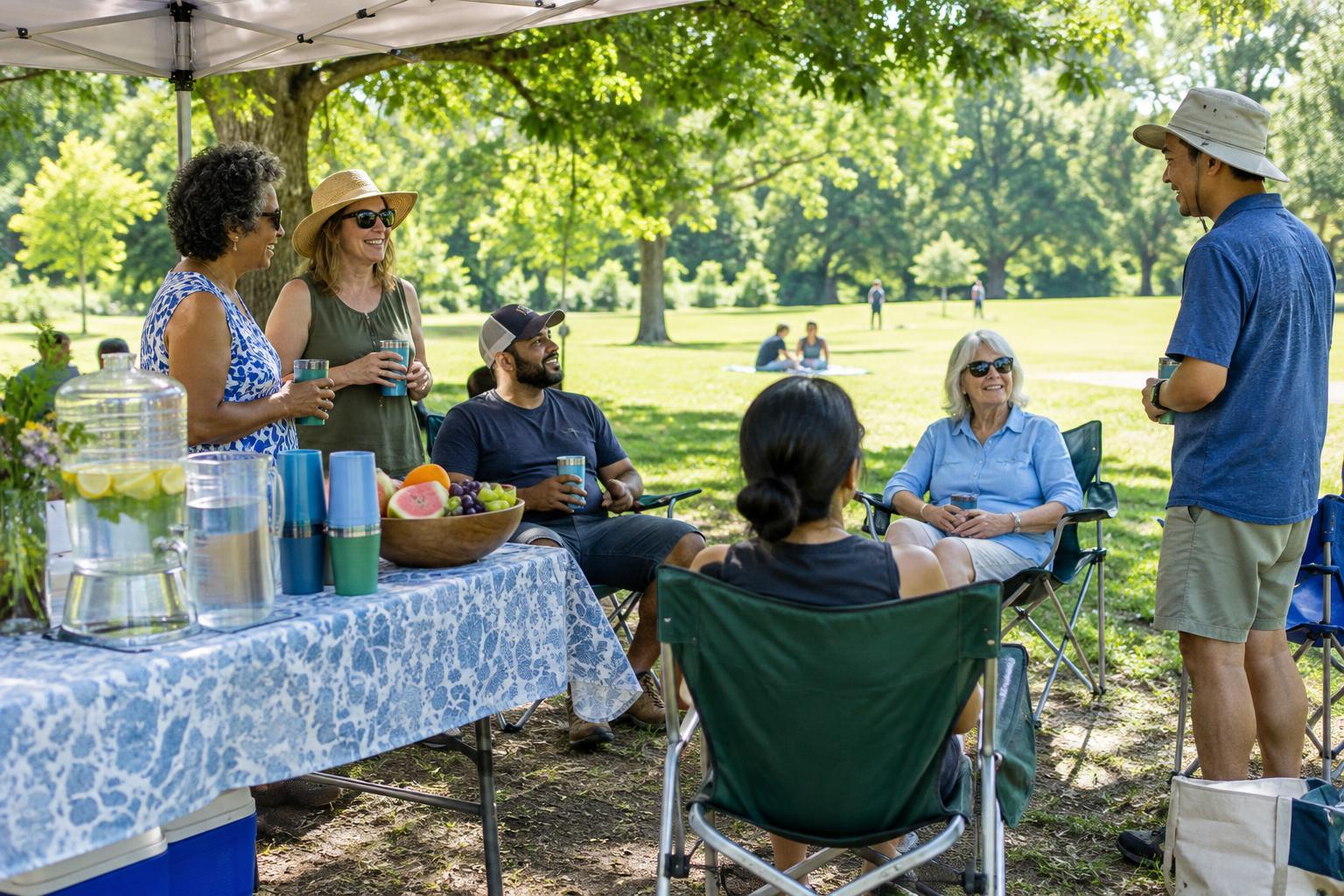
Shade is most useful when it covers the places where people pause: seating, food lines, children’s activities, and volunteer stations. Look for existing trees or a covered porch, then add suitable canopies where needed. Follow the setup instructions for any temporary shelter and secure it for the site’s conditions. Leave clear paths between shaded areas so guests can move without weaving around cords, tent legs, or supplies.
Offer seating within the shade rather than assuming everyone is comfortable standing. A few chairs near an activity make it easier for someone to join without committing to a long stretch in the sun. If the shaded space is limited, arrange activities so people can take turns and step away freely. Keep in mind that shade can make a gathering more comfortable, but it does not remove the need for water and breaks.
Make water easy to find and use
Place drinking water where guests will notice it when they arrive, not behind a food table or across the grounds. If the gathering is spread out, more than one station may be helpful. Set out cups or encourage people to bring refillable bottles, and ask a volunteer to check supplies regularly. A clear sign can spare newcomers from having to ask whether the water is meant for everyone.
Think about the small barriers that can make a water station less useful. Can someone reach the dispenser from a seated position? Is there a stable surface for setting down a cup? Is the route easy to navigate? Offer water alongside other refreshments rather than relying on guests to choose among sweet drinks or to bring their own. People’s needs vary, so avoid prescribing how much anyone should drink; focus on making water readily available.
Build breaks into the celebration
A relaxed schedule gives guests permission to care for themselves. Keep games, performances, and volunteer shifts short enough that people can return to shade and water without feeling they are missing the main event. Consider rotating helpers who are serving food or managing activities, especially if their tasks keep them in sunny areas. A simple announcement that anyone may rest or leave early can make the gathering feel more welcoming.
Some guests may be more affected by heat than others, and you cannot tell what someone needs by looking at them. Invite people to choose where to sit and whether to participate, without asking them to explain. Make sure helpers know where the cooler resting area is and how to get assistance if someone seems unwell. If a person appears seriously ill or is not responding normally, seek emergency help rather than waiting for the next scheduled break.
Let hospitality include a change of plans
Before guests arrive, give a few volunteers distinct, manageable roles: checking water, keeping paths clear, watching the shade as it shifts, and sharing schedule changes. No one needs to manage every detail alone. As the event unfolds, pay attention to the space as well as the program. Empty shaded chairs may mean they are too far from the activities; a line at the water station may mean it needs another table or more cups.
The goal is not a perfect outdoor event. It is a gathering where neighbors can take part at their own pace and where changing course is treated as sensible, not disappointing. When shade, water, and rest are easy to find, people have more room to enjoy the conversation and traditions that brought them together.