Make the purpose clear before you meet
Once a community event is over and the tables are put away, it is tempting to move straight on to the next project. A brief debrief gives volunteers a chance to notice what worked while the details are still fresh. Its purpose is not to grade anyone’s performance. It is to learn which arrangements helped people do their tasks, which arrangements got in the way and what should change next time.
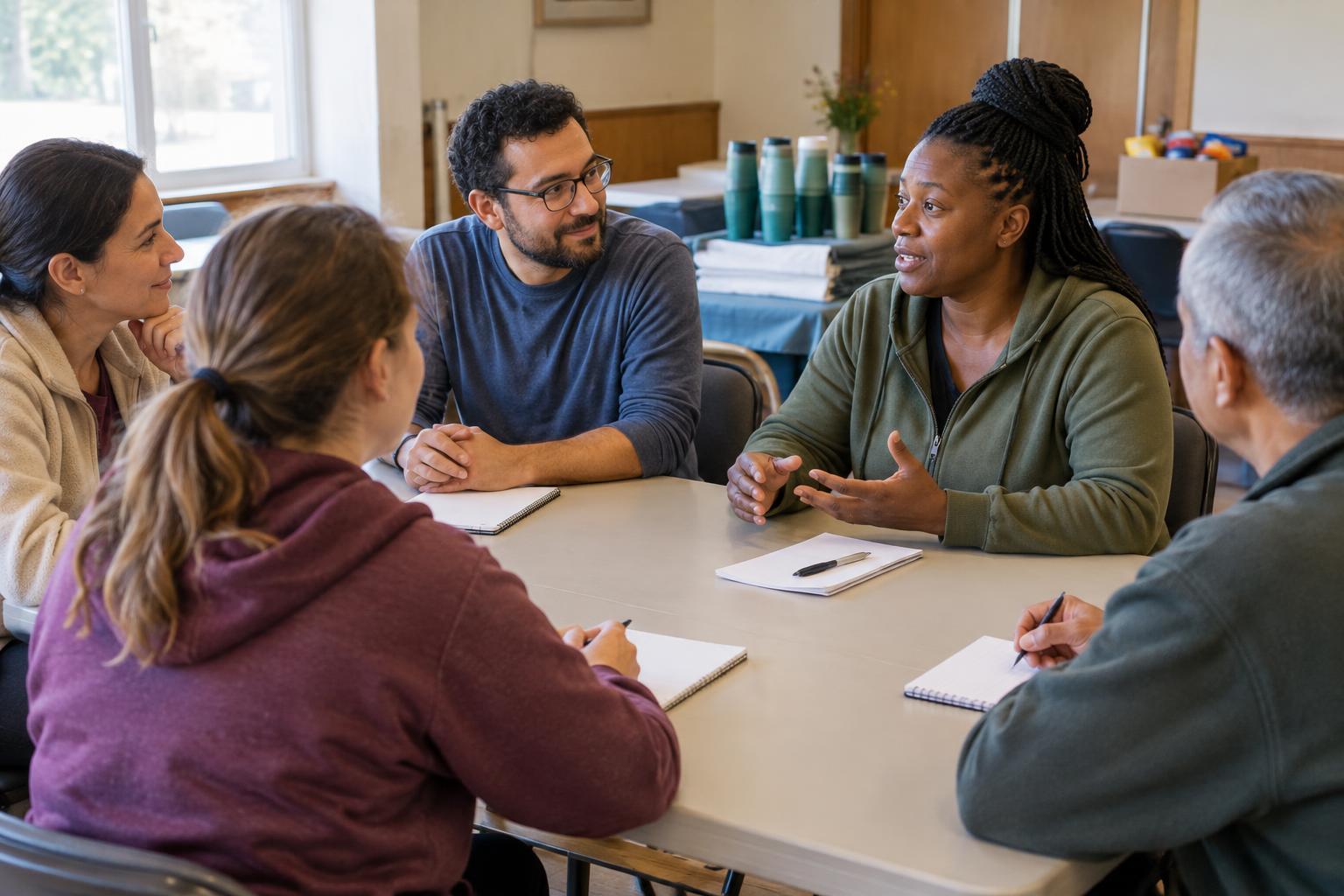
Keep the invitation modest. A conversation of twenty or thirty minutes may be enough for a small event. Tell volunteers what you hope to cover and when the conversation will end. If people cannot attend, offer a simple way to share a thought afterward. Make participation welcome rather than mandatory; someone who has already given their time may need to head home.
Start with the work, not with blame
Begin by thanking people for the specific work they contributed, including preparation and cleanup that others may not have seen. Then ask a few consistent questions: What made your task easier? Where did you have to improvise? What information would have helped you sooner? Questions about the work invite more useful answers than asking whether the event was simply good or bad.
Give people time to think before filling every silence. A quieter volunteer may have noticed a confusing sign or a supply shortage that others missed. If one voice dominates, invite observations from people in different roles without putting anyone on the spot. It is fine to acknowledge a success and a difficulty in the same conversation; neither cancels out the other.
Handle sensitive moments carefully
Sometimes a debrief brings up a disagreement, a missed task or an uncomfortable interaction. Keep the group focused on what happened and what can be changed, rather than guessing at someone’s motives. For example, “The handoff between shifts was unclear” offers a practical starting point; “Nobody cared about the afternoon shift” is harder to address fairly.
Do not use a group discussion to share personal details about guests, neighbors or volunteers. If a concern involves someone’s privacy, safety or conduct, arrange an appropriate private follow-up instead. A debrief is also not a substitute for responding promptly to an urgent issue. Make room for the concern, explain who will follow up and avoid promising an outcome before the relevant people have been heard.
Turn observations into a short action list
Take brief notes on patterns rather than trying to transcribe every comment. At the end, identify no more than a few changes that would make a noticeable difference. You might decide to label storage boxes more clearly, name one person to answer questions at the start of each shift or allow more time for cleanup. Keep what worked on the list, too, so a helpful practice is not lost.
For each proposed change, ask who can take it forward and when the group should check on it. If no one has the time or authority to make a change, mark it as an idea to revisit rather than treating it as a promise. A small action that someone can complete is more valuable than a long list that quietly disappears.
Close the loop with volunteers
After the conversation, send a short recap to the people involved. Include the main lessons, the agreed next steps and a sincere thanks. Keep private concerns out of a group message. Volunteers who could not attend should have a chance to correct a practical detail or add an observation before plans for the next event are settled.
At the next gathering, point out one or two things that changed because people spoke up. Perhaps the check-in table has a clearer location, or cleanup instructions now fit on one page. Visible follow-through shows that feedback was worth sharing. It also helps a debrief feel like part of caring for a shared project, rather than one more meeting at the end of a long day.