Choose one small thing to remember
The turning of the year often brings familiar questions: What changed? What stayed the same? What would we like to carry forward? A neighborhood memory project gives those questions a place to land. It need not become a formal history. A collection of short recollections, drawings or photographs can help neighbors notice the ordinary moments that made the year feel like theirs.
Start with a narrow prompt that people can answer without much preparation. Try “a place in the neighborhood I appreciated this year,” “a small kindness I remember,” or “a sound that tells me the season is changing.” One clear prompt makes it easier to contribute and gives the finished collection a thread. Keep the invitation open to people whose year was difficult, too. A memory does not have to be cheerful to be worth holding.
Make contributing easy and optional
Pick a format you can manage: a box for handwritten cards at a shared gathering, a few conversations recorded as notes, or contributions sent to one organizer. Offer more than one way to participate if possible. Some neighbors enjoy writing; others would rather draw, speak briefly or help arrange the finished display. Children can contribute alongside adults, with a parent or caregiver’s permission.
An invitation works best when it says exactly what you are collecting, when contributions are due and where the result may appear. Make clear that passing is welcome. Avoid asking people to speak for an entire street, age group or culture. A good project leaves room for different experiences without expecting anyone to explain more than they wish.
If you want to include neighbors who rarely attend gatherings, a personal invitation may be more useful than a general announcement. Keep it low-pressure: explain the prompt, offer to write down a response if that helps, and let them decide whether to take part.
Treat each memory with care
Before collecting anything, decide whether the project will be shared only at a gathering, printed for participants or made available more widely. Tell contributors the plan in plain language and ask how they want to be credited. Some may prefer a first name, initials or no name at all. Get clear permission before using a photograph, especially one showing other people, and avoid publishing private details about someone who has not agreed to share them.
Editing should be light and transparent. Correcting a typo is different from changing the meaning of a story. If a contribution is too long, ask its author to shorten it or agree on an excerpt. For a display in a shared space, let people review how their words or images will appear when practical. These steps may slow the project down, but they help keep it welcoming.
Create a simple way to share
The finished project might be a small booklet, a wall of cards at a seasonal gathering or a set of pages in a binder that neighbors can leaf through together. Choose what suits the time, materials and help you actually have. A handwritten collection can be just as meaningful as a polished one. Give it a title, include the original prompt and leave a little blank space for people to add a thought at the gathering if they choose.
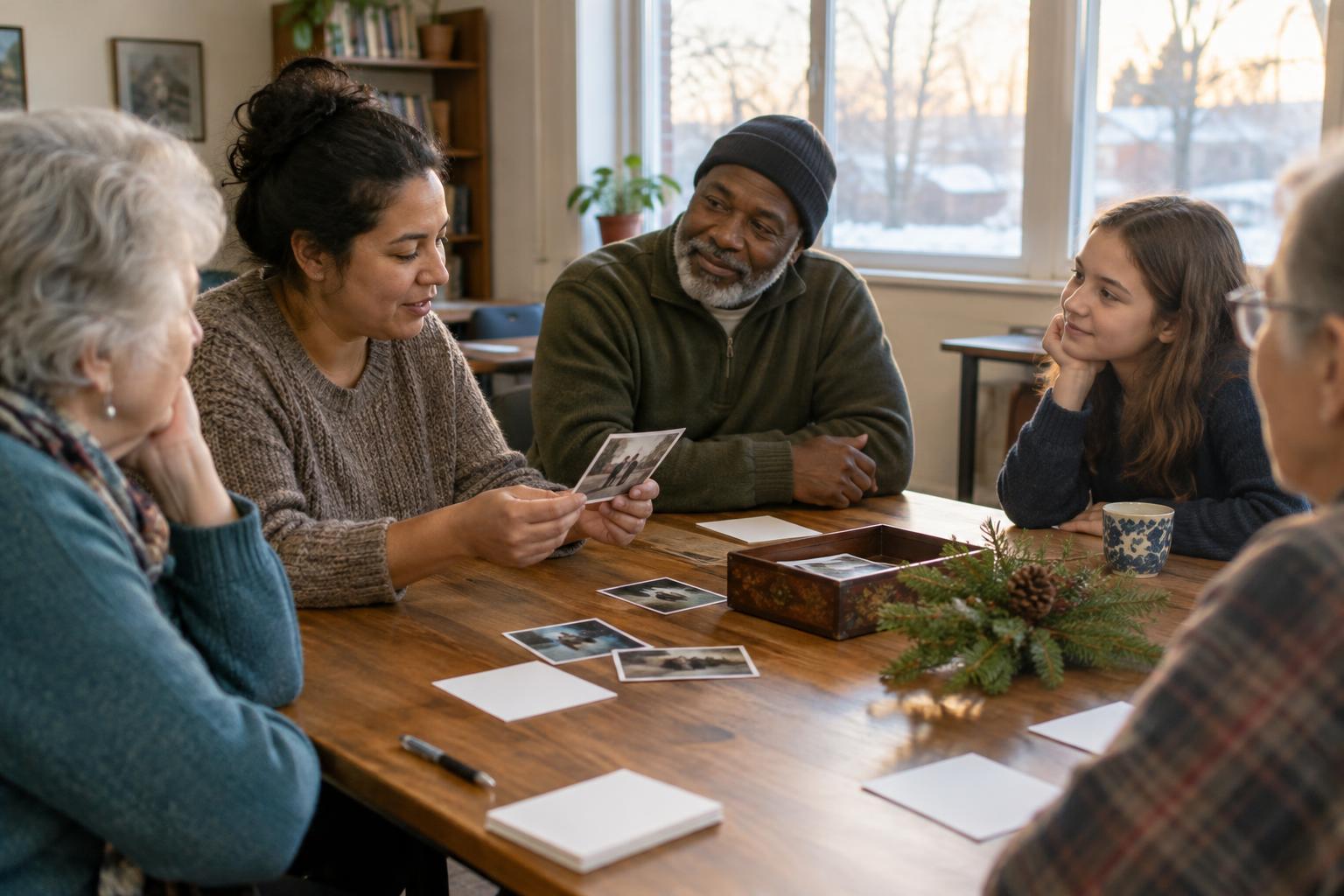
If you host a gathering around the collection, make room for quiet participation. Put out pens and cards, invite people to browse at their own pace, and avoid calling on anyone to tell a story publicly. Tea, a shared snack or a comfortable place to sit can make the occasion feel hospitable without turning it into a production. Thank contributors and helpers, including those who set up, listened or brought supplies.
Let it become a tradition only if it fits
Afterward, decide with contributors what should happen to the collection. You might give copies to participants, keep one in a community meeting place with permission, or return original photographs and notes. If you collected messages digitally, keep only what you have a reason and permission to keep. A brief note about who organized the project and what the prompt was will help future readers understand it.
There is no need to promise a bigger version next year. Ask what felt easy, what felt awkward and whose voices were missing. Perhaps the next project will use a different prompt, happen in another season or stay small enough to fit on one table. The lasting tradition is not the format. It is the practice of making time to notice a place together and allowing neighbors to tell their own stories.