Start with the journey, not the doorway
When daylight fades early, a gathering can feel difficult long before it begins. Guests may be thinking about an icy sidewalk, an unfamiliar entrance, a bus stop in the dark or the drive home. A welcoming plan starts by considering the whole trip: how people will get there, find the right door, move through the space and return home.
If the schedule is flexible, consider meeting earlier in the day or offering a shorter event that ends before dark. An afternoon meal, craft table or story exchange can carry the same sense of occasion as an evening party. If an evening time matters to the group, say when activities will begin and end so guests can choose whether to attend for all or part of it.
Make arrival information easy to use
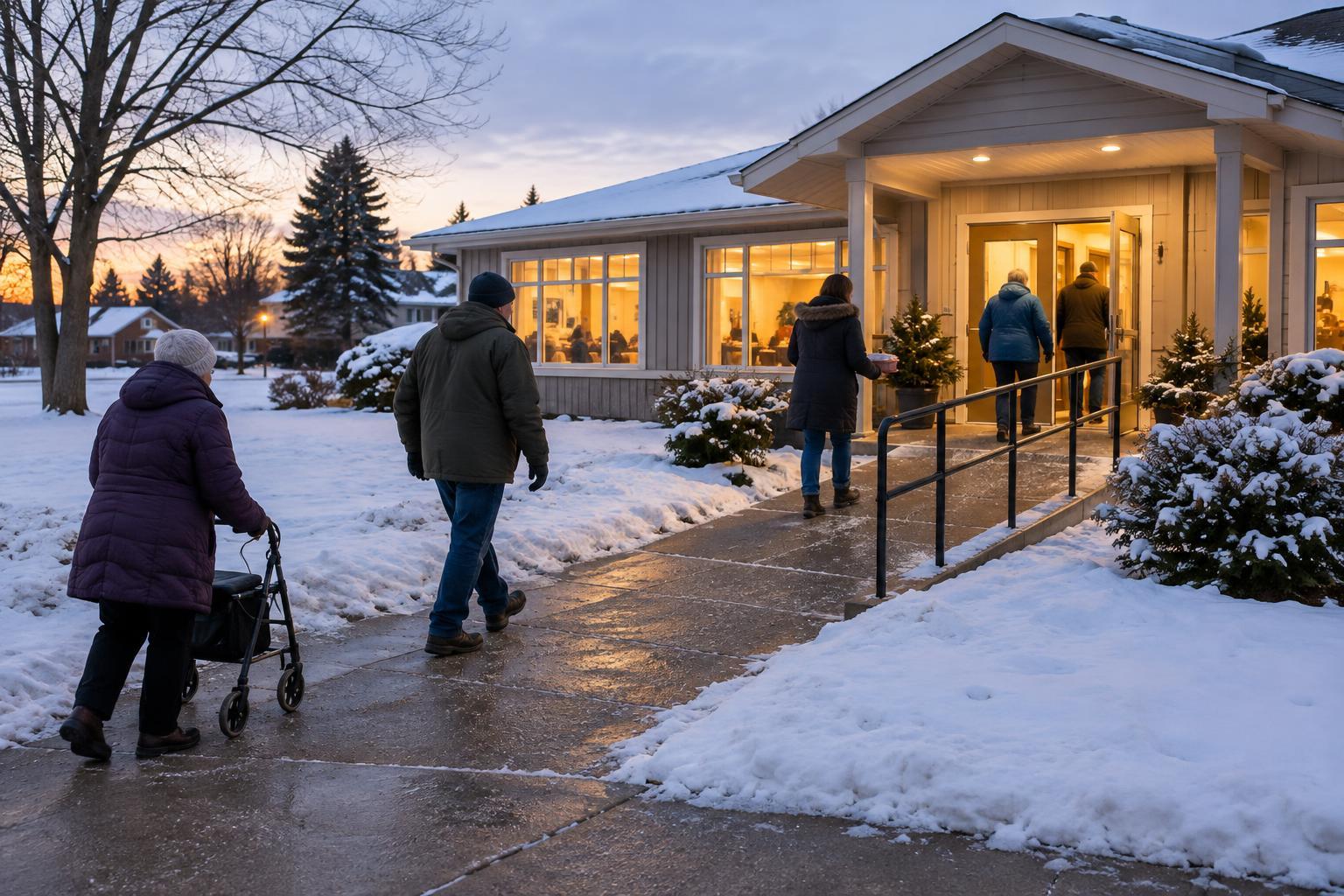
An invitation is more useful when it answers practical questions. Name the entrance guests should use, describe where they can be dropped off and explain whether there are steps between the street, parking area and gathering room. If an accessible entrance is in a different place, give it equal prominence rather than presenting it as an afterthought. Share a contact person who can answer questions before the event without asking anyone to explain why they need the information.
Short days make wayfinding more important. Check that signs are readable from the approach people will actually take and that exterior lights are working before guests arrive. Inside, keep the route to seating and restrooms clear of coats, bags and decorations. A volunteer near the entrance can welcome people and offer directions, but should ask before providing physical assistance.
Treat winter conditions as a changing plan
No cleared path stays predictable in every kind of winter weather. Before the event, identify who will check entrances, walkways and drop-off areas, and when that check will happen. Follow the location’s usual procedures for snow and ice removal. Pay particular attention to slopes, steps and places where water can refreeze. If a route cannot be made reasonably usable, tell guests plainly rather than relying on them to discover the problem when they arrive.
A backup plan is a form of hospitality, not a sign that the gathering has failed. Decide in advance what conditions would lead you to shorten, postpone or cancel the event, and how you will notify people. Use the same channels that carried the invitation, and send an update early enough to help guests make travel decisions. Avoid pressuring anyone to come when their own route feels unsafe.
Offer more than one way to take part
Accessibility also shapes what happens once everyone is inside. Provide a mix of seating, with room to move between tables, and avoid making every activity depend on standing for a long time. Let guests know if food is being served and invite them to ask about ingredients or bring something that suits them. A quieter corner can give people a place to pause without leaving the gathering altogether.
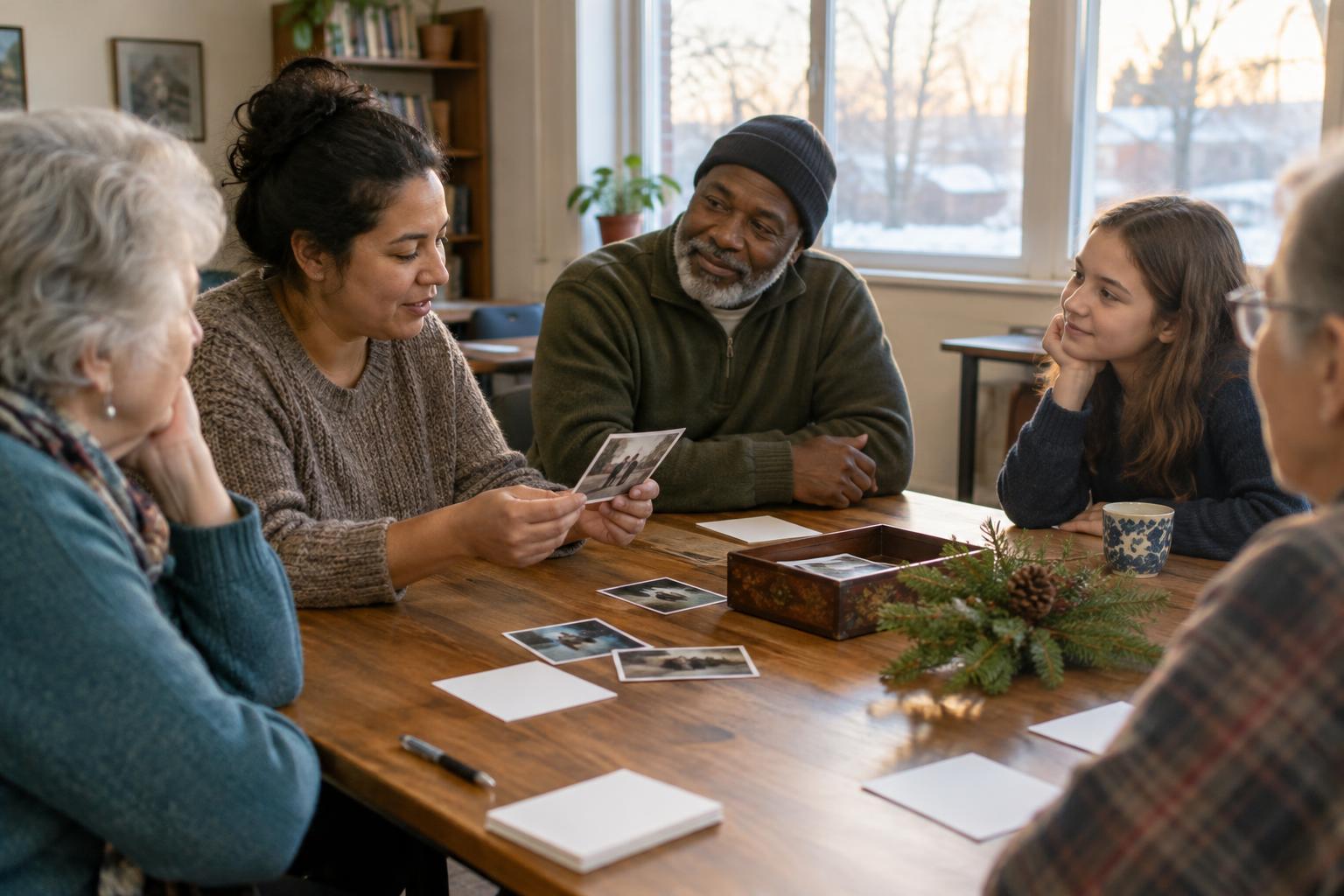
Not everyone will be able to travel on the chosen day. A small companion activity can keep the tradition open: neighbors might exchange written memories, contribute a recipe to a shared collection or pick up a simple craft to do at home. These options work best when they are genuine ways to participate, not assignments for those who could not attend.
Leave room for choice and connection
A ride offer may help some guests, but it should never be assumed to solve an access problem. Ask what would be useful, make any meeting details clear and accept a no without fuss. Likewise, someone may prefer to leave early, skip an outdoor activity or join by phone for a brief conversation. The goal is to remove unnecessary obstacles while letting each person decide what is comfortable.
Afterward, invite simple feedback: Was the entrance easy to find? Did the timing work? Was any information missing? One or two practical changes may make the next seasonal gathering easier to join. Traditions grow stronger when people can shape them together, especially during the part of the year when getting together takes a little more care.