Make the invitation clear
“You’re welcome even if you haven’t finished” is a useful thing to say before a reading-circle meeting, not just when someone arrives apologizing. A member may have stopped halfway because of a busy week, an unexpected responsibility or simply because the book did not hold their attention. None of those circumstances has to disqualify them from a conversation with neighbors.
Put the invitation in the meeting reminder alongside the time, place and book title. You might add, “Come whether you read every page, a few chapters or none this month.” This sets an expectation for the whole group: reading is encouraged, but attendance is not a test. Members who have finished still get to discuss the book; those who have not know they can listen and contribute without pretending.
Agree on a spoiler boundary
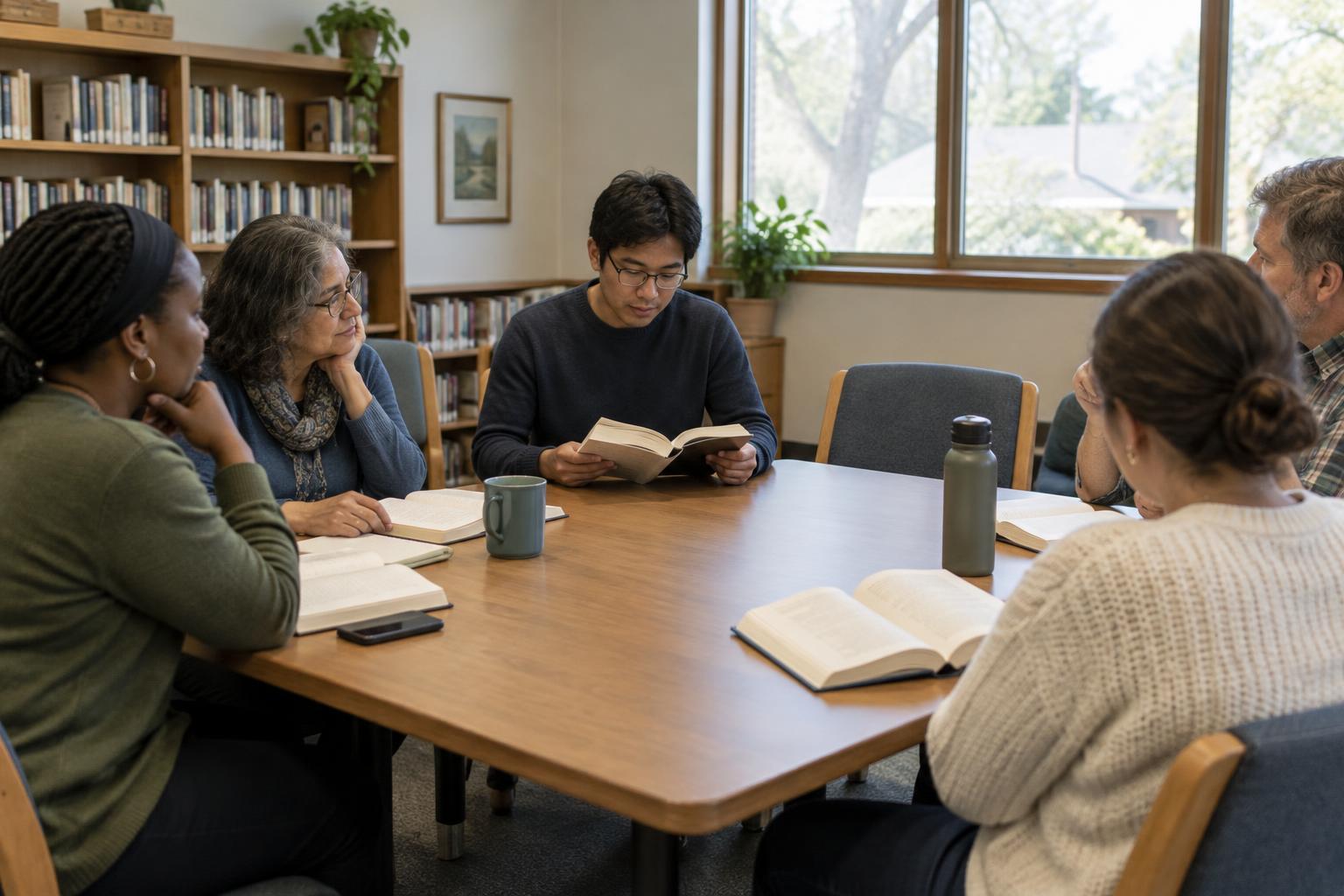
A welcoming circle does not need to avoid the ending forever. It helps, though, to tell people when spoilers will begin. One option is to spend the first part of the gathering on early impressions, themes and questions, then clearly announce the move into a full-book discussion. Another is to choose a stopping point for each meeting, especially when the group is reading a longer work together over several weeks.
Whatever the plan, share it ahead of time and repeat it briefly at the start. A member who has not finished can then decide whether to stay for the whole conversation, listen without worrying about spoilers or step away before the ending is discussed. The point is not to protect every surprise at the expense of lively discussion. It is to let people make an informed choice.
Ask questions with more than one doorway
Questions such as “What did you think of the ending?” have their place, but they can leave partial readers silent. Begin with prompts that draw on different kinds of attention: “What detail stayed with you?” “Was there a character or idea you wanted to understand better?” “Did anything in the book remind you of another story?” Someone who read one chapter may have a thoughtful response, while a person who finished may notice that their first impression changed later.
Invite members to speak from what they have actually read rather than guess at the rest. When a later plot point matters, offer just enough context to frame the discussion and mark it as a spoiler. Avoid putting an unfinished reader on the spot to explain why they stopped. If they volunteer that the book was not for them, curiosity is more useful than persuasion: what made it difficult to connect with, and did anyone else have a different experience?
Leave room for listening
Participation need not mean speaking often. Someone who has not read much may prefer to listen, help welcome a new member or offer a question for the group to consider. A facilitator can make space for those contributions without turning them into substitute homework. A simple “You’re welcome to jump in wherever you like” gives permission without demanding a response.
It also helps to keep the conversation from becoming a round of individual book reports. Let one observation lead to another, and pause occasionally to invite voices that have not yet been heard. If a few confident readers carry the discussion, a broad question can reopen it: “Is there another way to read this scene?” That invitation includes people at different points in the book without singling anyone out.
Keep the next meeting easy to enter
At the close, briefly name what the group will read next and how the discussion will work. If a book is long, the circle might agree on a manageable section rather than assuming everyone can finish by the next meeting. If the group chooses a new book each time, let members know that missing one selection does not put them behind. Clear plans make it easier to return after an unfinished month.
A reading circle is sustained by books, but also by the habit of gathering and paying attention together. When members can arrive honestly, without an apology ready, they are more likely to ask genuine questions and hear perspectives they might have missed on their own. Finishing the book can enrich that exchange. It does not have to be the price of a seat.