Begin with a question, not a familiar story
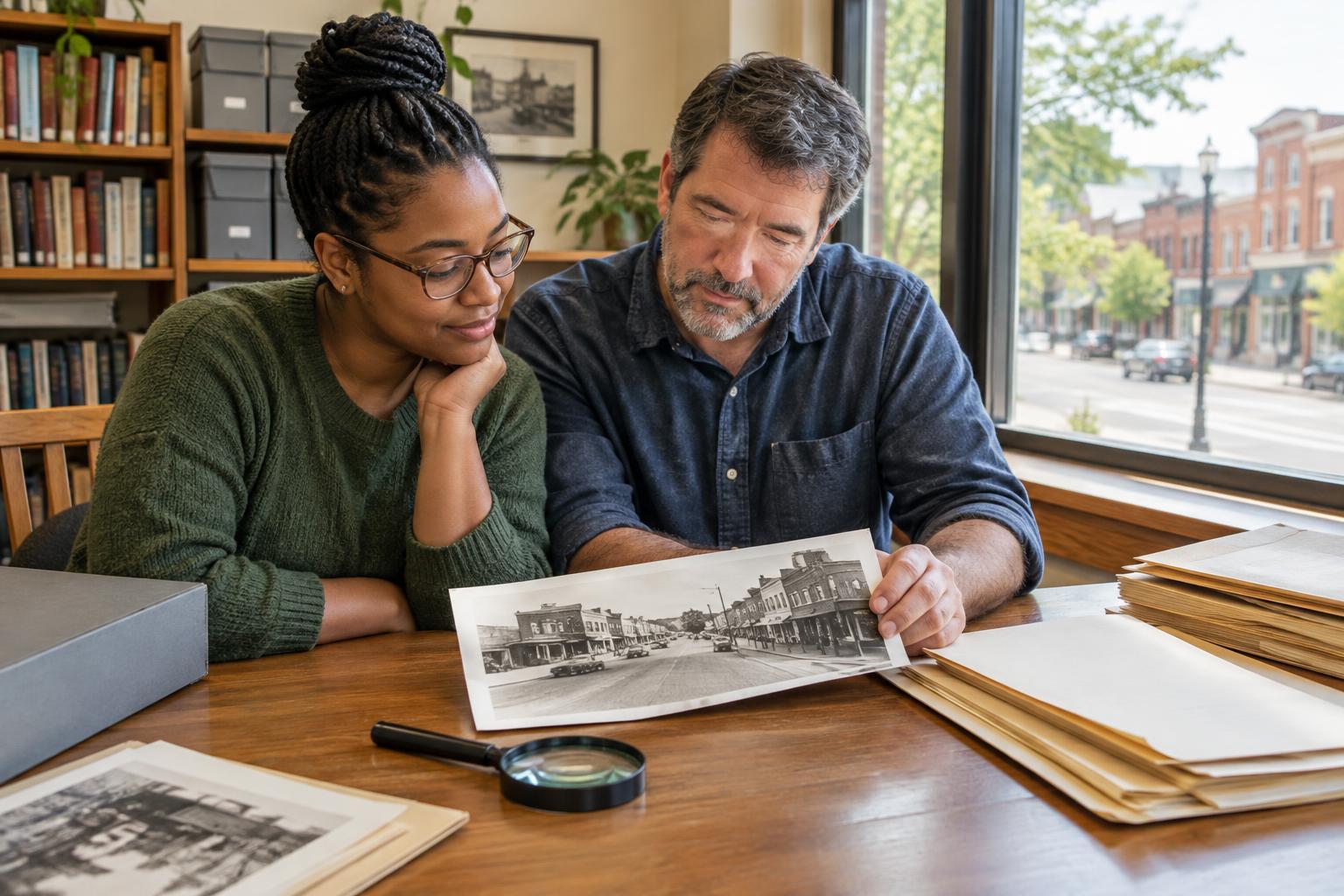
A town history can make a place feel more familiar. An old photograph may show a street before its storefronts changed; a neighborhood booklet may explain why a gathering became a tradition. These accounts are valuable starting points, but they are not the whole story. Someone chose what to photograph, preserve, write down or leave out.
Before reading, choose a small question: Who used this building over time? How did a particular gathering begin? What changed when a road was built? A focused question makes it easier to compare accounts without trying to settle the entire history of a community at once. As you read, keep two notes: what the source says and what you would still need to know.
Find out where an account came from
Start with the basics. Who created the item, when was it made, and for whom? A meeting record, a newspaper article written years later and a family recollection may describe the same event differently. Each can offer useful details, but each was created for a different purpose. A meeting record might capture a decision without explaining how neighbors felt about it. A recollection might preserve an experience while placing dates or sequences less precisely.
Look for clues within the item itself. A photograph caption may have been added long after the image was taken. A printed booklet may repeat an earlier account without naming it. If you can, trace a claim back to the document, image or testimony on which it rests. If you cannot, mark it as unverified rather than treating repetition as confirmation.
Compare details without forcing agreement
When two sources disagree, ask exactly where the difference lies. Do they give different dates, describe different groups of people, or disagree about why something happened? Sometimes both accounts can be accurate within a limited view: one may describe an official opening while another remembers when people actually began using a space.
Compare sources that were created independently when possible. A map might help locate a building mentioned in a letter; several photographs might show how a site changed. Pay attention to what each source can establish. An image can show what was in the frame, but not necessarily who owned the property or how everyone felt about a change. A careful conclusion may be modest: “These records suggest” is often more honest than “This proves.”
Notice whose experiences are hard to find
Ask whose names and activities appear often, and whose appear only in passing. Formal records may emphasize property owners, officeholders or event organizers while saying less about workers, children, newcomers and people who gathered informally. An absence from a record does not mean a person or group was absent from community life. It means you need to ask what the record was designed to capture and what other kinds of evidence might help.
Try reading beyond the main narrative. Captions, advertisements, school materials, programs and everyday correspondence may raise new questions about who participated and who did the work. Oral memories can add perspectives that written records missed. If someone shares a memory with you, ask how they would like it used, especially before recording, naming or publishing it. A person’s account deserves care, not pressure to stand for an entire group.
Share an account that leaves room to learn
A simple local-history project could begin with one photograph or short account. Write down its creator and date if known, describe what you can actually see or read, and list two questions it raises. Then seek another source that might clarify one detail or offer a different perspective. Keep track of where each detail came from so a neighbor can follow your path.
When you share what you find, distinguish documented facts from interpretations and memories. Name gaps plainly: “We have not found an account from the people who worked there,” for example, is more useful than filling the gap with a guess. Invite corrections and additional stories without treating every memory as interchangeable evidence. Local history is richer when curiosity is paired with care for both the records that remain and the people whose voices they may not contain.