Begin with the invitation
Shared reading can be as simple as a few neighbors gathering around a short story, poem or essay. Yet an invitation that says only “bring your copy” may leave people wondering whether they can participate if small print is difficult, they prefer listening, or they need more time with the text. Accessibility begins before the first meeting, with a clear description of what the group will read and the ways people can take part.
An invitation might say that printed copies, a large-type version and an audio option will be available when possible. It can also explain that reading aloud is optional and that listening is a welcome form of participation. Ask privately if another format would help, without asking anyone to justify the request. Not every need can be anticipated, but a group can make it easy to suggest changes.
Choose material with formats in mind
When selecting a text, consider more than its theme. Is it a manageable length for the time available? Can participants get it in a format they can use? A short piece that everyone can access may lead to a richer discussion than a longer selection that is difficult for some people to obtain or navigate. If the group uses books, give people enough notice to seek a preferred edition.
Before copying, recording or distributing a work, check what the group is permitted to share. Public-domain material and works offered with suitable permissions can simplify planning. A library may be able to help people locate print, large-print or audio editions, though availability will vary. If the group cannot provide a particular format, say so early and work with participants to find another selection rather than leaving someone to solve the problem alone.
Make print and large type comfortable to use
For handouts, use a clear typeface, generous spacing and strong contrast between text and background. Avoid squeezing a long passage onto one page by shrinking the letters. Numbered pages and a clear title help readers find their place when the conversation moves between passages. If you prepare a large-type version, enlarge the body text and leave enough room around it; simply scaling up a crowded page may not make it easier to follow.
Offer handouts ahead of time when you can. Some readers like to preview a passage, mark a few lines or read at a slower pace. Others may prefer to arrive without preparation. Both approaches can fit within the same gathering. Keep extra copies at the meeting, and let participants know that using a large-type copy is an ordinary choice, not something that requires an announcement.
Treat audio as a full reading option
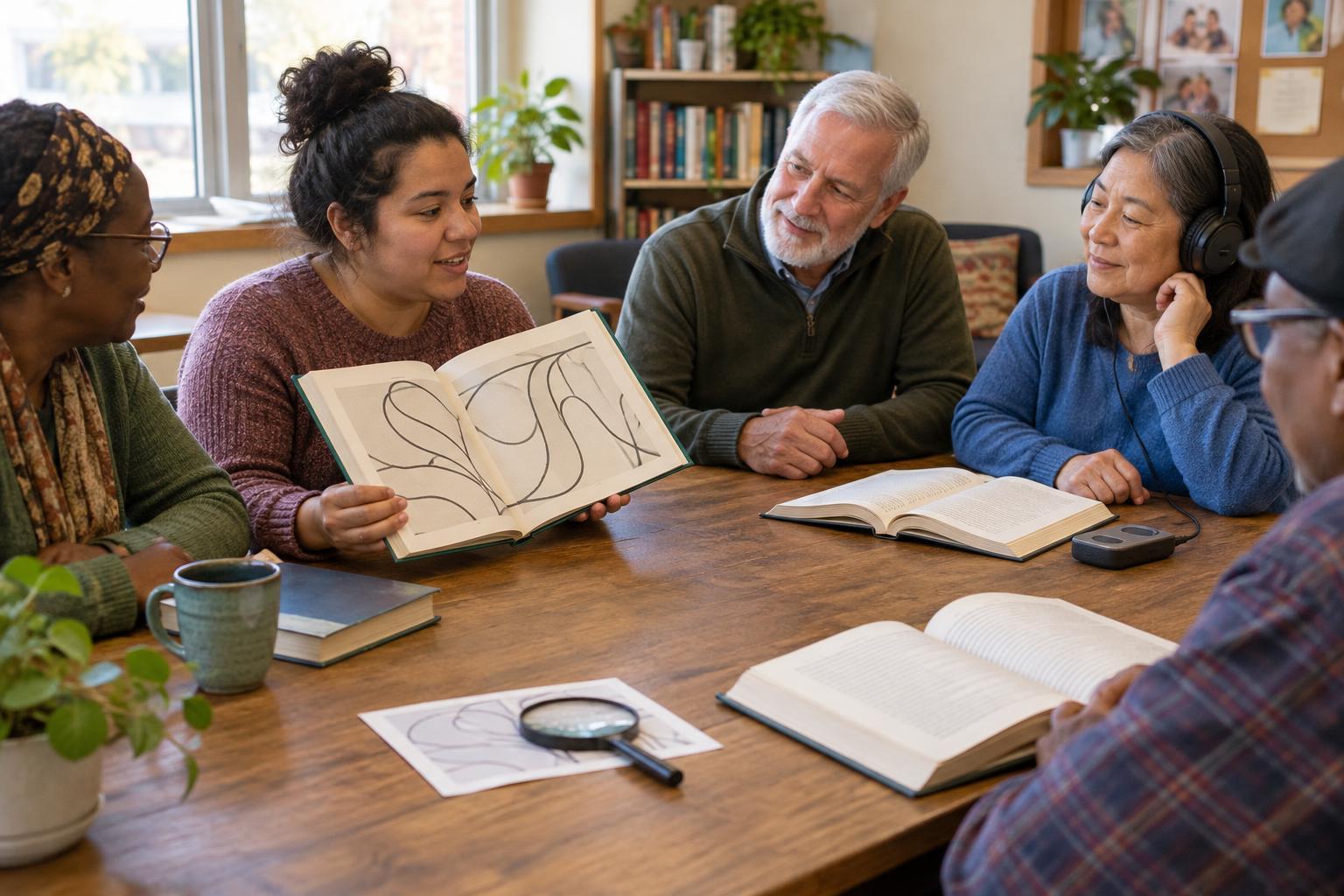
Audio can make a text easier to enjoy for people who prefer listening, as well as for those who find print tiring or inconvenient. Where an authorized recording exists, share how participants can access it. If there is no audio edition, a short piece could be read aloud at the meeting, provided that doing so respects the work’s permissions. A volunteer reader should speak at a comfortable pace and pause at natural breaks, rather than trying to perform the text.
Listening and following along on a page are different experiences, and neither needs to be treated as the default. If the group plays a recording together, check that the volume is comfortable and that background noise is limited. Provide a printed text when possible so listeners can return to a phrase during discussion. For people using their own audio version, identify chapters or passages clearly instead of relying only on page numbers.
Shape the conversation so everyone can join
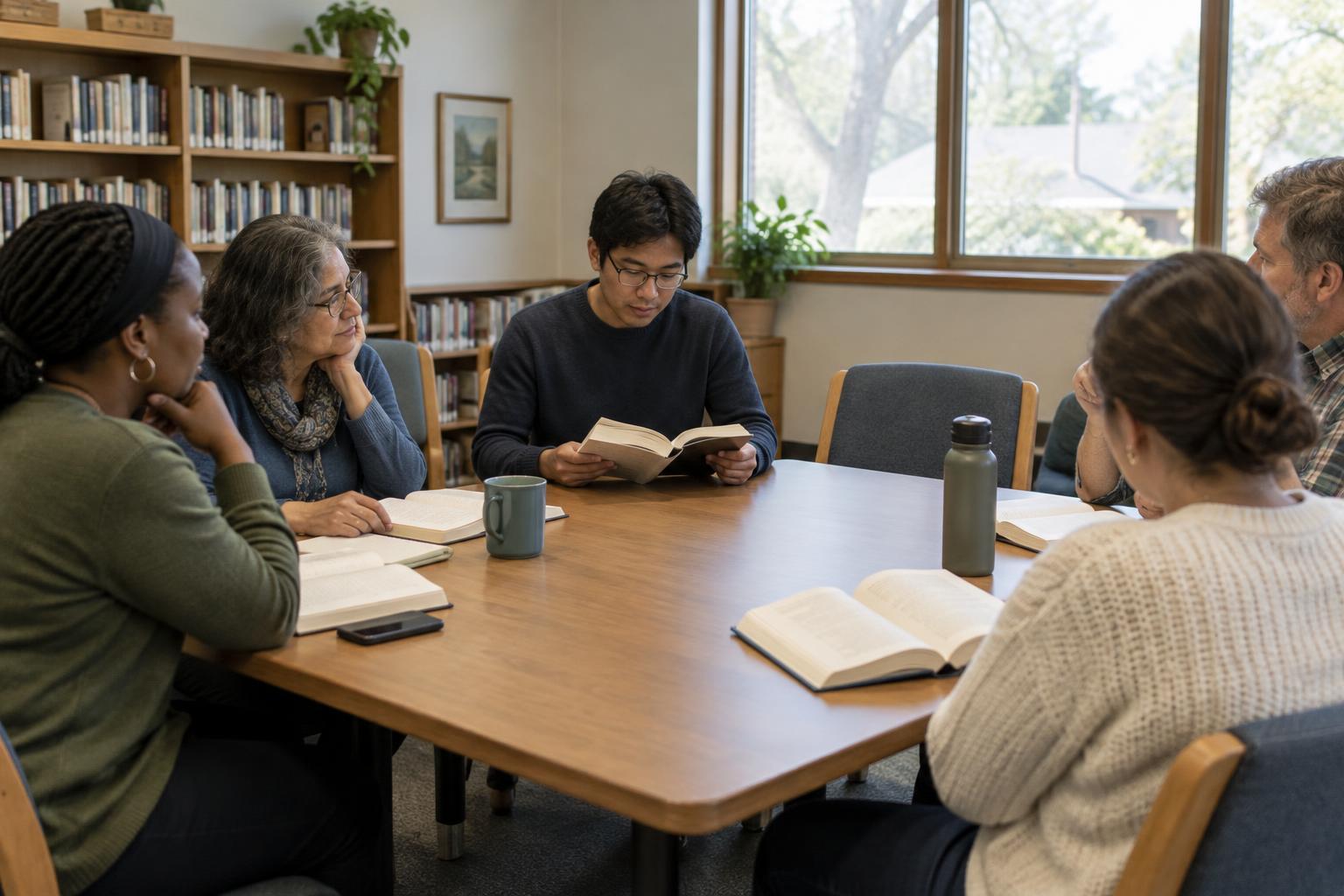
A good discussion does not depend on everyone reading in the same way or at the same speed. Begin with an open question, such as “What stayed with you?” Give people a moment to think before inviting responses. When referring to a passage, briefly describe where it appears and read a short portion aloud if appropriate. This helps people who listened to a recording, used a different edition or lost their place.
Make it acceptable to pass on a question or participate mainly by listening. Avoid calling on someone to read aloud without asking first. At the end, a simple check-in can reveal what worked: Was the text available early enough? Were the handouts easy to follow? Would a different length or format help next time? Small adjustments, made together, can turn a reading group into a place where more neighbors feel free to show up and take part.