Begin with the people, not the project
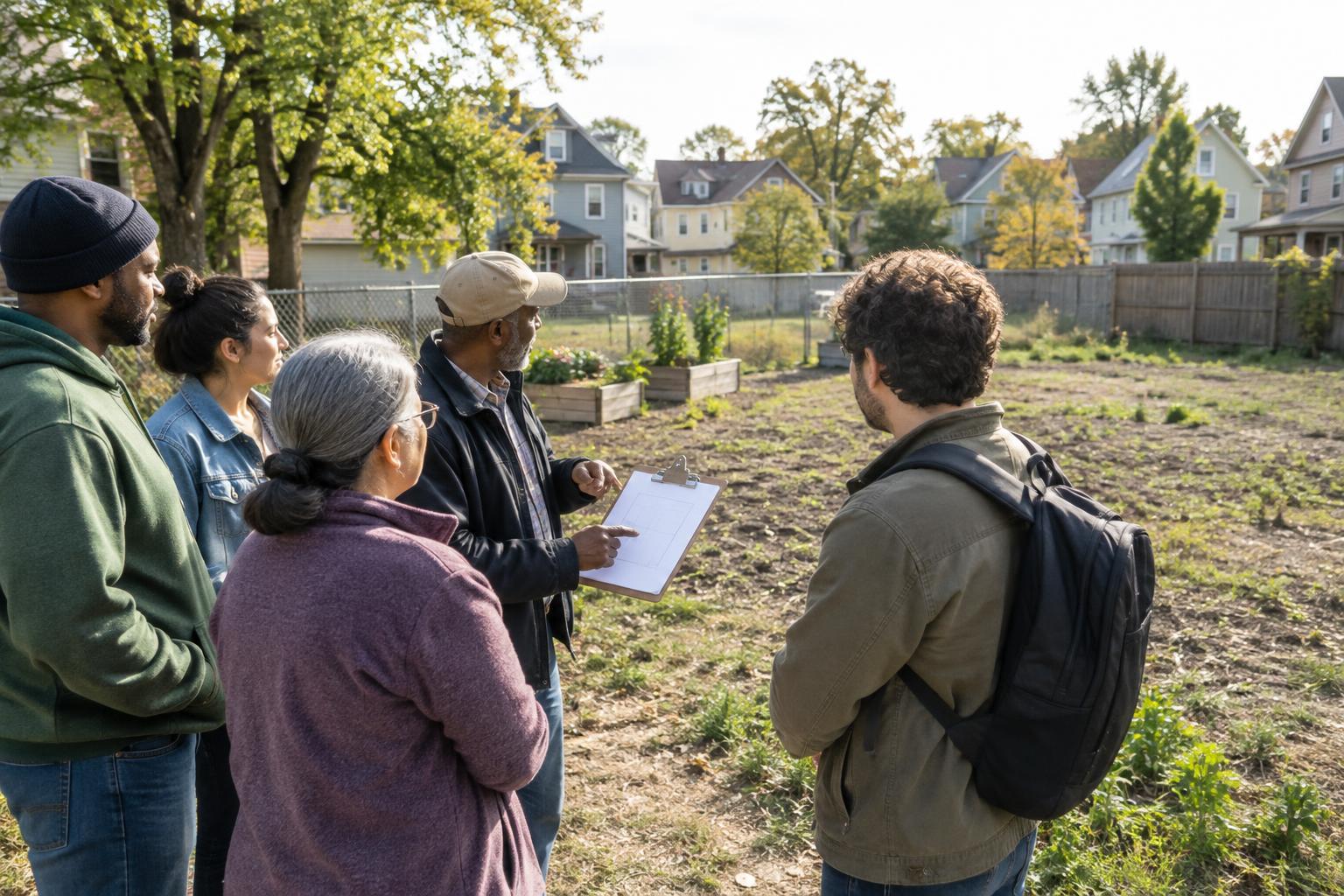
A garden, book exchange, walking group or neighborhood meal can sound inviting in a planning meeting. Its usefulness becomes clearer when neighbors describe what would help them take part. Before settling on a design, ask people how they might use it, what would make participation difficult and what they would change. Invite input beyond the people who usually attend meetings: children with their caregivers, older neighbors, people with disabilities and people whose work or care responsibilities limit their free time.
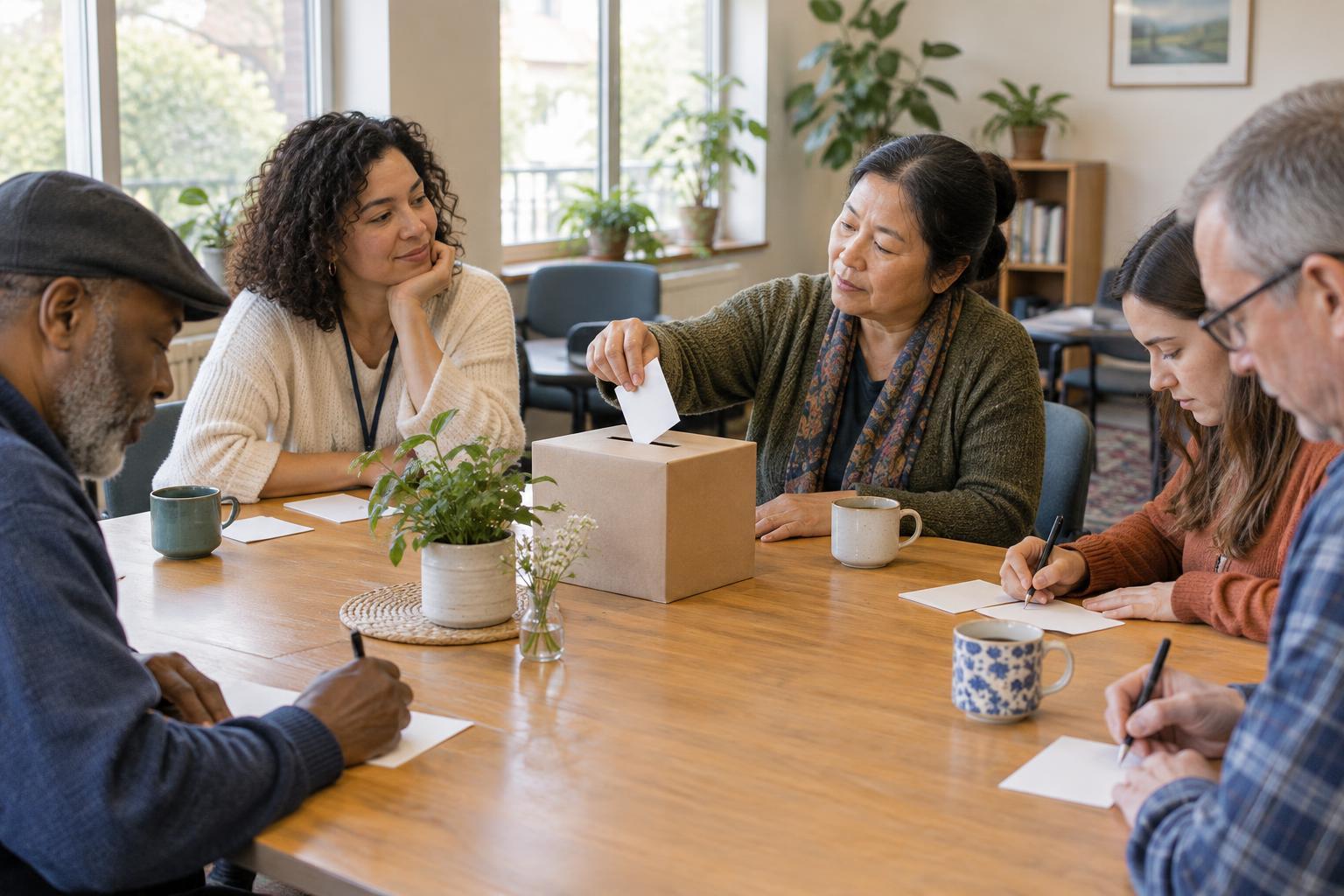
Offer more than one way to respond. A short conversation, a paper note and a phone call may reach different people. Ask specific questions rather than asking only whether an idea sounds good. For a shared garden, for example: Where could someone rest? Would the paths be easy to move along? What jobs could someone do without bending or lifting? Listening early may reveal a small adjustment that matters more than an elaborate feature.
Make the route and the task easier to navigate
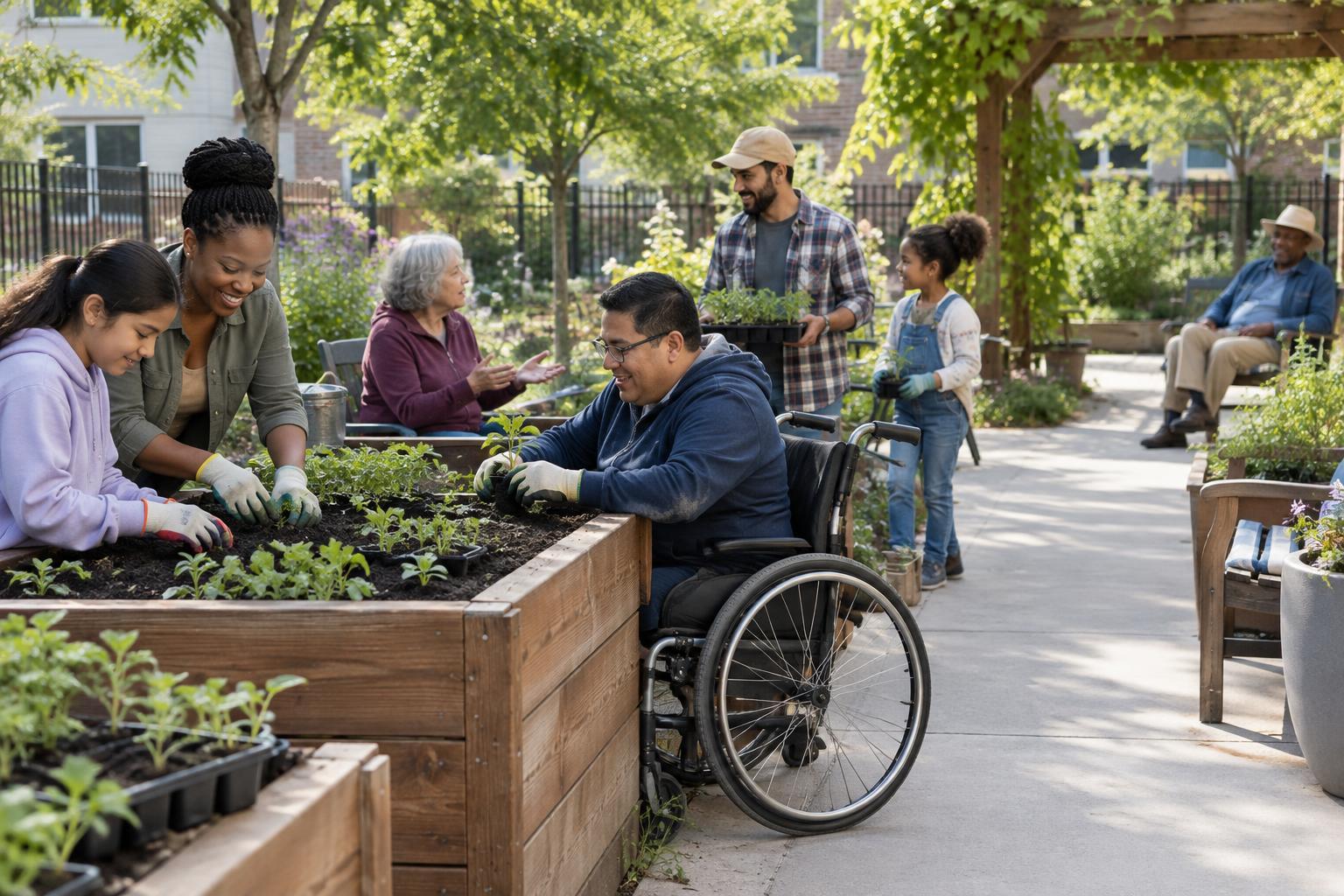
Think through the full experience of arriving and taking part. Is the entrance easy to find? Is there a clear, reasonably firm route from the sidewalk or drop-off point? Could someone using a mobility aid, pushing a stroller or carrying supplies move through without squeezing past equipment? Seating in a few places can help neighbors who need breaks and can make a space more pleasant for everyone.
Apply the same thinking to activities. Put frequently used materials within comfortable reach where possible. Use clear signs with readable lettering, and pair written directions with a simple spoken explanation when people gather. If a task requires strength, balance or standing for a long time, offer another meaningful task alongside it. Accessibility is not a single feature to add at the end; it is a series of choices about how people enter, understand and use a project.
Give people different ways to contribute
Community projects often rely on a narrow picture of volunteering: show up at one time, stay for several hours and do physical work. That leaves out people who could contribute in other ways. A cleanup might also need someone to welcome arrivals, label sorting bins, prepare refreshments, make reminder calls or check that tools are returned. A neighbor who cannot attend on the day might help plan a supply list or share the invitation.
Keep roles clear and manageable. Say what a task involves, how long it is likely to take and whether help is available. Offer shorter shifts when you can, and make it easy for someone to switch tasks without having to explain why. Children may enjoy helping with safe, age-appropriate jobs alongside adults, while experienced neighbors may prefer to teach a skill rather than direct the whole event. Giving people choices respects both their abilities and their time.
Plan for comfort, not just access
A person may be able to reach an event and still feel unsure whether they belong. Welcome people who come alone. Let them know what will happen, where they can sit and whom to ask for help. For gatherings, consider noise, shade, water and a quieter place to talk. If food is involved, label what is served as clearly as you can and avoid treating eating as a requirement for joining in.
Good invitations also make fewer assumptions. State the location, time, expected activity and any practical limitations plainly. If a project site has steps, uneven ground or no nearby seating, say so before people arrive while you work toward improvements. Honest information helps neighbors decide what works for them. It also gives organizers a clearer picture of what needs attention next.
Test, adjust and share ownership
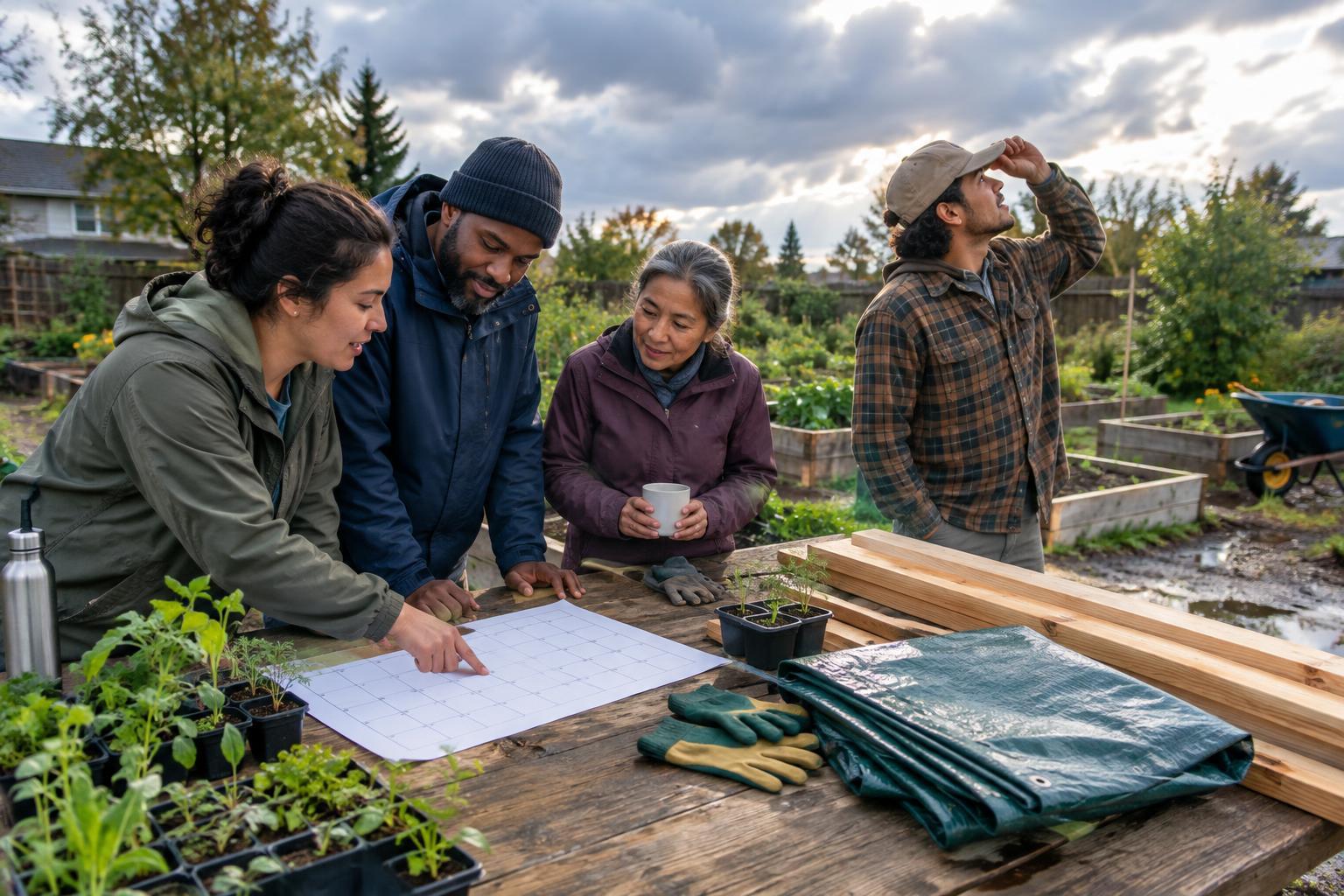
Try a small version before committing every resource. Set out a few tables for a trial book swap, mark a proposed garden path or host one short work session. Watch where people pause, ask for directions or choose not to participate. Then ask what worked and what could be easier. Feedback is most useful when organizers are willing to change the plan rather than defend it.
Finally, decide who will care for the project after its first enthusiastic day. Shared spaces need modest, repeatable routines: checking supplies, keeping routes clear and making sure newcomers know how to join. Spread those jobs among willing neighbors instead of relying on one person. A project designed for different ages and abilities is never finished once and for all. It stays welcoming when the people who use it can keep shaping it.