Start with the finished project, then work backward
A timeline is most helpful when it describes more than a hoped-for finish date. Begin by writing down what “finished” means for your project. For a garden, that might include prepared beds, installed paths, planted spaces and a plan for ongoing care. For a neighborhood cleanup, it might include collecting supplies, completing the work and arranging proper disposal afterward. A clear endpoint helps the group see which tasks belong on the timeline.
Next, list the steps required to reach that endpoint and put them in order. Mark tasks that depend on something else happening first: a delivery before installation, a site visit before a layout decision, or permission to use a space before inviting volunteers. These dependencies matter more than the apparent size of a task. A short approval wait can hold up a full day of hands-on work.
Give each task an owner or a small team, along with a reasonable window for completion. Ask the people doing the work how much time they can actually offer. A timeline built around volunteer availability is more useful than one that assumes everyone can respond immediately.
Separate weather-sensitive work from flexible work
Look at each task and ask what conditions it needs. Outdoor painting may require a suitable stretch of dry weather, while a planning call can happen regardless of rain. Planting, digging and moving materials can also become difficult when the ground is wet or conditions are uncomfortable for volunteers. Rather than treating all outdoor tasks alike, note the specific condition that could stop each one.
Where possible, place weather-sensitive tasks in a season when conditions are generally suitable for the work, without assuming any particular weekend will cooperate. Then identify tasks that can move forward if outdoor plans pause. Preparing signs, sorting supplies, confirming refreshments or updating neighbors can all help a group make progress without asking people to work in poor conditions.
Include a safety and accessibility check in the plan. Heat, cold, mud and slippery paths may affect participants differently. A project is not behind schedule merely because the group chooses to wait for safer, more welcoming conditions.
Add room for the delays you can anticipate
Instead of scheduling every task back-to-back, leave open time between major steps. Materials may arrive later than expected, a volunteer may become unavailable, or a decision may take another conversation. This open time is a buffer: it gives the project a chance to absorb a setback without forcing every later task onto a new date.
The amount of buffer depends on the project. Work with several dependencies needs more flexibility than a simple one-day gathering. You can also build flexibility into individual tasks. If a delivery date is uncertain, set a window for installation rather than announcing a fixed installation day before the materials are on hand.
Decide in advance which dates are firm and which are targets. A reserved space or scheduled pickup may be difficult to move; a decorating session might be easier to reschedule. Knowing the difference helps the group protect the commitments that matter most while adjusting the rest.
Create a clear Plan B before inviting everyone
For each outdoor workday, agree on who will decide whether it goes ahead, when that decision will be made and how participants will hear about it. Choose a backup date if the project needs one. If an indoor alternative is available and appropriate, spell out what volunteers would do there rather than simply promising that the event will happen “rain or shine.”
Share the plan in the invitation. People need to know what to bring, whether the work is physically demanding and where to look for updates. A simple message such as “We will confirm the workday the evening before” is more useful than leaving volunteers to guess. If plans change, explain the next step plainly and thank people for keeping time open.
A backup plan should also cover a smaller turnout. Identify the work that a small group can complete safely, and save larger tasks for a day with enough help. Scaling down is often better than asking a few people to carry an unreasonable load.
Review the timeline as the project unfolds
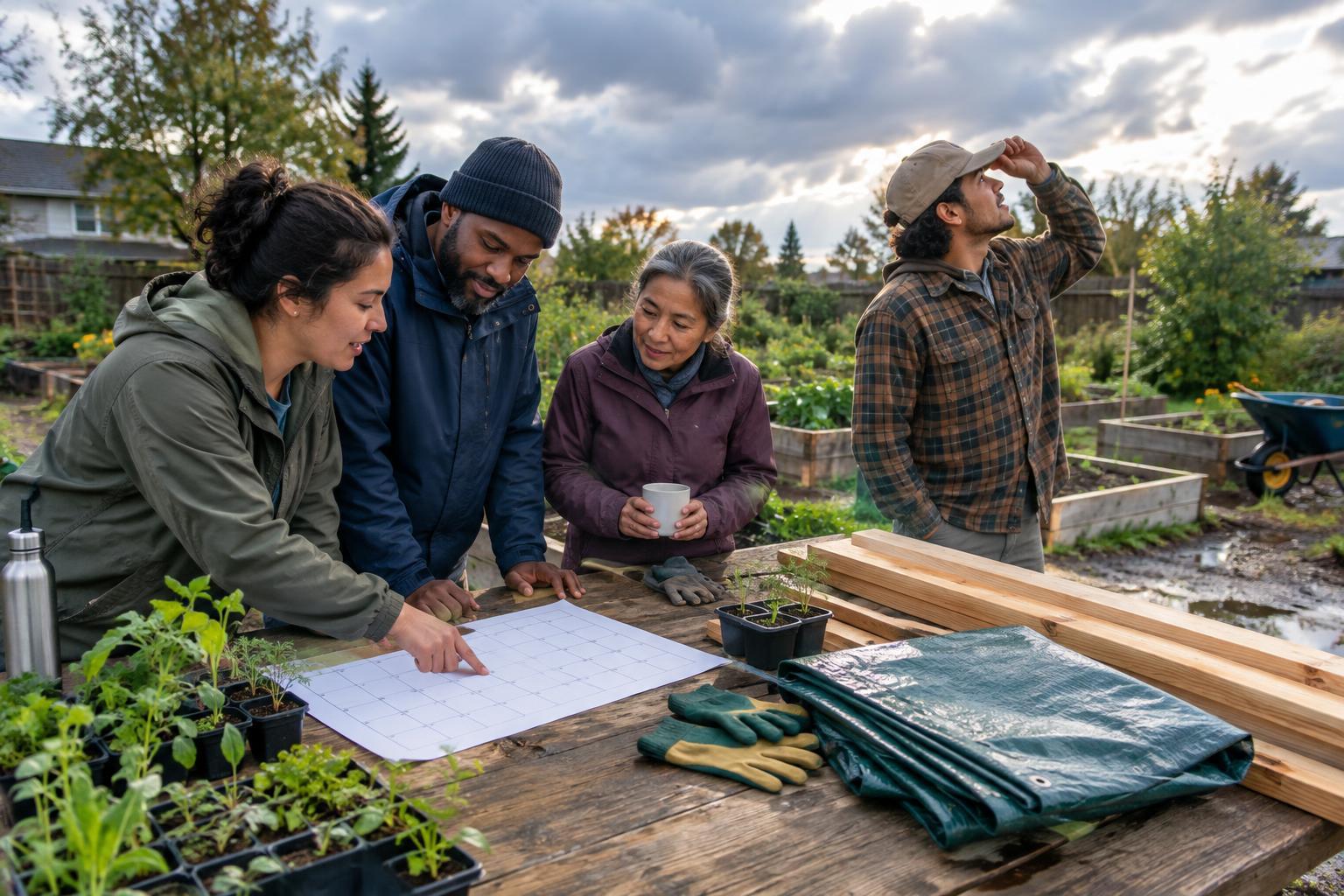
Keep the timeline in a place the core team can access, whether that is a shared document or a printed sheet at regular meetings. Check it at agreed intervals. Note what is done, what is waiting and what decision comes next. When a task slips, look at its dependencies before changing every date; some other work may still be able to continue.
Treat updates as part of good hospitality, not as an admission that the plan failed. Volunteers and neighbors can adapt more easily when they receive a clear change of plans. At the end, make room to record what took longer than expected and which backup choices helped. Those notes can make the next community project easier to plan.