Begin with an invitation, not a list of holidays
A traditions calendar is more than a schedule of celebrations. It can be a way for neighbors to share food, stories, skills, and time together across the year. But a calendar built around what organizers assume everyone celebrates may leave some people feeling like guests in their own neighborhood. Before choosing dates, ask what kinds of gatherings people would actually enjoy.
Keep the invitation open: neighbors might suggest a holiday they observe, a seasonal activity, or something they would like to try for the first time. Offer several ways to respond, such as a short paper form, a message to an organizer, or a conversation at an existing gathering. Some people will not want to disclose personal beliefs or family customs. They should still be welcome to propose a game night, a garden workday, or a meal.
Make space for different kinds of traditions
An inclusive calendar does not need to represent every holiday in the same way. Some observances are private, some call for quiet rather than a party, and others may be celebrated differently by different households. Avoid asking one neighbor to explain or represent an entire culture. If someone offers to share a custom, let them decide what they are comfortable sharing and how it should be described.
Mix suggested gatherings with activities that do not depend on a particular holiday: a seed swap, an afternoon of sidewalk chalk, a recipe exchange, or a neighborhood walk. These events can become traditions of their own through repetition. A small, reliable gathering that people can help shape is often more welcoming than an elaborate event that takes too much work to sustain.
Choose dates with care and leave room to change
Before settling on a date, ask whether it conflicts with important commitments for people who have expressed interest. No date will suit everyone, and not all observances follow the same calendar from year to year. When plans are flexible, consider holding an activity on a nearby day rather than assuming a holiday itself is the best time to gather.
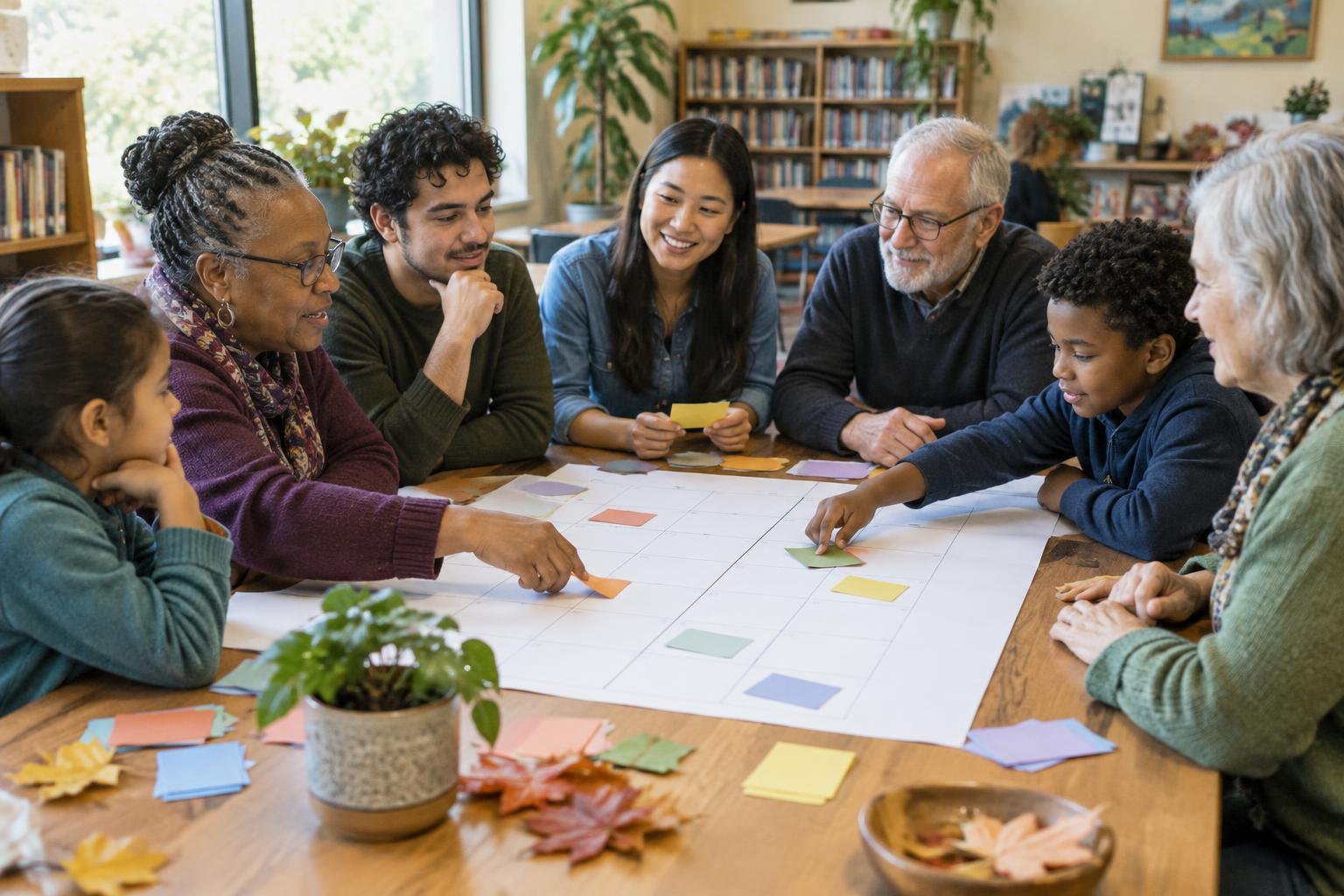
A calendar can also show different levels of commitment. Mark some ideas as confirmed gatherings and others as possibilities that need a volunteer host. Review plans a few times a year instead of filling every month at once. That leaves space for new neighbors, changing schedules, and suggestions that arrive after the first round of planning. If an event draws little interest, it is fine to revise it or let it go.
Describe events so people know what to expect
A welcoming event description answers ordinary questions: What will happen? Is there a cost? Are children welcome? Does anyone need to bring food or supplies? Is the gathering indoors or outside? If an activity includes prayer, religious language, or a cultural practice, say so plainly rather than surprising attendees. Clear descriptions help people decide whether and how they would like to take part.
Build in choices wherever possible. Someone may want to attend without eating, sharing a story, appearing in photos, or staying for the whole event. For food-centered gatherings, invite people to label dishes with ingredients they know are present, while avoiding promises that a shared table can meet every dietary need. If a venue has access barriers, name what you know and invite questions privately. Thoughtful details make it easier to participate without having to explain oneself publicly.
Treat the calendar as a shared practice
The strongest calendar is not the fullest one. It is one that neighbors can help maintain without burning out. Spread small tasks among willing volunteers: one person can welcome arrivals, another can bring supplies, and another can update the calendar. Make it easy for someone to help once without taking on an ongoing role.
After each gathering, ask a simple question: What should we keep, change, or try next time? Listen especially for feedback about timing, cost, access, and whether the invitation matched the experience. Over time, the calendar may become less a collection of holidays and more a record of how neighbors choose to spend time together. Its value lies in making room for people to belong without requiring them to celebrate in the same way.