Set a purpose wider than agreement
A book group can be a place to practice curiosity rather than reach a verdict. People may respond differently to the same character, argument, or ending because they notice different details and bring different experiences to the page. At the start, tell the group that the aim is to understand the book and one another more fully, not to decide on the one correct interpretation.
A few simple expectations make that purpose easier to keep: let people finish, make room for quieter voices, and speak from your own reading rather than announcing what everyone must think. You can also say that passing on a question is welcome. These expectations give participants a way to contribute without feeling that every comment has to become a debate.
Begin with what readers noticed
Opening with a broad judgment such as “Was it good?” can quickly divide the room into supporters and critics. Instead, invite observations: Which scene stayed with you? Was there a sentence you returned to? Where did your attention slow down? These questions give people a way in even if they have not formed a confident opinion about the whole book.
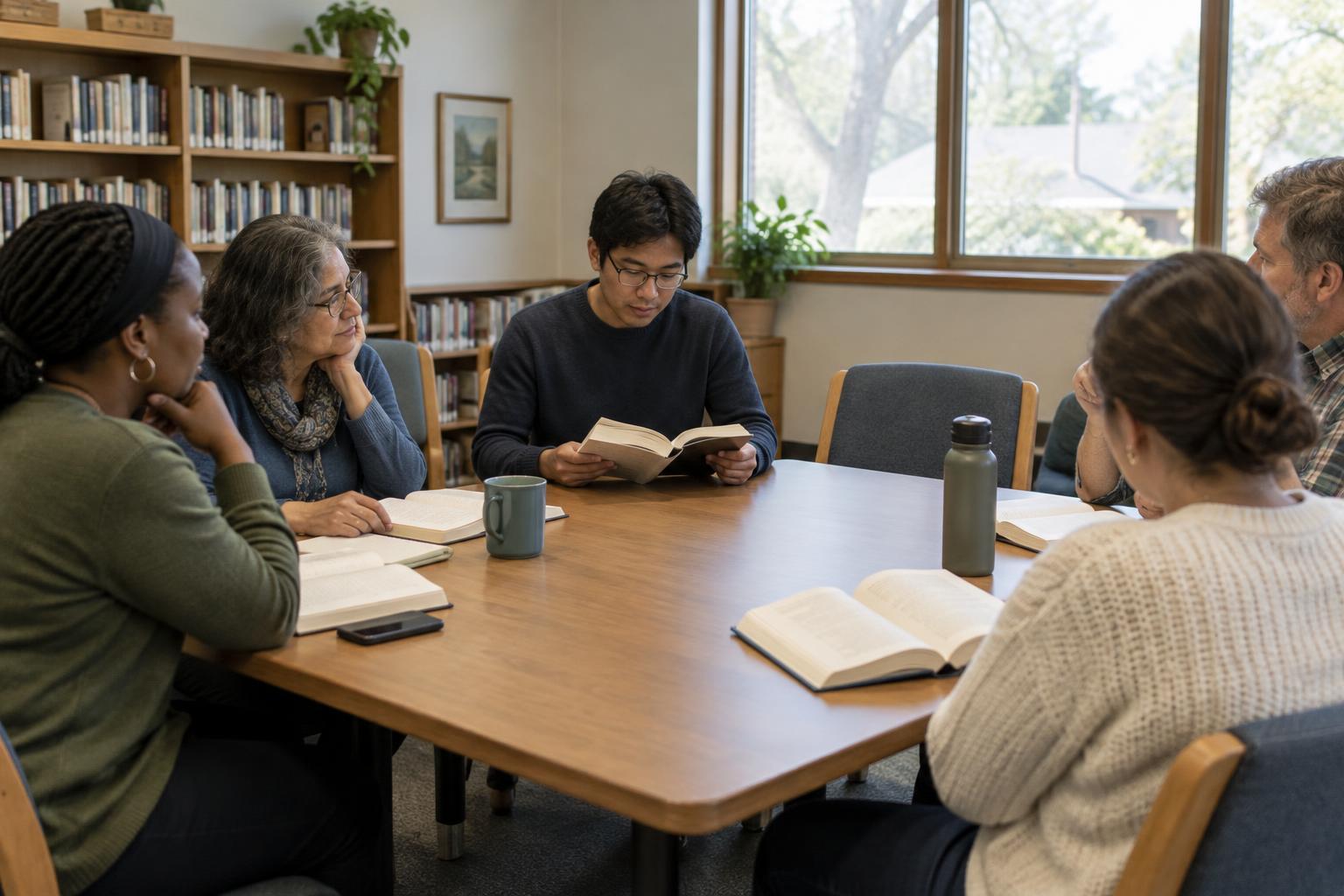
Ask participants to point to a passage when they can. The purpose is not to demand proof, but to give the group something shared to examine. If two people read the same moment differently, you might ask, “What in that scene led each of you there?” Both readings can remain on the table while the conversation grows more precise.
Make disagreement useful, not personal
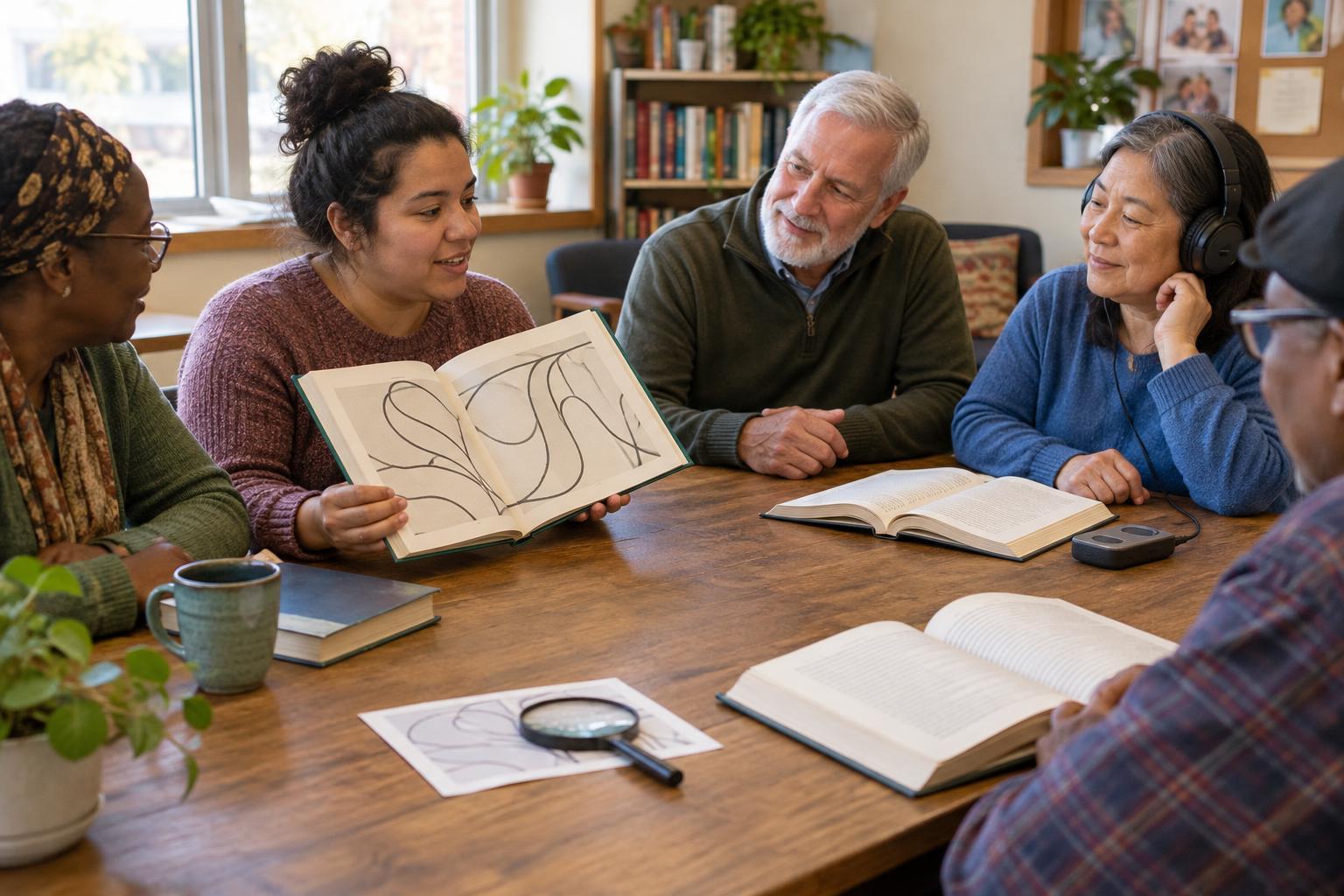
A discussion often becomes more interesting when someone says, “I saw that differently.” As a guide, you do not need to settle the difference. You can name it without ranking the speakers: “We have two readings of this choice. What does each one help us notice?” That response turns disagreement back toward the text and away from a contest between participants.
Notice when comments shift from an idea to a person. If someone says that a particular reaction is foolish or impossible, pause and reframe: “Could we describe the interpretation you disagree with, rather than the reader?” Likewise, invite people to use phrases such as “I read it as” or “I wonder whether.” Careful wording will not erase strong feelings, but it can leave room for others to stay in the conversation.
Share the space without putting anyone on the spot
The most confident speakers are not always the only ones with something to say. After a lively exchange, allow a brief pause before moving on. You can ask, “Is there a perspective we have not heard yet?” without calling on a specific person. If the group is comfortable with it, a short opening round in which everyone may speak or pass can help establish that participation takes more than one form.
Be especially careful with books that touch on grief, identity, family, or other personal experiences. Readers may connect a passage to their lives, but no one owes the group a personal story or an explanation of their background. Keep questions about the book available alongside invitations to reflect. That balance lets participants choose how much of themselves to share.
Close with curiosity still intact
Resist the temptation to finish by asking the group to agree on what the book means. Instead, ask what changed or sharpened in their reading: Did someone else’s comment help you notice a detail? What question would you carry into a second reading? A brief closing round gives the conversation a sense of completion without flattening its differences.
Afterward, consider which questions opened the discussion and which ones narrowed it too quickly. Guiding well is less about having the best interpretation than about tending the conditions for attentive reading. When people leave with a clearer sense of the text, and with respect for those who read it differently, the gathering has done worthwhile work.