Protect the purpose, not every detail
An annual neighborhood tradition may be built around a familiar place: a picnic on the green, a lantern walk, or a shared meal outdoors. When the weather changes, it can feel as though the whole event is at risk. Start by naming what matters most. Is the purpose to welcome new neighbors, spend time together, share food, or mark the season? A backup plan works best when it preserves that purpose, even if the route, schedule, or setting changes.
Write down the parts that can move or shrink without losing the spirit of the gathering. A long outdoor program might become a shorter meet-up under cover. A walking route might become a stationary display that people can visit when conditions improve. Giving organizers permission to simplify ahead of time makes a last-minute decision less stressful.
Choose a backup people can actually use
Pick one clear alternative rather than a list of possibilities. If an indoor space is available, check its capacity, access, restrooms, seating, and any rules for food or decorations before naming it as the backup. Do not assume a nearby porch or covered area will shelter everyone from wind and rain. If there is no suitable location, postponing or canceling may be more welcoming than asking people to endure uncomfortable conditions.
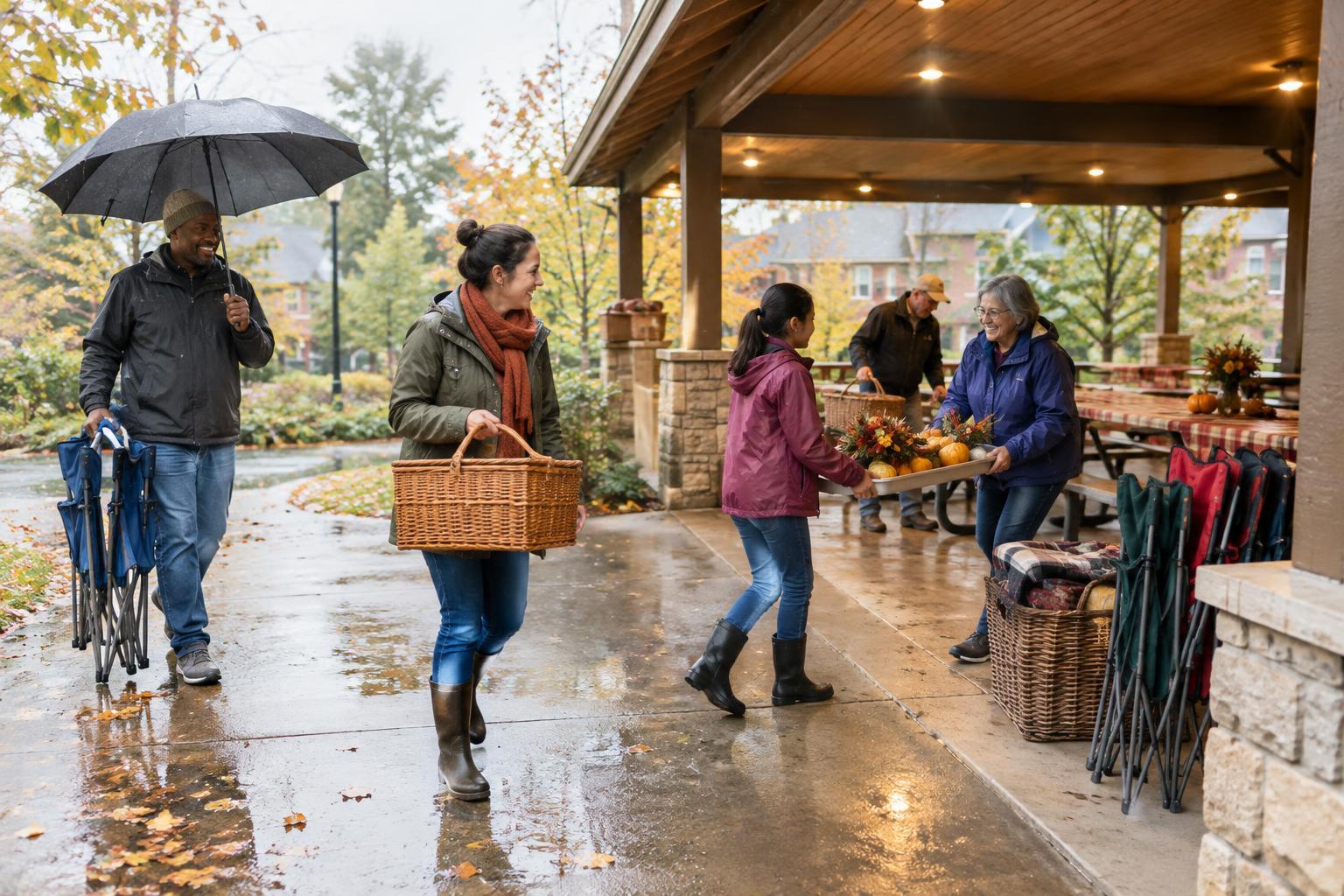
Think through the practical changes the backup creates. Who has access to the space and can open it? Will tables, supplies, and volunteers need to arrive at a different time? Can someone using a mobility aid enter and take part? If the event involves children, make it easy for caregivers to understand where to go and whether the activity has changed. A modest backup that works for most people is more useful than an elaborate one that depends on perfect timing.
Set a decision time and a safety boundary
Agree in advance who will make the weather call and when. For example, an evening gathering may need a decision early enough for volunteers to move supplies and for neighbors to adjust their plans. Choose a time that fits your event, then include it in the original invitation. Avoid waiting for certainty: forecasts can change, but people still need a dependable answer.
Decide which conditions would prompt a move, postponement, or cancellation. Heavy rain, strong wind, poor visibility, or unsafe travel may affect different activities in different ways. Give particular thought to decorations, electrical equipment, temporary shelters, and walking routes. If conditions seem hazardous, do not feel obliged to preserve the schedule. The tradition can continue another day; participants should not have to guess whether it is safe to attend.
Make the update easy to find and share
Use the same communication channels for the weather update that you used for the invitation. That might mean a neighborhood email, a printed notice at the usual meeting spot, and a message from block volunteers to neighbors who are less likely to see an online post. Keep the announcement short and specific: say whether the event is proceeding, moving, postponing, or canceled; give the revised place and time; and note any change to what people should bring.
Prepare the wording before the forecast becomes urgent. Organizers can then fill in a few details and send a consistent message. Ask one person to update each channel so old information does not linger beside new instructions. If the event moves, a sign at the original location can help anyone who arrives without seeing the announcement. Include a contact method for questions if the organizing group can reliably monitor it.
Keep room for warmth and flexibility
A backup plan is also a hospitality plan. Let volunteers know what their roles become if the event moves, and avoid expecting anyone to make a difficult trip simply to keep things running. If food is involved, plan how to handle contributions that cannot easily be transported or stored. If the gathering is postponed, say whether people should hold on to their supplies or expect a fresh invitation.
After the event, make a brief note of what worked: the decision time, the messages people received, and any access problems you noticed. Those notes can make next year’s planning easier. Neighbors may remember an adjusted celebration just as fondly as the original plan, especially when they felt informed, comfortable, and welcome.