Walk the site before inviting volunteers
Begin with a manageable area: a short stretch of sidewalk, a small park, or the edges of a shared green space. Walk it in daylight and note where litter has gathered, where volunteers could enter safely, and where filled bags could wait for pickup. A focused cleanup is easier to supervise and more satisfying to finish than an open-ended promise to tidy an entire neighborhood.
Make the survey a safety check, not just a count of trash. Look for traffic, steep banks, unstable ground, dense vegetation, and places where people may have difficulty moving or carrying bags. Mark any areas that should remain off-limits. If you see needles, unknown chemicals, leaking containers, or other suspicious items, leave them untouched and ask the appropriate local service how to report them. Do not assume volunteers can safely handle every item they find.
Find out who manages the site before setting a date. A park, roadside, stream bank, or privately owned lot may have different permission requirements. Ask the property manager or relevant local office whether a cleanup is welcome and whether they have guidance on supplies, sorting, or collection.
Build a plan that fits the people and place
Choose a start and finish time, a meeting point, a cleanup boundary, and a place for collected waste. Keep the first event modest, with enough time for orientation and a final sweep. Decide in advance what would prompt a change of plans, such as severe weather or conditions that make the site unsafe.
Invite neighbors with a clear description of the work. Let people know whether the route is level, whether there are seated or lighter tasks, and what to bring. Someone who cannot pick up litter may still help by greeting arrivals, handing out supplies, tracking which areas are complete, or sharing information with neighbors. If children participate, arrange appropriate adult supervision and give them tasks away from traffic and unknown waste.
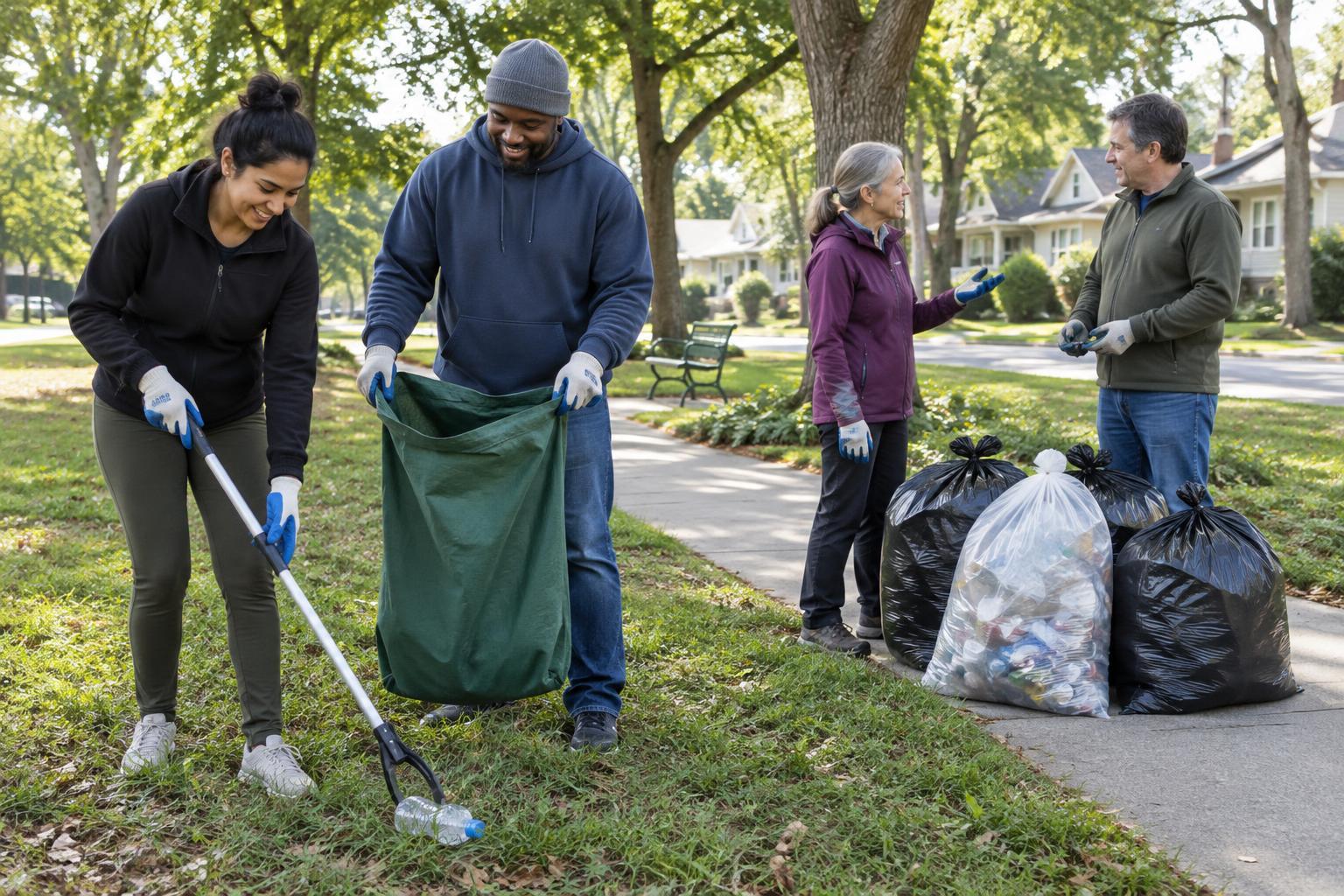
Gather sturdy gloves, litter grabbers if available, bags suited to the expected waste, and a way to identify team leads. Water and a hand-cleaning option help make the day more comfortable. Rather than buying everything at once, ask whether neighbors or the site manager can lend suitable supplies. Name one organizer to handle questions and another person, if possible, to manage the waste collection point.
Start with a short, clear briefing
At the meeting point, welcome volunteers, show the cleanup boundary, and explain where full bags belong. Pair or group people so no one has to work alone in a less visible area. Point out routes that should stay clear for pedestrians, cyclists, and vehicles. Remind everyone to leave private property and planted areas undisturbed unless permission has been given.
Give simple handling guidance: use gloves or grabbers, avoid reaching into hidden spaces, and do not lift anything too heavy or awkward to move comfortably. Volunteers should leave sharp objects, unidentified substances, and anything that seems hazardous in place, then tell the organizer where it is. If wildlife or a nest is encountered, give it space and work elsewhere. Encourage breaks and make it easy for anyone to switch tasks or stop.
A brief check-in midway through can prevent small problems from growing. Ask whether teams need more bags, whether a location should be closed off, and whether the planned collection point is working. Keeping track of completed sections also helps avoid sending volunteers over the same ground twice.
Sort carefully and make disposal part of the plan
Before the event, confirm what the local waste collector or site manager will accept, where bags may be placed, and who will collect them. Rules for recycling, bulky items, and yard waste can vary. Do not leave a pile of bags behind on the assumption that someone else will take it. If collection cannot be arranged, reduce the size of the cleanup until there is a reliable disposal plan.
Set up clearly marked places for ordinary trash and any recycling the local program accepts. Recycle only items that meet its rules; dirty or mixed material may not belong in that stream. Keep bags light enough to lift safely, close them securely, and avoid blocking paths, drains, or access points. Treat unusual finds separately: appliances, tires, paint, batteries, and other special waste may need a different collection route. Ask the appropriate local service rather than putting them in ordinary bags.
At the end, count bags if that helps with pickup, then inspect the meeting point and collection area for loose litter or forgotten supplies. Confirm that the person responsible for removal knows the location and expected volume.
Close the loop with neighbors
Thank volunteers before they leave, and share any remaining disposal details so the outcome is clear. After pickup, a short message to participants can confirm that the waste was removed and note any hazards reported to the proper service. Avoid publishing photos of people without their permission.
Use what you learned to make the next project easier. Perhaps the boundary was too large, a crossing needed closer attention, or the collection point was hard to reach. A cleanup can also reveal practical prevention ideas, such as asking a site manager about a bin or choosing a regular time to care for one small area. The goal is not a perfect-looking neighborhood for one afternoon, but a shared project that people can safely sustain.