Start with the jobs neighbors actually do
A tool library works best when it solves a specific local need. Before collecting donations, ask neighbors what they would borrow for ordinary projects: a rake for a cleanup, a drill for hanging shelves, or a folding ladder for a task at a reachable height. A short conversation at a community gathering or a simple paper survey can reveal which items are useful enough to share. Begin with a modest collection that volunteers can store, inspect, and lend without strain.
Choose a home for the collection before accepting tools. It should be dry, reasonably secure, and accessible during clearly posted hours. Decide who may borrow: perhaps residents of a defined neighborhood or members of a participating community group. Make the boundary easy to explain. If the project is run by volunteers, name at least two people who can handle questions and keep it going when someone is away.
Build a collection you can care for
Invite donations from a wish list rather than asking for anything people want to clear out. Sturdy hand tools are often easier to manage than equipment with batteries, fuel, blades, or complex instructions. Check each item before adding it to the shelf. A tool with a loose handle, missing guard, damaged cord, or uncertain operating condition should not be lent simply because it was donated. Set aside items that need attention, and decline those the group cannot safely maintain.
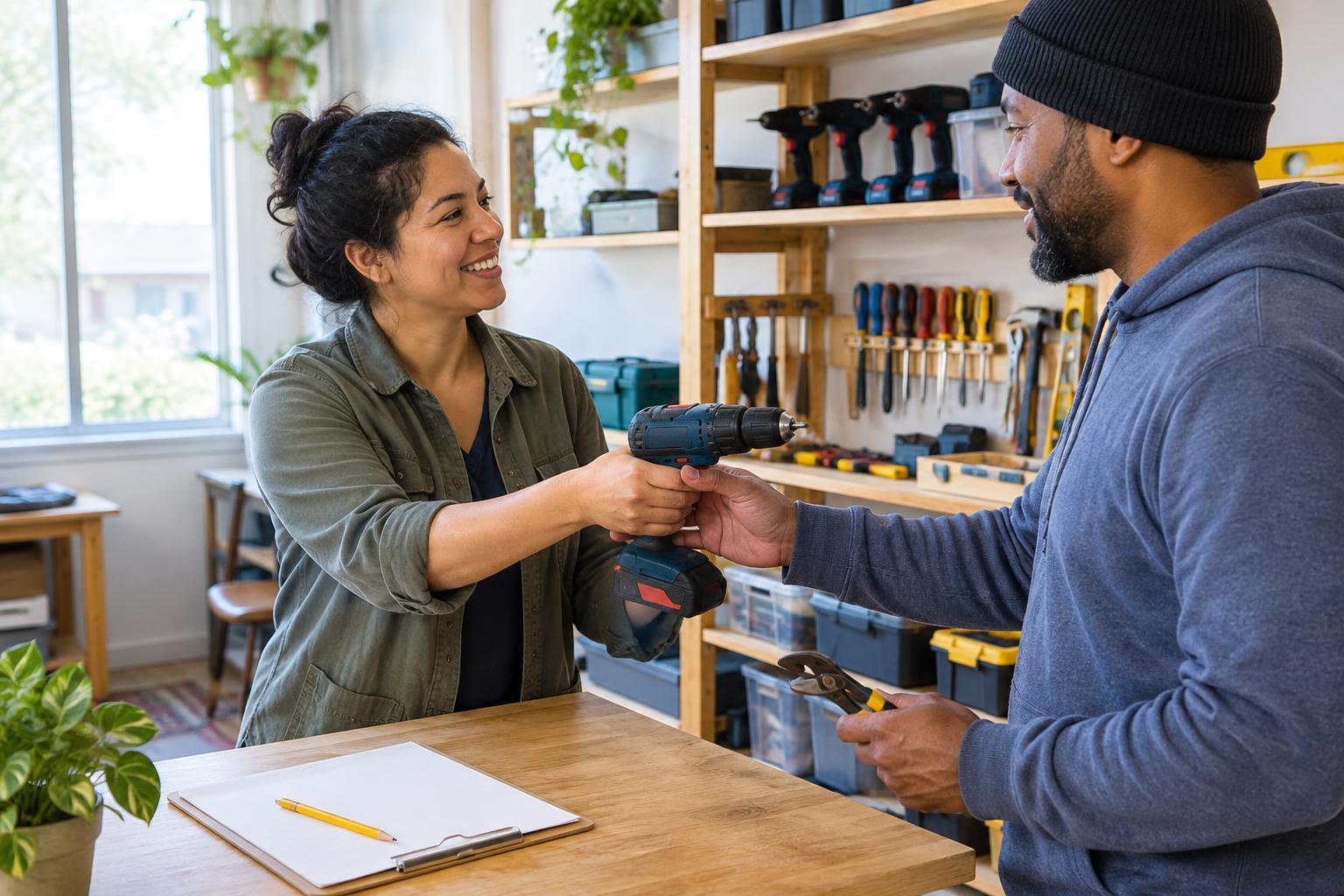
Give each accepted tool an identifying number and record its condition and included parts. A drill, for example, might have a case, charger, and bits; listing them makes both checkout and return easier. Store manuals with the tools when available, and label shelves so borrowers can put items back in the right place. Leave room to add equipment later, once the group understands what gets borrowed and how much work the collection requires.
Write borrowing rules people can remember
Clear rules protect the project from awkward guesswork. Put the essentials on a single page: who can borrow, when checkout is available, how long a loan lasts, whether renewals are possible, and how to contact the team about a delay. Set a loan period that suits the collection; a weekend may work for a rake, while a popular tool may need a shorter turn. Explain whether a borrower may reserve an item and what happens if someone else is waiting.
Include a straightforward expectation for care: use the tool only for its intended purpose, follow its instructions, return it clean and with all parts, and tell the team promptly if anything breaks or goes missing. Encourage borrowers to raise problems without embarrassment; a reported fault can be addressed before the next person takes the item home. If the group considers deposits, fees, or a written agreement, keep the process understandable and avoid creating a barrier that shuts out the neighbors the library hopes to serve.
Make checkout and maintenance routine
A notebook can be enough to track a small collection. Record the tool number, borrower’s name, contact method, checkout date, expected return date, and actual return date. Keep that information available only to the people managing loans, and do not collect details the project does not need. At checkout, a volunteer can confirm the parts list and point out where the instructions are kept. At return, the volunteer can check for missing pieces or visible damage before marking the loan complete.
Set aside regular time for care, even when nothing appears broken. Clean and organize items, check for wear, and remove questionable tools from circulation until someone capable can assess them. Decide in advance who can approve repairs or replacements and how the group will pay for them. A small, reliable collection is more useful than a crowded shelf of tools nobody has time to inspect.
Keep the library welcoming and adaptable
Post the rules where people borrow tools, and offer them in the same format to anyone who asks about joining. Consistent procedures help a first-time borrower feel as comfortable as a familiar neighbor. Consider whether checkout hours work for people with different schedules, and invite feedback without promising every requested tool will be added. A request list can guide future donations while keeping expectations realistic.
After the first few months, ask volunteers what has been easy and what has caused confusion. Are return dates clear? Do tools come back with their parts? Is the storage space working? Revise the rules in response, and let borrowers know when they change. The goal is not an elaborate system. It is a dependable way for neighbors to share useful things, look after them together, and make the next small project a little easier to begin.