Decide what the meeting needs to accomplish
A community project can attract plenty of goodwill and still leave people unsure what to do. Before inviting neighbors to a meeting, write down its purpose in one sentence. Are you choosing between two possible locations, identifying tasks for a cleanup, or deciding whether there is enough interest to continue? A meeting with one clear purpose is easier to join and easier to finish.
Share a short agenda in advance, along with any information people need to take part. If a decision depends on a property owner’s permission or the availability of supplies, say so rather than inviting a discussion based on assumptions. Name the questions the group can answer at this meeting and those that will need more information.
Think about who may be affected but unable to attend. A meeting time, location, or format can unintentionally exclude neighbors with work, caregiving, transportation, or accessibility needs. Offer a simple way to send thoughts beforehand, such as a message to an organizer. Make clear how those comments will be brought into the room.
Make room for useful participation
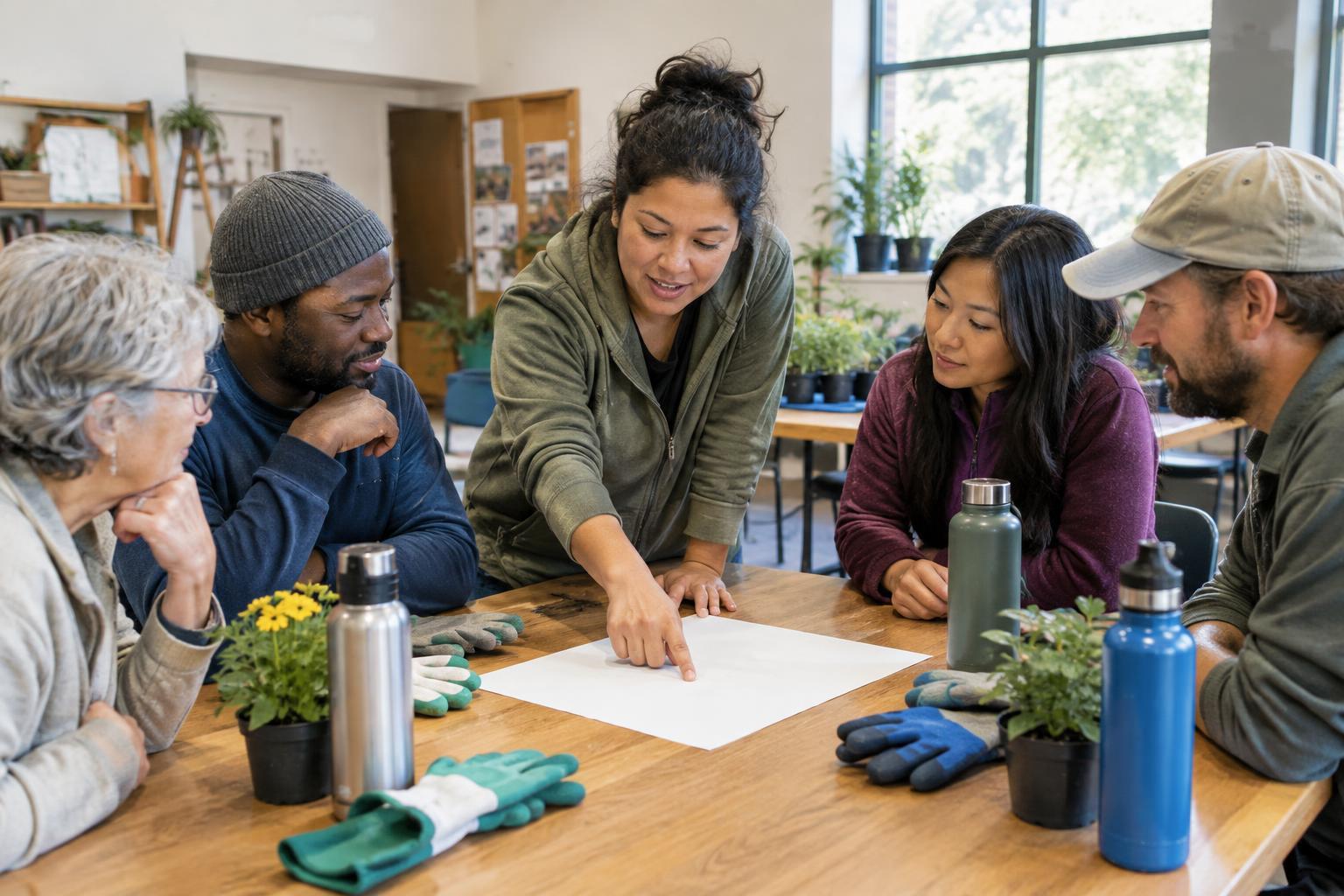
At the start, introduce the purpose, the planned finish time, and how the group will reach a decision. For a small project, you may only need a facilitator to guide the discussion and a note-taker to record outcomes. These roles do not have to make either person the permanent leader. They simply help everyone follow the conversation.
Begin with a brief explanation of the issue, then ask a focused question. “What would make this location easy or difficult to use?” is more productive than “What does everyone think?” Give people a moment to consider the question before inviting responses. If a few voices dominate, the facilitator can ask to hear from people who have not spoken, while making it comfortable to pass.
Welcome practical concerns without treating every suggestion as a commitment. A neighbor who proposes adding benches is not necessarily offering to find, install, or maintain them. Ask what the idea would require and whether it fits the project’s purpose. This keeps the discussion respectful while helping the group distinguish possibilities from workable plans.
Handle disagreement without rushing past it
Disagreement may point to a real issue: noise near homes, upkeep after the initial workday, or uncertainty about who can use a shared space. Restate the concern in neutral terms and ask what information would help resolve it. People are more likely to stay engaged when they can see that their concern has been recorded accurately, even if the group does not adopt their preferred solution.
Not every question needs a vote. If the group lacks permission, cost information, or input from people directly affected, record the options and postpone the decision. If a choice must be made, explain the agreed method before using it. Whatever the method, avoid describing a decision made by a handful of attendees as the view of the whole neighborhood.
Close with owners, deadlines, and a written recap
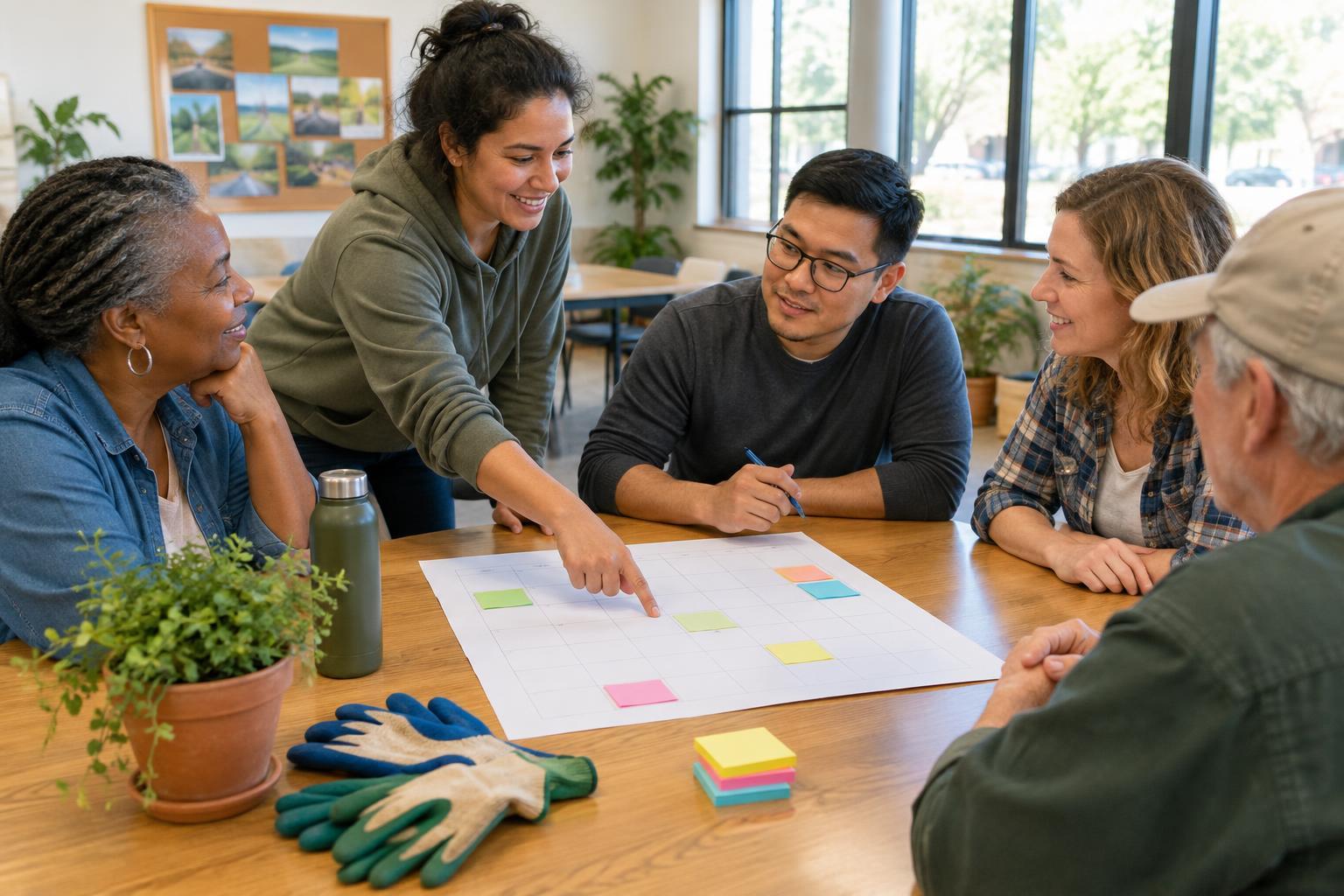
Reserve the final part of the meeting for next steps. Read back what was decided, what remains open, and each task that needs doing. Give every task a willing owner and a realistic check-in date. “Find out who can provide bags for the cleanup by next Friday” is clearer than “Look into supplies.” If no one can take a task, leave it unassigned rather than quietly assuming someone will do it.
Send a concise recap through the same channels used for the invitation. Include the decisions, unanswered questions, task owners, and how someone who missed the meeting can respond. Do not publish personal contact details without permission. A clear recap helps absent neighbors understand the project and gives volunteers a shared reference if memories differ later.
Finally, check whether another meeting is necessary. Some tasks can move forward through a short update, while a new decision may call for another conversation. Let the work determine the next gathering—not the habit of putting a date on the calendar. A useful meeting ends with enough clarity that people can act before they meet again.